-
Courses
Courses
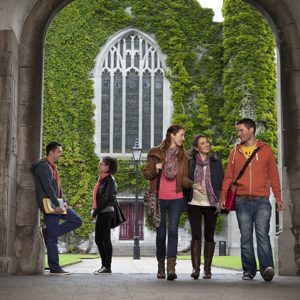
Choosing a course is one of the most important decisions you'll ever make! View our courses and see what our students and lecturers have to say about the courses you are interested in at the links below.
-
University Life
University Life
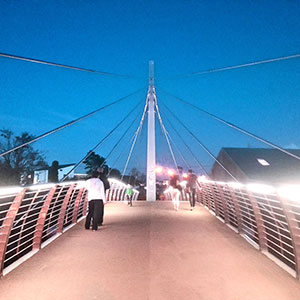
Each year more than 4,000 choose University of Galway as their University of choice. Find out what life at University of Galway is all about here.
-
About University of Galway
About University of Galway
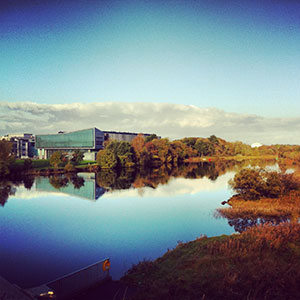
Since 1845, University of Galway has been sharing the highest quality teaching and research with Ireland and the world. Find out what makes our University so special – from our distinguished history to the latest news and campus developments.
-
Colleges & Schools
Colleges & Schools
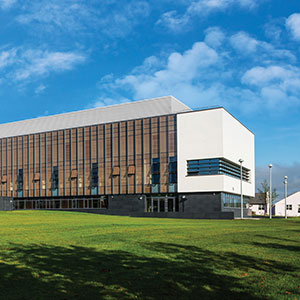
University of Galway has earned international recognition as a research-led university with a commitment to top quality teaching across a range of key areas of expertise.
-
Research & Innovation
Research & Innovation
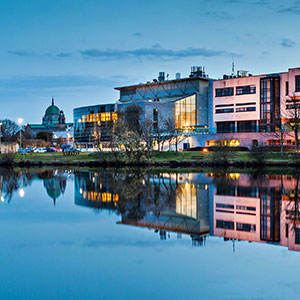
University of Galway’s vibrant research community take on some of the most pressing challenges of our times.
-
Business & Industry
Guiding Breakthrough Research at University of Galway
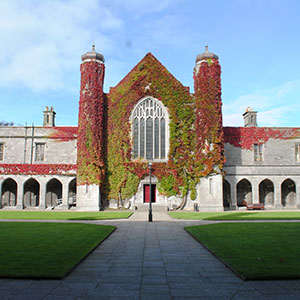
We explore and facilitate commercial opportunities for the research community at University of Galway, as well as facilitating industry partnership.
-
Alumni & Friends
Alumni & Friends
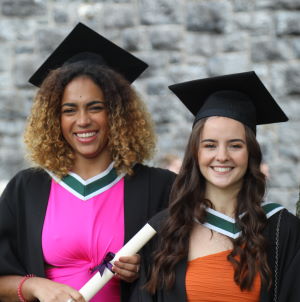
There are 128,000 University of Galway alumni worldwide. Stay connected to your alumni community! Join our social networks and update your details online.
-
Community Engagement
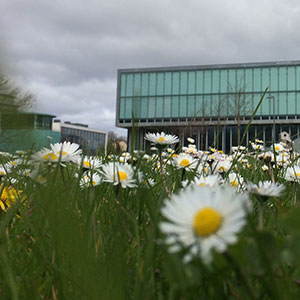
Community Engagement
At University of Galway, we believe that the best learning takes place when you apply what you learn in a real world context. That's why many of our courses include work placements or community projects.
 Accessibility & Language
Our News
Thursday, 16 July 2026
The Discipline of Archaeology is delighted to announce that Professor Lakhdar Benbouzid, Full Professor of Ancient History and Archaeology at the University of Biskra, Algeria, has been awarded a Visiting Fellowship by the College of Arts, Social Sciences and Celtic Studies (CASSCS). With more than twenty years of fieldwork in the Sahara, his research addresses Saharan rock art, Neolithic pastoral societies, ancient migration, and Holocene environmental change. His current work examines Late Neolithic ritual and funerary monuments of the central Sahara. He is a member of ICOMOS and is the author of eleven books and more than twenty peer-reviewed articles. Professor Benbouzid will be here for two weeks from the 10th of August 2026 and is keen to meet with staff members and students with a particular interest in his areas of expertise, or their related and interrelated fields. With this in mind, his research will involve an examination of Irish Neolithic funerary architecture, Megalithic Art and Rock Art and an exploration of some of its famous sites and landscape environments. He will also be giving a lecture to the staff and students of the CASSCS and is particularly looking forward to meeting colleagues of our School to learn more of its range or research interests, towards possible collaborations in the future. More details will follow.
Wednesday, 17 June 2026
We are delighted to announce that Dr Mariana Pereira Guimarães has received a College of Arts, Social Sciences and Celtic Studies (CASSCS) Visiting Fellowship to work with UrbanLab Galway as part of her ongoing research on urban climate resilience and citizen science. Mariana will join us at UrbanLab Galway, in the School of Geography, Archaeology and Irish Studies, in August. Mariana Pereira Guimarães is an environmental health planner, architect, and urban climate scientist whose work sits at the meeting point of urban planning, public health, and climate science. She earned her PhD Cum Laude from the Politécnico di Milano and holds a joint Master's in Urban Planning and Public Health from Harvard University, where her public health studies followed the Human Health, Sustainability, and Global Environmental Change track at the Center for Climate, Health, and the Global Environment (Harvard Chan C-CHANGE). She first trained as both an architect and a civil engineer at the University of São Paulo, São Paulo, Brazil. Much of her interdisciplinary outlook took shape during her years in the United States. She was a Fox International Fellow at Yale University and a fellow of the Harvard University Center for the Environment, and at the Harvard Graduate School of Design she worked across several of its design and research groups, among them the Zofnass Program for Sustainable Infrastructure, the Healthy Places Design Lab, and the Critical Landscapes Lab. At Yale, she also collaborated with Prof. Alexander Felson's former Urban Ecology and Design Laboratory (UEDLAB). Alongside this research, Mariana has worked directly with communities and city governments such as São Paulo, Toronto, Boston and Tirana. In Tirana, Albania, she supported the City's "City for Children, City for All" programme within the Bernard van Leer Foundation's Urban 95 initiative, pairing stakeholder engagement with baseline research to create an indicator's data package on the everyday needs of infants, toddlers, and their caregivers. Mariana completed her doctorate within SOLOCLIM (Solutions for Outdoor Climate Adaptation), a Marie Skłodowska-Curie Actions Innovative Training Network (ITN) funded under the EU's Horizon 2020 programme, which brought three universities (Wageningen University, the University of Kent, and the Politecnico di Milano) together with four industry partners (Foster + Partners, Carlo Ratti Associati, ZinCo, and Arcadis). The network trained a small cohort of early-career researchers to develop vegetation, water, and responsive design solutions for the urban (micro)climate, at scales ranging from single buildings to whole neighborhoods. As part of this programme, Mariana spent two years at Arcadis in the Netherlands as a consultant on nature-based solutions. Mariana is dedicated to advancing innovation in planning, design, public health, water resources, and urban (micro)climate to promote healthier, sustainable, and inclusive cities.
Wednesday, 17 June 2026
We are delighted to announce that Dr Eamon Maher has received a College of Arts Visiting Fellowship to work with the Centre for Irish Studies and the University Library as part of his ongoing research on John McGahern this summer. Eamon Maher is a lecturer in the School of Tourism and Hospitality Management and Joint Principal Investigator (with Máirtín Mac Con Iomaire) of the Centre for Irish Studies. He founded and acted as Director of the National Centre for Franco-Irish Studies (NCFIS) from 2005-2025, and served as President of its offshoot, AFIS (Association of Franco-Irish Studies), from 2005-2020. In 2016 Eamon was made an Officier dans l’Ordre des Palmes Académiques, an Honour bestowed on him by the French Government for the promotion of Franco-Irish Studies. Eamon has written widely on representations of Catholicism in 20th-century fiction in France and Ireland and has published two book-length studies and several articles on the Irish writer John McGahern, on whom he is a recognised international expert. He is co-editing the Companion to John McGahern, which is due to appear in 2026, the 20th anniversary of the author’s death. His most recent monograph, which will appear in 2026, is titled The Prophetic Voice: Jean Sulivan’s Ongoing Relevance in France and Ireland. Eamon did his PhD thesis on Sulivan and also published a monograph in French, with L’Harmattan, on this intriguing Breton priest-writer who lived from 1913-1980, which were seismic years for France and the world in general. Eamon is General Editor of the highly successful Irish Studies series, Reimagining Ireland, as well as of Studies in Franco-Irish Relations, both with Peter Lang Oxford. He has edited and co-edited numerous books in these series and is a regular contributor to The Irish Times.
Tuesday, 6 February 2024
The Climate Campaigners project team are hosting an event aimed at preparing for the European elections in 2024. The primary goal of the event, ‘The right to have a choice to live sustainably with Climate Campaigners Amplifier Cities’, is to spearhead a "Go Vote" campaign advocating for a robust European Green Deal with collective action at its core. Climate Campaigners project aims to be the mechanism for citizen-driven change in a way that is fully immersed in behavioural research and integrated with local, national and EU-level policy goals. Event Details: Date: 20 February 2024 Time: 4-6 PM CET Platform: Zoom (Will be sent upon registration) Register here.
Friday, 15 July 2016
Dr Aaron Potito and three Geography undergraduates just returned from a 10-day field class in Chengdu, China, with Sichuan University’s University Immersion Program. The field course in Environmental Change and Sustainability included students and teachers from China, Italy, Australia, United States and Ireland.
Monday, 12 February 2024
As part of SHARED GREEN DEAL (a five-year, European Union Horizon-2020-funded project), members of the Clean Energy experiment team led by University of Galway’s Prof Frances Fahy met in Jaywick, the United Kingdom for a study tour. They exchanged experiences with facilitating community visioning for clean energy futures in different locations and learned about the challenges of future visioning and community energy in Jaywick. Postgraduate researcher Emily Gray represented the University of Galway at the study tour.
Wednesday, 31 October 2018
Dr John Morrissey has won the President’s Award for Teaching Excellence for a second time. Programme Director of the MA in Environment, Society and Development and Lecturer in Geopolitics and International Development, John previously won the award in 2011. He is pictured here receiving his award from NUIG President Prof. Ciarán Ó hÓgartaigh at the recent College of Arts conferring in the Bailey Allen Hall.
Wednesday, 31 October 2018
Dr Eugene Farrell received the 2018 President’s Award for Societal Impact from NUIG President Prof Ciarán Ó hÓgartaigh. This award stems from his work with local communities in The Maharees (Co. Kerry) to find solutions to coastal pressures from storms and human activities that have led to the chronic destabilization of the fragile dune ecosystems and increased erosion and flooding risks.
Wednesday, 10 January 2018
The School of Geography and Archaeology is running another Spring Lunchtime Lecture Series this year, with the first lecture starting on Monday, January 15th. The lectures will take place in the Town Hall Theatre, Woodquay, Galway. Please note, while the event is free it is advisable to come early to ensure a seat as pre-booking is not available. Download full programme here: Spring Lecture Series 2018
Friday, 10 November 2017
John Morrissey, Senior Lecturer in Geography and Associate Director of the Moore Institute, has published a new book critically telling the story of repeated US military interventions in the Middle East and Central Asia over the last 30 years. Entitled The Long War, the book focuses on the archives of US Central Command, and engages a wide range of scholarship on imperialism, geopolitics and neoliberalism, in critiquing the US military’s role in enacting US foreign policy in the most energy-rich region on earth, and in documenting the profound human consequences of military violence.
Press Office
pressoffice@
universityofgalway.ie
+353 (0) 91 493361
Follow:
https://www.instagram.com/universityofgalway/
https://www.facebook.com/universityofgalway
https://www.youtube.com/c/universityofgalway