-
Courses

Courses
Choosing a course is one of the most important decisions you'll ever make! View our courses and see what our students and lecturers have to say about the courses you are interested in at the links below.
-
University Life

University Life
Each year more than 4,000 choose University of Galway as their University of choice. Find out what life at University of Galway is all about here.
-
About University of Galway

About University of Galway
Since 1845, University of Galway has been sharing the highest quality teaching and research with Ireland and the world. Find out what makes our University so special – from our distinguished history to the latest news and campus developments.
-
Colleges & Schools
Colleges & Schools
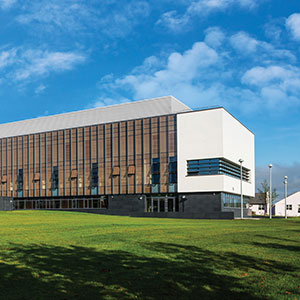
University of Galway has earned international recognition as a research-led university with a commitment to top quality teaching across a range of key areas of expertise.
-
Research & Innovation

Research & Innovation
University of Galway’s vibrant research community take on some of the most pressing challenges of our times.
-
Business & Industry
Guiding Breakthrough Research at University of Galway
We explore and facilitate commercial opportunities for the research community at University of Galway, as well as facilitating industry partnership.
-
Alumni & Friends

Alumni & Friends
There are 128,000 University of Galway alumni worldwide. Stay connected to your alumni community! Join our social networks and update your details online.
-
Community Engagement
Community Engagement
At University of Galway, we believe that the best learning takes place when you apply what you learn in a real world context. That's why many of our courses include work placements or community projects.
 Accessibility & Language
College of Business, Public Policy and Law
The Marie Skłodowska-Curie Actions are the European Union’s reference programme for doctoral education and postdoctoral training. The Marie Skłodowska-Curie Actions fund excellent research and innovation and equip researchers at all stages of their career with new knowledge and skills, through mobility across borders and exposure to different sectors and disciplines. MSCA are open to all domains of research and innovation and encourage international cooperation to set-up strategic collaborations.
See below a list of the supervisors particularly interested in hosting MSCA PF candidates.
|
Name of Supervisor |
Research Areas |
Proposed Projects |
Postdoctoral Fellow Expertise |
Additional Information |
| My research focuses on copyright law, the arts and access to culture. I currently have four active research streams: archiving and preserving video games; AI and copyright; technology and law; and access to culture for persons with disabilities. |
This project examines how contemporary forms of data extraction by AI systems reshape the legal and moral boundaries of consent, ownership, and participation in digital life. As platforms routinely repurpose users’ online traces for machine learning, the question of meaningful consent embedded in terms of service has become a central site of governance. This project approaches this terrain from a socio-legal and tech-policy perspective, treating platform infrastructures as regulatory systems in their own right, ones that perhaps govern ordinary people’s creative and communicative acts without democratic oversight, and avoid the question of meaningful ownership of creative output for ordinary people. Through an EU–US lens (though other perspectives are welcomed), the project interrogates how human rights–based frameworks in Europe interact, and sometimes collide, with the market-centred logic underpinning American approaches to AI training data. Combining normative legal analysis with empirical or policy-oriented work, the research will develop a rights-based framework for data justice that foregrounds user agency, everyday digital experience, and the ethics of participation in AI development. Its aim is to articulate how law might reclaim human dignity and public accountability within the architectures of data-driven governance. |
Background in law or policy, with a demonstrated interest in technology, particularly machine learning, deep learning and so-called AI technologies |
I am open to a potential MSCA PF candidate varying the project to suit their specific interests and research goals, within the boundaries of non-traditional authorship, users, AI and copyright. |
|
| My research focuses on state responsibility for protecting human rights in the field of social care. I am particularly interested in protections from arbitrary detention and torture or cruel, inhuman or degrading treatment or punishment. Much of my research has focused on the Northern/Irish State's responsibility for gross and systematic human rights violations in the 20th century institutional and forced family separation system, and the rights of affected people to cessation of continuing violations and to comprehensive access to justice and reparation. My research also focuses on present-day mistreatment that older people routinely face in relation to care; this is the subject of my most recent monograph, Human Rights and the Care of Older People: Dignity, Vulnerability, and the Anti-Torture Norm (OUP 2024). Keywords: transitional justice, torture, reparation, social care, human rights, older persons, institutional abuse, adoption. |
|
|
|
|
| Punishment, Imprisonment, Justice |
International Principles of Prison Law and Policy |
Prison law, Human rights law, doctrinal and critical legal and rights analysis skills |
|
|
| My research covers topics in applied microeconomics related to human capital, child development and inequalities in both developed and developing countries. |
|
|
||
| Digital Sustainability, Digital Transformation, Blockchain, Hate Speech, Business Analytics |
Projects related to the use of digital technologies for sustainability and operational excellence. Quantitative and mixed methods projects are preferred. |
Ph.D. in Information Systems or related areas. |
|
|
|
Health Economics, Health Technology Assessment |
Health Economics Evaluation based on Randomised Controlled Trials and/or Decision Analytic Modelling |
PhD Health Economics or Health Services Research |
|
|
|
Health Economics; Environmental Economics |
|
Economics, econometrics |
|
|
|
Whistleblowing in Organizations |
Whistleblowing Speak-up Arrangements; Whistleblower Partners and Allies; Democracy, Critique and Whistleblowing; Gender, Intersectionality and Whistleblowing; Digital Responsibility and Whistleblowing; Human Rights, Speech Rights, and Whistleblowing; National Security, Government and Whistleblowing |
Literature review, Qualitative and/or Quantitative methods, Conceptual and Theoretical capacity, Experience with academic journal publishing |
|
|
|
Public international law, human rights, global democracy, gender, queer theory, feminist legal work, identity, culture, critical legal thinking and history of these areas, law and literature (especially Kafka) |
Any project related to the stated research areas will be considered, with clear links in the proposed project to the global/international dimension of any of the topics. |
|
|
|
|
Disability law and policy, mental health law and policy, health law |
Projects Related to the Implementation of the UN Convention on the Rights of Persons with Disabilities, International and Comparative Disability Law & Policy |
Expertise on disability law and policy, human rights law |
|
|
|
International and EU refugee law, policy and practice and how these areas intersect with international and regional human rights law; human rights implications of the EU Common European Asylum System and how they are adjudicated by the European courts. |
Exploring the human rights implications of the normalisation of extraordinary asylum procedures in the new EU Pact on Migration and Asylum. As Member States prepare to receive the instruments of the new Pact into their domestic legal systems, the project will explore how existing national procedures are being changed, evaluating the changes in light of regional and international human rights law. This may involve exploring a single issue, such as border detention, across all Member States; or exploring several issues, such as border admissibility and border merits procedures, in select Member States. |
PhD in a related area of international or EU refugee law |
|
|
|
Information Technology Law, Regulation of Artificial Intelligence, Environmental Law. |
Proposals in any relevant fields are welcome but of particular interest are the use of information and communications technology for environmental regulation, the development of open legal data in Ireland, and the environmental footprint of ICT and AI. |
|
|
|
|
Gender, Religion and Human Rights, Middle East, Islam in Europe, Access to Justice. |
. |
|
||
|
Human-AI collaboration, Data-centric AI, Data Spaces, Collective Intelligence, Information Systems |
Investigate utility of human-AI collaboration based on LLMs in legal reasoning, question answering, and other AI tasks. |
PhD in Information Systems, Computer Science or related disciplines. |
||
|
Ageing, Social Exclusion & Inequity, Work & Retirement, Place and changing contexts, Infrastructures of care and support |
We welcome research projects in areas related to Ageing, Social Exclusion & Inequity, Work & Retirement, Place and changing contexts, Infrastructures of care and support |
Researchers with relevant social science experience and in particular in relation to ageing and public policy are welcome to apply. |
Along with the possibility to join the Institute’s vibrant research environment and benefit from its wide international network, successful candidates will be provided with equipped office space, e-mail and internet access, as well as access to library facilities. The Marie Curie Fellow will have access to the extensive programme of events taking place annually at the Centre (including seminar series, guest lectures and conferences). The University of Galway places a strong focus on providing a supportive environment for its researchers and has a dedicated infrastructure in place to support research and development. |
|
|
Social impact of digital technology, online social movement, online activism, new forms of organising, future of work, process and practice theory. |
|
|
|