-
Courses
Courses
Choosing a course is one of the most important decisions you'll ever make! View our courses and see what our students and lecturers have to say about the courses you are interested in at the links below.
-
University Life
University Life
Each year more than 4,000 choose University of Galway as their University of choice. Find out what life at University of Galway is all about here.
-
About University of Galway
About University of Galway
Since 1845, University of Galway has been sharing the highest quality teaching and research with Ireland and the world. Find out what makes our University so special – from our distinguished history to the latest news and campus developments.
-
Colleges & Schools
Colleges & Schools
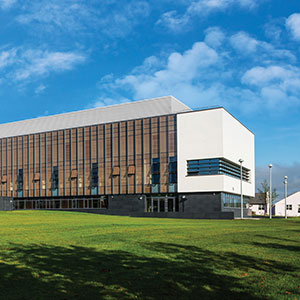
University of Galway has earned international recognition as a research-led university with a commitment to top quality teaching across a range of key areas of expertise.
-
Research & Innovation
Research & Innovation
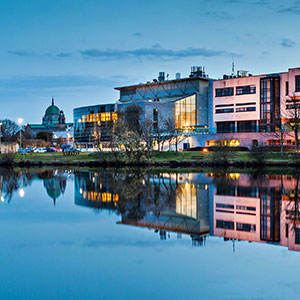
University of Galway’s vibrant research community take on some of the most pressing challenges of our times.
-
Business & Industry
Guiding Breakthrough Research at University of Galway
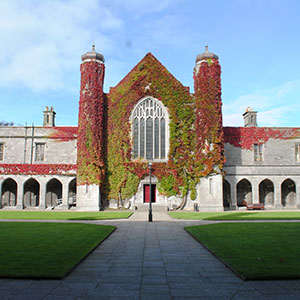
We explore and facilitate commercial opportunities for the research community at University of Galway, as well as facilitating industry partnership.
-
Alumni & Friends
Alumni & Friends
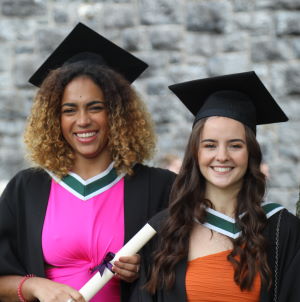
There are 128,000 University of Galway alumni worldwide. Stay connected to your alumni community! Join our social networks and update your details online.
-
Community Engagement
Community Engagement
At University of Galway, we believe that the best learning takes place when you apply what you learn in a real world context. That's why many of our courses include work placements or community projects.
 Accessibility & Language
College of Arts, Social Sciences and Celtic Studies
The Marie Skłodowska-Curie Actions are the European Union’s reference programme for doctoral education and postdoctoral training. The Marie Skłodowska-Curie Actions fund excellent research and innovation and equip researchers at all stages of their career with new knowledge and skills, through mobility across borders and exposure to different sectors and disciplines. MSCA are open to all domains of research and innovation and encourage international cooperation to set-up strategic collaborations.
See below a list of the supervisors particularly interested in hosting MSCA PF candidates.
|
Name of Supervisor |
Research Areas |
Proposed Projects |
Postdoctoral Fellow Expertise |
Additional information |
|
Child and adolescent health and wellbeing (risk and protective factors; role of family, peers, school and community in developing positive health behaviours & fostering wellbeing); school mental health research; youth mental health; youth mental health services research (integrated services; barriers to service access); health care transition (from paediatrics to adult services). |
|
Depending on the project a PhD in Psychology or related area; quantitative and qualitative skills |
https://scholar.google.com/citations?user=MuOkSDEAAAAJ&hl=en&oi=ao |
|
|
Irish theatre, theatre historiography and archives, and/or theatre and ecocriticism (for example, theatre and the climate crisis; the Anthropocene; environmental and green approaches to theatre history); Irish literature. |
Ecology and theatre histories - methods, case studies, and/or practice-based approaches; Irish literature and environment, especially with a focus on west of Ireland writers and landscapes. |
Applicants would need to be able to demonstrate a track record in the proposed area of research, as demonstrated through recent publications. Evidence of an ability and willingness to make use of archival resources at University of Galway would be a distinctive advantage. This includes the Abbey Theatre, Gate Theatre, John Arden and Margaretta D'Arcy, Druid Theatre, Thomas Kilroy, Tim Robinson, Lyric Theatre and/or Galway Arts Festival archives. https://library.universityofgalway.ie/collections/archives/ |
My current funded research project is CoastARTS - Coastlines as Zones of Ecocultural Crisis – Shaping Resilience through Transnational Performance-based Arts. https://chanse.org/coastarts/ |
|
|
Contemporary theatre and performance in Ireland, the United States and beyond with particular specialisation in Performance Studies, interculturalism, critical race theory, postcolonial and decolonial theory, gender, sexuality and consent studies, as well as educational and applied theatre and practice-as-research methodologies. |
I am interested in supporting projects related to any of my research areas, with particular interest in projects that examine social impact in and through the arts as well as working with/responding to the work of minority artists and/or communities in national, regional and/or transnational contexts. |
|
|
|
|
My research relates to childhood victimisation. I am specifically interested in topics such as bullying, cyberbullying, intimate image sharing and how they impact development. |
Projects relating to AI use for bullying and victimisation and the psychological impact of childhood victimisation. |
|
|
|
|
Translation; Intercultural Communication; Migration and Asylum; Sociolinguistics; Multilingualism. |
|
|
I am co-director of the Centre for Applied Linguistics and Multilingualism (CALM): |
|
|
Irish-Jewish history; German-Jewish history; Populations in Twentieth-century Ireland; Scots in Ireland. |
Minorities in the Irish Free State: The 1926 Census. |
History background; demonstrable competence with statistics. |
|
|
|
Community media, media literacy, scholar activism, alternative media |
|
|
|
|
|
Cognitive Neuroscience, Dyslexia |
Examining wellbeing in neurodiverse university students in Ireland |
Background in psychology/neuroscience, interest in or experience of working with neurodiverse participants, statistical skills and data wrangling (preferably in R) |
|
|
|
Health inequalities and experiences of health and wellbeing in the LGBT+ community. Challenging the narratives of risk and vulnerability that are often perpetuated in relation to our community by mainstream medical and psychological research. Keywords: Health Inequalities; LGBT+ Health; Sexual Health |
Investigating Increases in STIs in Europe from a Systems Theory Perspective |
Quantitative and qualitative skills |
|
|
|
The archaeology and history of pre- and early Roman Italy, especially South Italy; intercultural connections in early Italy; ethnicity in antiquity; South Italian red-figured pottery; South Italian Matt-Painted pottery; Etruscan black- and red-figured pottery |
|
|
|
|
|
Cultural history from Late Antiquity to the early Middle Ages (fourth to ninth centuries AD). Education, scholarship and language interaction in Latin, Greek, Old Irish, including manuscripts. Glosses and glossing. Digital Humanities (digital editions and databases; Natural Language Processing). |
|
|
|
|
|
Translation history, institutional translation, religious translation, multilingualism and non-professional translation. |
Projects that link with research methodologies currently in use in PIETRA/MISTE/VICO: https://pietra.universityofgalway.ie/ |
Translation Studies; languages; sociolinguistics; corpus linguistics and translation |
|
|
|
GIS; Environmental geochemistry; Soil; Spatial analysis; Environment and Health; Potentially toxic elements. |
Use of machine learning to explore hot spots of potentially toxic elements in potatoes grown in Ireland based on soil geochemical data |
Geographical Information System (GIS), Environmental Sciences, Machine Learning, Agriculture |
|
|
|
Children's literature and culture; Medical and Health Humanities; Comparative literature; Food Studies; Historical and Contextual approaches; 19th century to present. |
I welcome project proposals in the following areas: Comparative and transnational children's literature; Literature, food, and the young; Child health in historical perspective; Intersections between literature and child health. |
A background in literary studies is recommended; any methodological and theoretical background is welcome. |
I am an alumna of the Marie Skłodowska-Curie IF Programme. My project FED was developed at Ca' Foscari University of Venice (Italy), after which I moved on to receive IRC funding within the Laureate programme. |
|
|
Diversity and equity in education; cultural responsivity in education; teacher education; education leadership. |
Transforming Teacher Education: Developing Cultural Humility and New Pedagogical Approaches for Transcultural Responsiveness. |
PhD in Education, Sociology or Psychology |
|
|
|
Youth civic engagement; youth work; youth mentoring; empathy. |
Mapping social mentoring policy, provision and practice in Europe (or open to other ideas) |
|
|
|
|
Early modern history; history of religion; history of the Catholic Church; early modern French history; early modern Irish history; early modern social and cultural history. |
|
|
|
|
|
Film studies; masculinity and culture; ageing; creative industries; film/media education. |
|
|
|
|
|
Early modern British literature, palaeography and manuscript studies, bibliography and the history of the book, the history of reading, Donne, poetry and poetics, women’s writing, transatlantic approaches, scholarly editing, computational methods, humanities applications of AI, cultural analytics, digital humanities. |
|
|
I am open to supervising applicants in any of my areas of interest/expertise. Candidates interest in early modern poetry, manuscript culture, and/or digital/computational approaches would benefit from working alongside the STEMMA team. |
|
|
I research digital cultures and the social media sphere, with a particular focus on qualitative methods and digital ethnography. My work examines social media practices, alternative and non‑mainstream media, and interdisciplinary approaches to understanding online communities and digital communication. Digital cultures; Social media; Qualitative research; Digital ethnography; Alternative media; Interdisciplinary research; Online communities; Digital communication. |
|
A proven record of published qualitative research based on the applicant’s own empirical work. Applicants should demonstrate a strong commitment to research ethics. The proposed project must align clearly with my research interests and field, even where it adopts a qualitative focus. |
My first language is Arabic, and my research and supervisory interests place a strong emphasis on the Global South. I particularly welcome candidates whose work engages with these contexts. My approach to supervision is collaborative and supportive, with a strong emphasis on the postdoctoral researcher’s intellectual leadership and ownership of their project. I see supervision as a process of guidance, critical engagement, and mentoring, rather than directing the research agenda. |
|
|
Western art music c. 1890–1945, particularly in the UK and Ireland, including historical, analytical and critical approaches, especially reception. |
|
|
|
|
|
Creativity, Culture, Place based Development, Urban Change, Rural Creative Economy, Participatory Planning, Democracy |
The development of UrbanLab Galway, due to open its doors in 2026 in Nuns Island, Galway. The role of UrbanLab Galway is to develop a variety of platforms to facilitate the broadest possible public engagement. Our aim is to ensure that all voices contribute to the future development of places. We make use of traditional methods and more innovative digital ones. These methods serve the primary goal of UrbanLab: to enable the dreaming and to inspire the imagination of the greatest number of people to collectively co-create the future: www.urbanlabgalway.ie |
Public Engagement, mapping, data visualisation, software development, 3D visualisation, placemaking, creative practices |
|
|
|
Environmental Humanities, Culture, Climate Change, Environment, Nature Writing, Irish Literature, Landscape Studies, Creative Practice, Eco-social arts practice, Decolonial pedagogies. |
|
|
|
|
|
History of modern Germany, Poland and Ireland; transnational and comparative history; colonialism within Europe; migration and mobility; religion; nationalism. |
Religious Conversion after Emancipation: European Perspectives. |
Knowledge of scholarship and experience of researching religious identity and/or practice in ethnically diverse contexts in modern Europe, not necessarily Germany, Poland or Ireland |
|
|
| Dr. Kevin O'Sullivan |
Contemporary environmental history; history of global justice; history of humanitarianism; history of human rights; contemporary Irish history |
|
I am open to mentoring interdisciplinary projects; potential researchers must have some experience of using historical methods. |
|
| Prof. Felix Ó Murchadha |
Phenomenology of Nature, Time, the Self, Violence and Religion |
I am open to projects related to debates within the Philosophy of Nature and the Philosophy of Religion. My approach is phenomenological, drawing on the various traditions of Post-Kantian philosophy within Germany and France |
|
|