-
Courses
Courses
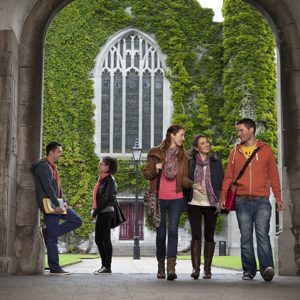
Choosing a course is one of the most important decisions you'll ever make! View our courses and see what our students and lecturers have to say about the courses you are interested in at the links below.
-
University Life
University Life
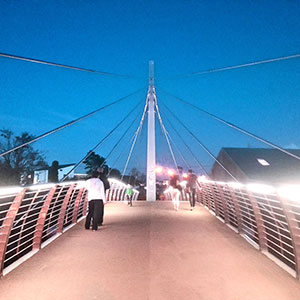
Each year more than 4,000 choose University of Galway as their University of choice. Find out what life at University of Galway is all about here.
-
About University of Galway
About University of Galway
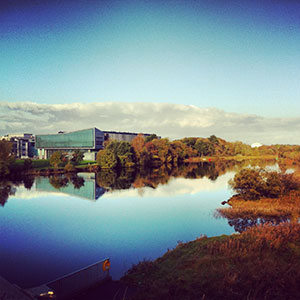
Since 1845, University of Galway has been sharing the highest quality teaching and research with Ireland and the world. Find out what makes our University so special – from our distinguished history to the latest news and campus developments.
-
Colleges & Schools
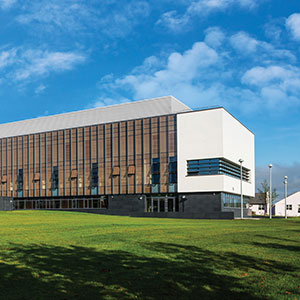
Colleges & Schools
University of Galway has earned international recognition as a research-led university with a commitment to top quality teaching across a range of key areas of expertise.
-
Research & Innovation
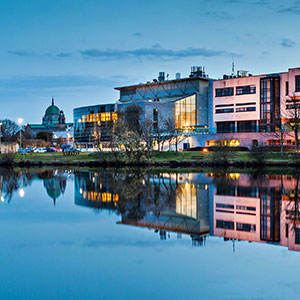
Research & Innovation
University of Galway’s vibrant research community take on some of the most pressing challenges of our times.
-
Business & Industry
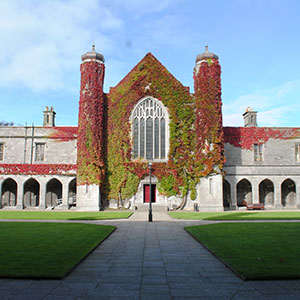
Guiding Breakthrough Research at University of Galway
We explore and facilitate commercial opportunities for the research community at University of Galway, as well as facilitating industry partnership.
-
Alumni & Friends
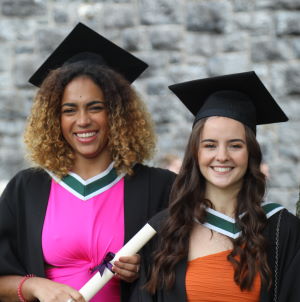
Alumni & Friends
There are 128,000 University of Galway alumni worldwide. Stay connected to your alumni community! Join our social networks and update your details online.
-
Community Engagement
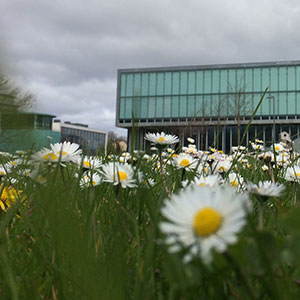
Community Engagement
At University of Galway, we believe that the best learning takes place when you apply what you learn in a real world context. That's why many of our courses include work placements or community projects.
 Accessibility & Language
News and Social Media
From Space to Sustainable Seas: EPA-Funded EHIRG Research Pioneers Satellite-Based Oxygen Monitoring in Irish Coastal Waters
11 June 2026The Eco-HydroInformatics Research Group (EHIRG) at the University of Galway is celebrating a major international research milestone following the publication of a groundbreaking study in Water Research, one of the world's leading journals in environmental and water sciences.
Conducted under the EPA-funded project "An Exploitation of Remote Sensing Copernicus Marine Service (CMS) Products for Monitoring of Transitional and Coastal Waters" (Project No. 2022-NE-112), collaborated with Marine Institute Ireland, Charles Sturt University, Wageningen University & Research and University of Tartu; the study demonstrates, for the first time in Ireland, how freely accessible Copernicus Marine Service satellite products can be used to retrieve dissolved oxygen (DOX) across Irish transitional and coastal waters using advanced machine learning and artificial intelligence approaches.
The significance of the work has been further recognised through its official promotion by the Copernicus Marine Service, which highlighted the study as an example of how open-access ocean data can drive scientific innovation and support environmental decision-making worldwide.
Monday, 8 July 2024
The University of Galway, in collaboration with esteemed institutions including the School of Engineering, Ryan Institute, MaREI Research Centre, Eco-HydroInformatics Research Group (EHIRG), and international partners from Charles Sturt University, the Marine Institute, and Cardiff University, has recently completed a groundbreaking study on the effects of pathogenic hazards, specifically COVID-19, on water quality. This extensive research leverages the innovative Irish Water Quality Index (IEWQI) model to assess the impact of the COVID-19 lockdown on surface water quality in Cork Harbour, Ireland. The IEWQI model that is recently developed by Dr Md Galal Uddin based form university of Galway, Ireland, a significant advancement in water quality assessment, addresses the limitations of traditional Water Quality Index (WQI) models by significantly reducing uncertainty and improving accuracy. This study marks the first initiative in Ireland to investigate the impacts of COVID-19 on surface water quality, contributing critical insights into water resource management during global pathogenic events. Key Findings Model Validation: The IEWQI model demonstrated exceptional performance, with less than 1% uncertainty, compared to nearly 12% in other models. It effectively computed water quality index scores, underscoring its reliability for such assessments. Impact of COVID-19: The study tested two main hypotheses to determine the effect of the COVID-19 lockdown on water quality. It concluded that while there were no significant overall changes in water quality due to the lockdown, certain indicators showed variability, reflecting the complex dynamics of anthropogenic pressures and natural processes. Long-term Trends: Analysis over a six-year period, including the COVID-19 pandemic, revealed no substantial long-term trends in water quality indicators, although specific parameters like Biochemical Oxygen Demand (BOD5) showed significant post-lockdown increases, highlighting areas for ongoing monitoring and management. Research Implications This research emphasizes the necessity of incorporating advanced models like the IEWQI in water quality monitoring programs. The findings provide a comprehensive understanding of how major events, such as the COVID-19 pandemic, influence water ecosystems. The study also underscores the importance of continuous monitoring and the integration of additional indicators, including chemical substances and biological components, for a more holistic view of water quality dynamics. Collaborative Efforts This study was made possible through the collaboration of multiple institutions: University of Galway: School of Engineering, Ryan Institute, MaREI Research Centre, Eco-HydroInformatics Research Group. Charles Sturt University, Australia: School of Computing, Mathematics and Engineering, and The Gulbali Institute of Agriculture, Water and Environment. Marine Institute, Cardiff University, UK: School of Engineering. Future Directions The research team calls for further studies to evaluate long-term impacts and to expand the scope of indicators used in water quality assessment. Such efforts will enhance our understanding and management of water resources in the face of both natural and anthropogenic challenges.