-
Courses
Courses
Choosing a course is one of the most important decisions you'll ever make! View our courses and see what our students and lecturers have to say about the courses you are interested in at the links below.
-
University Life
University Life
Each year more than 4,000 choose University of Galway as their University of choice. Find out what life at University of Galway is all about here.
-
About University of Galway
About University of Galway
Since 1845, University of Galway has been sharing the highest quality teaching and research with Ireland and the world. Find out what makes our University so special – from our distinguished history to the latest news and campus developments.
-
Colleges & Schools
Colleges & Schools
University of Galway has earned international recognition as a research-led university with a commitment to top quality teaching across a range of key areas of expertise.
-
Research & Innovation

Research & Innovation
University of Galway’s vibrant research community take on some of the most pressing challenges of our times.
-
Business & Industry
Guiding Breakthrough Research at University of Galway
We explore and facilitate commercial opportunities for the research community at University of Galway, as well as facilitating industry partnership.
-
Alumni & Friends
Alumni & Friends
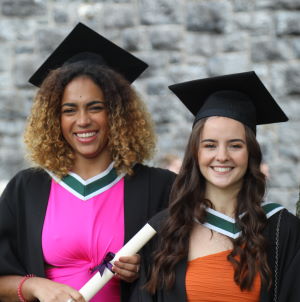
There are 128,000 University of Galway alumni worldwide. Stay connected to your alumni community! Join our social networks and update your details online.
-
Community Engagement
Community Engagement
At University of Galway, we believe that the best learning takes place when you apply what you learn in a real world context. That's why many of our courses include work placements or community projects.
 Accessibility & Language
Primary school
The Youth Academy is offering Summer Camps for high-ability primary school students, in 4th, 5th or 6th class in the 2025/26 academic year.
Dates and Times
Week 1:
| Course Dates | Time |
|---|---|
| Monday 6th July | 10.00am -12.30pm |
| Tuesday 7th July | 10.00am -12.30pm |
| Wednesday 8th July | 10.00am -12.30pm |
| Thursday 9th July | 10.00am - 12.30pm |
| Friday 10th July | 10.00am - 12.30pm |
Week 2:
| Course Dates | Time |
|---|---|
| Monday 13th July | 10.00am -12.30pm |
| Tuesday 14th July | 10.00am -12.30pm |
| Wednesday 15th July | 10.00am -12.30pm |
| Thursday 16th July | 10.00am - 12.30pm |
| Friday 17th July | 10.00am - 12.30pm |
Who can apply?
To attend Youth Academy programmes primary school students must present one of the following:
1. The most recent standardised test report showing below result in English, Maths OR Gaeilge. Eligibility is based on their most recent tests. For summer courses the most recent result might be from 2025. These results are usually noted on your child's report card. Your school will also have the results of these tests and can tell you if your child is eligible to apply. You will need to submit proof of their test results to support their application.
- STen score of 9 or 10
- Standardised score of 123 or above
- 95th percentile or above
2. A copy of an educational psychologist’s assessment with ability scores included and demonstrating high ability. Reports must be submitted no later than 4 years after the date of the educational psychologist's assessment.
When to apply?
- Applications will be open from Tuesday 12th May until Tuesday 26th May. Applications are made online via our application portal here: Application Portal
- Please note that if selected, all primary age children are required to be signed in and out of class by an adult.
- No offered places can be deferred or transferred to another child.
- Test results from 2025 are sufficient evidence
Fees and Scholarships
A fee of €150 applies for primary school summer camp courses.
If you are successfully selected you will be contacted regarding fee payment after an offer has been made.
Due to popular demand and a limited number of places, not all applicants will receive a place.
We have a limited number of scholarships, based on economic circumstances, available for students to attend the Youth Academy free of charge.
If your child has a medical card you are eligible to apply for a scholarship. Please apply via the online application form by uploading proof of your child's medical card details. You can take a photo/scan of your child's medical card and upload to the form. 25% of the total number of places we have on offer are allocated on a scholarship basis, so not all who apply for a scholarship will be successful.
Summer Camp Descriptions
Week 1 (6th-10th July)
Sounds Class! Analysing media and making your own radio show/podcast
"Media literacy is the ability to access, analyze, evaluate, and create media. This includes; television, radio, Internet, newspapers, magazines, books, billboards, video games, music, and all other forms of media."
Over this course you will;
- Identify programme formats, production features and target audieces of different shows
- Start the lifelong habit of active interaction with media, as opposed to passive consumption
- Learn basic technical terms for radio, podcast & television production
- Use storyboards and running orders to describe how a programme is structured
- Plan segments for a show using the broadcast clock
- Develop a production plan, divide up team roles, prepare a running order and script for your own show
- Look at interview structures, skills, and plan an online audio interview with a person you admire
- Use online recording sites, and free to download software to make a short programme which will be broadcast on Flirt FM 101.3, and uploaded to the station's Mixcloud to listen back later
- If time permits, design visual assets to promote your show/podcast
- Kick off your amazing career in media!
Basic Electronics: Understanding electrical circuits
This hands-on course introduces students to the fundamentals of electronics and the principles of electrical circuits. Through engaging, practical activities, students will explore essential components and learn how simple electric circuits function. The course also includes beginner-friendly programming using mBlock and Arduino, leading into the basics of robotics.
Introduction to Electronics and Electrical Circuits
- Importance and real-world applications of electronics
- Basics of electricity: voltage, current, resistance
- Understanding circuit types: series vs. parallel
- Key components: LEDs, batteries, resistors, switches, transistors, and more
Introduction to mBlock and Arduino
- Overview of mBlock: visual programming for beginners
- Introduction to Arduino and its integration with mBlock
- Setting up the environment and writing basic programs
Interactive Projects Using mBlock and Arduino
- LED Control: Blinking, dimming, and sequencing LEDs
- Traffic Light Simulation: Timed control of multiple LEDs
- Switch-controlled LEDs
- Photoresistor-triggered actions (including building an optocoupler switch)
- Temperature sensing (room and body) with visual feedback
Introduction to Robotics
- mBot Assembly: Hands-on robot building
- Basic mBot Controls: Movement, turning, and obstacle interaction
- Advanced Activities: Obstacle avoidance, Line following, etc
Further Exploration and Learning Resources:
- Guidance for independent project development
- Project ideas to inspire creativity and problem-solving
By the end of the course, students will:
- Understand core concepts in electronics and circuits
- Gain hands-on experience with mBlock and Arduino
- Develop simple but functional electronic and robotic projects
- Be equipped with resources to pursue further learning in electronics and robotics
The Secret Life of Physics: A rollercoaster ride through Life, Energy, and Cosmic Wonders!
From our toes to the sky: Physics is everywhere!
Calling all young scientists:
Ever wondered why things fall when you drop them? Or how our planet stays floating in space?
From the smallest atom to the depths of the ever-expanding universe, there is so much to explore.
Welcome to The Secret Life of Physics, where we’re going to explore the wild science that makes our world, and the whole universe, go round!
- Explore the secrets of matter, density, and forces!
- Dive into electricity and electromagnetism!
- Blast off into astronomy!
- Study waves (not all of them are in the sea!)
- Uncover the mystery of radiation!
This course will open your mind to the possibilities an understanding of physics can give you. Who knows where it will take you!
From tiny worlds to big life: A journey through biology
This course explores the levels of biological organization, from tiny cells to the complexity of the human body.
Students will discover how different types of cells give rise to diverse organisms, from simple life forms such as bacteria and fungi to more complex living systems. Through hands-on experiments, including microscope investigations of bacteria and human cell slides, students will explore cell structure and learn to identify key organelles, as well as remarkable molecules such as DNA and RNA.
Additional activities include using a forensic kit and gel electrophoresis to visualize DNA bands, introducing students to the fundamentals of molecular biology in an engaging, practical way. In the final session, students will focus on the different systems of the human body, with special attention to the nervous system and its role in movement and coordination. Interactive activities, such as building or exploring a robotic hand and playing educational card games, will make learning both entertaining and memorable.
Throughout the course, students will gain a deeper understanding of how living organisms function while exploring biology through fun, interactive, and educational experiments.
Be a Bio-Engineer: Build, Test and Hack the Human Body
Have you ever wondered how doctors use machines to see inside the body or how some people use special limbs to walk and move again? In this exciting course, students will explore the world of biomedical engineering, where science, technology, and creativity come together to improve people’s health.
Students will learn how the human body works and how engineers design tools to help doctors understand and treat it. Topics include the basics of the heart and muscles, simple biomedical devices (such as heart rate monitors and prosthetic limbs), and how images of the body are created using technology. They will also explore how sensors can measure things like heart rate and movement.
Through hands-on activities and guided exploration, students will investigate real-life challenges and design their own solutions. Activities will include building a simple model of a prosthetic limb; measuring and recording their heart rate during different activities; creating models to explore how the body works; and solving real-world “medical mysteries” through teamwork
By the end of the course, students will be able to:
· Describe how parts of the human body work
· Explain how simple medical technologies help doctors and patients
· Design and present simple solutions to health-related problems
· Collect and understand basic body measurements (like heart rate)
Earth Explorers: The World Beneath Your Feet
Travel back in time, uncover ancient worlds, and discover how our planet really works!
This exciting, hands-on course brings Earth Science to life through interactive activities, games, and real scientific techniques. From rocks and fossils to dinosaurs and volcanoes, students will explore the story of Earth like real scientists.
Over the week, students will:
- Crack open the secrets of rocks and minerals - and discover how epic landscapes are built over millions of years
- Unleash the power of plate tectonics, volcanoes, and earthquakes - and see what's happening beneath your feet
- Unlock how fossils form - and use them to reveal stories from ancient worlds
- Step into the age of dinosaurs and explore the Triassic, Jurassic, and Cretaceous like a time traveller
- Get stuck into hands-on challenges from making your own fossils to solving rock and fossil mysteries
Perfect for curious minds, this course is all about exploring, discovering, and having fun with science!
Week 2 (13th-17th July)
A World that we Cannot See: The Secret Life of Microbes
This course teaches you all about microorganisms, the good, bad and evil! Learn all about their secret world through fun and interactive experiments. Some activities include:
- Ever wondered about microorganisms in our food?
- Uncover how good microbes can be used to make food products.
- Carry out your own fermentation experiment at home to learn about the process of bread making.
- Let's put hand hygiene to the test! You will carry out an experiment using agar to see how many microbes are killed when we clean our hands.
- Discover the dangerous side of microorganisms and how they can cause disease. You will be shown magnified images of different microbes and learn all about the illnesses they can cause.
- Find out how we can fight harmful microorganisms. Discover the world of vaccines and antibiotics, but also how microorganisms can fight back. Can you help the scientist figure out which antibiotics will save the patient?
- Finally, you will get to be the doctor for a day! Learn about how infection is diagnosed and how to check vital signs when microbes make us sick!
Sounds Class! Analysing media and making your own radio show/podcast
"Media literacy is the ability to access, analyze, evaluate, and create media. This includes; television, radio, Internet, newspapers, magazines, books, billboards, video games, music, and all other forms of media."
Over this course you will;
- Identify programme formats, production features and target audiences of different shows
- Start the lifelong habit of active interaction with media, as opposed to passive consumption
- Learn basic technical terms for radio, podcast & television production
- Use storyboards and running orders to describe how a programme is structured
- Plan segments for a show using the broadcast clock
- Develop a production plan, divide up team roles, prepare a running order and script for your own show
- Look at interview structures, skills, and plan an online audio interview with a person you admire
- Use online recording sites, and free to download software to make a short programme which will be broadcast on Flirt FM 101.3, and uploaded to the station's Mixcloud to listen back later
- If time permits, design visual assets to promote your show/podcast
- Kick off your amazing career in media!
Basic Electronics: Understanding electrical circuits
This hands-on course introduces students to the fundamentals of electronics and the principles of electrical circuits. Through engaging, practical activities, students will explore essential components and learn how simple electric circuits function. The course also includes beginner-friendly programming using mBlock and Arduino, leading into the basics of robotics.
Introduction to Electronics and Electrical Circuits
- Importance and real-world applications of electronics
- Basics of electricity: voltage, current, resistance
- Understanding circuit types: series vs. parallel
- Key components: LEDs, batteries, resistors, switches, transistors, and more
Introduction to mBlock and Arduino
- Overview of mBlock: visual programming for beginners
- Introduction to Arduino and its integration with mBlock
- Setting up the environment and writing basic programs
Interactive Projects Using mBlock and Arduino
- LED Control: Blinking, dimming, and sequencing LEDs
- Traffic Light Simulation: Timed control of multiple LEDs
- Switch-controlled LEDs
- Photoresistor-triggered actions (including building an optocoupler switch)
- Temperature sensing (room and body) with visual feedback
Introduction to Robotics
- mBot Assembly: Hands-on robot building
- Basic mBot Controls: Movement, turning, and obstacle interaction
- Advanced Activities: Obstacle avoidance, Line following, etc
Further Exploration and Learning Resources:
- Guidance for independent project development
- Project ideas to inspire creativity and problem-solving
By the end of the course, students will:
- Understand core concepts in electronics and circuits
- Gain hands-on experience with mBlock and Arduino
- Develop simple but functional electronic and robotic projects
- Be equipped with resources to pursue further learning in electronics and robotics
From tiny worlds to big life: A journey through biology
This course explores the levels of biological organization, from tiny cells to the complexity of the human body.
Students will discover how different types of cells give rise to diverse organisms, from simple life forms such as bacteria and fungi to more complex living systems. Through hands-on experiments, including microscope investigations of bacteria and human cell slides, students will explore cell structure and learn to identify key organelles, as well as remarkable molecules such as DNA and RNA.
Additional activities include using a forensic kit and gel electrophoresis to visualize DNA bands, introducing students to the fundamentals of molecular biology in an engaging, practical way. In the final session, students will focus on the different systems of the human body, with special attention to the nervous system and its role in movement and coordination. Interactive activities, such as building or exploring a robotic hand and playing educational card games, will make learning both entertaining and memorable.
Throughout the course, students will gain a deeper understanding of how living organisms function while exploring biology through fun, interactive, and educational experiments.
Be a Bio-Engineer: Build, Test and Hack the Human Body
Have you ever wondered how doctors use machines to see inside the body or how some people use special limbs to walk and move again? In this exciting course, students will explore the world of biomedical engineering, where science, technology, and creativity come together to improve people’s health.
Students will learn how the human body works and how engineers design tools to help doctors understand and treat it. Topics include the basics of the heart and muscles, simple biomedical devices (such as heart rate monitors and prosthetic limbs), and how images of the body are created using technology. They will also explore how sensors can measure things like heart rate and movement.
Through hands-on activities and guided exploration, students will investigate real-life challenges and design their own solutions. Activities will include building a simple model of a prosthetic limb; measuring and recording their heart rate during different activities; creating models to explore how the body works; and solving real-world “medical mysteries” through teamwork
By the end of the course, students will be able to:
· Describe how parts of the human body work
· Explain how simple medical technologies help doctors and patients
· Design and present simple solutions to health-related problems
· Collect and understand basic body measurements (like heart rate)
Earth Explorers: The World Beneath Your Feet
Travel back in time, uncover ancient worlds, and discover how our planet really works!
This exciting, hands-on course brings Earth Science to life through interactive activities, games, and real scientific techniques. From rocks and fossils to dinosaurs and volcanoes, students will explore the story of Earth like real scientists.
Over the week, students will:
- Crack open the secrets of rocks and minerals - and discover how epic landscapes are built over millions of years
- Unleash the power of plate tectonics, volcanoes, and earthquakes - and see what's happening beneath your feet
- Unlock how fossils form - and use them to reveal stories from ancient worlds
- Step into the age of dinosaurs and explore the Triassic, Jurassic, and Cretaceous like a time traveller
- Get stuck into hands-on challenges from making your own fossils to solving rock and fossil mysteries
Perfect for curious minds, this course is all about exploring, discovering, and having fun with science!