-
Courses
Courses
Choosing a course is one of the most important decisions you'll ever make! View our courses and see what our students and lecturers have to say about the courses you are interested in at the links below.
-
University Life

University Life
Each year more than 4,000 choose University of Galway as their University of choice. Find out what life at University of Galway is all about here.
-
About University of Galway

About University of Galway
Since 1845, University of Galway has been sharing the highest quality teaching and research with Ireland and the world. Find out what makes our University so special – from our distinguished history to the latest news and campus developments.
-
Colleges & Schools
Colleges & Schools
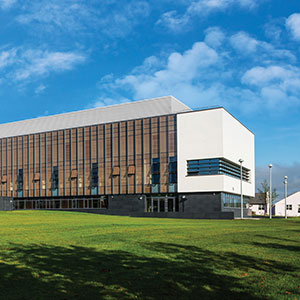
University of Galway has earned international recognition as a research-led university with a commitment to top quality teaching across a range of key areas of expertise.
-
Research & Innovation

Research & Innovation
University of Galway’s vibrant research community take on some of the most pressing challenges of our times.
-
Business & Industry
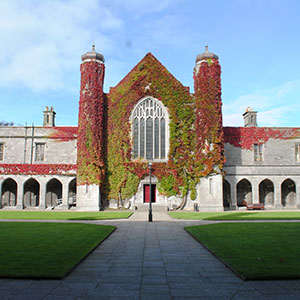
Guiding Breakthrough Research at University of Galway
We explore and facilitate commercial opportunities for the research community at University of Galway, as well as facilitating industry partnership.
-
Alumni & Friends
Alumni & Friends
There are 128,000 University of Galway alumni worldwide. Stay connected to your alumni community! Join our social networks and update your details online.
-
Community Engagement
Community Engagement
At University of Galway, we believe that the best learning takes place when you apply what you learn in a real world context. That's why many of our courses include work placements or community projects.
 Accessibility & Language
Summer Research Scholarship Projects
Each summer the School of Computer Science offer a number of internship bursaries to undergraduate students wishing to pursue a summer research project. The interns will work under the supervision of an academic within the School who must submit a report at the end of the summer internship.
See below for a list of projects undertaken in previous years.
Academic Year 2025/26
|
Supervisor |
Student |
Project Title |
Summary |
|
Dr Effirul Ramlan |
Chukwuma Anayo-Ezikeoha (4BCT1) |
Towards Attention-Level Control of Hallucination in Large Language Models
|
Chukwuma Anayo-Ezikeoha Summary Report The project explores why large language models (LLMs) sometimes produce fluent but factually incorrect answers. Rather than treating hallucination solely as an output-level problem, it investigates whether this behaviour can be traced to specific attention heads within the model and targeted directly. By combining interpretability methods with causal analysis, the work aims to develop a more precise and transferable approach to understanding and reducing hallucination across different LLM architectures. |
|
Dr Frank Glavin |
Sade Gray (4BCT1) |
Annotating and Analysing Human–LLM Stance Discrepancies on Judicial Reform in an Under‑Resourced Language |
This project involves developing a stance-annotated dataset on judicial reform (2023-present) and exploring its applications in Natural Language Processing and political analysis. The primary focus will be the completion and refinement of a partially annotated dataset, which classifies textual data according to stance. This dataset has potential value for both NLP tasks, such as stance detection and topic modelling, and for political science research examining public discourse around the judicial reform. The project will also involve analysing discrepancies between human and LLM stance annotations on an under-resourced language. |
Academic Year 2024/25
|
Supervisor |
Student |
Project Title |
Summary |
|
Dr Karl Mason |
Sofiia Biedakova (2BDA1) |
How Design Sells: Linking UX Patterns to Behavioral Marketing Tactics in the Airline Industry |
This research aims to examine the impact of behavioural marketing tactics and UX design patterns on consumer behaviour in airline booking systems. Two different airlines were used as case studies, Ryanair and Aer Lingus. The study connects design features to their neuropsychological mechanisms, exploring their effectiveness and ethical implications. |
|
Dr Effirul Ramlan |
Conor McNamara (4BCT1) |
Deep CCA-Based Fusion of Textual and Graph Representations for Citation Recommendation |
As the volume of scientific literature continues to grow each year, researchers face increasing difficulty in identifying relevant citations to support their work. Recent advances in citation recommendation have leveraged multi-view representation learning to integrate different modalities present in scholarly documents. Current state-of-the-art approaches that have applied Canonical Correlation Analysis (CCA) techniques to integrate textual and graph-based representations of scientific articles have relied on homogeneous networks, which limits their ability to capture the rich semantic and structural heterogeneity present in real-world academic networks. This work evaluates the effectiveness of a novel framework that applies Deep CCA (DCCA), a neural network extension of linear CCA, to learn non-linear relationships between distributed textual and heterogeneous network representations of scientific articles. |
Academic Year 2023/24
|
Supervisor |
Student |
Project Title |
Summary |
|
Dr Bharathi Raja Chakravarthi |
Tomas Nolan (3BA1) |
Sentiment Analysis of the Irish Famine Folklore Tales |
This project explored the emotional landscape of folklore from the Irish Famine period (1845–1852). The study applied Natural Language Processing (NLP) techniques to analyse sentiment in transcriptions from the Dúchas.ie digital archive, with a focus on identifying emotional trends in both Irish and English language texts. |
|
Dr Patrick Mannion |
Diarmaid Hehir (4BCT1) |
Using an agent-based approach to model language competition |
The research focused on modelling the behaviour of speakers of minority languages in a society dominated by one other language. Close to home this is the current situation of Gaeilge in Ireland, but there are many other comparable cases across the world often because of colonialism. The research sought to model the societal and individual factors that influence what language that a minority language speaker will use in the Irish context (whether someone who can speak Irish will speak it, and why). |
Academic Year 2022/23
|
Supervisor |
Student |
Project Title |
Summary |
|
Dr Ihsan Ullah |
Srinivas Ilancheran (4BCT1) |
Segmentation of Medical Images using Deep Learning Techniques |
The primary objectives that were identified for this project were to resolve issues present in our pre-processing pipeline, to identify and implement a novel layer addition to the U-NET architecture and to train the models to segment False Lumen Thrombosis (FLT) segments in addition to the TL and FL classes. As a secondary objective we aimed to analyse the performance of the Segment Anything Model (SAM) released by Meta in terms of its ability to segment images from the IMAGETBAD dataset without being trained on the dataset. |
|
Dr Frank Glavin |
Ayush Gupta (Trinity College Dublin) |
An investigation into effects of Data Synthesis on the classification of High dimensional spectroscopy Blending and Machine Learning Algorithms |
This study investigates the performance of machine learning algorithms and data synthesis on the accuracy of binary classification of wheat kernel types. Exploratory data analysis was conducted, and various machine learning algorithms were applied to the dataset to evaluate their out-of-the-box performance. Support Vector Machines (SVM) and K-Nearest Neighbours (KNN) were utilized, and the optimal hyperparameters were analysed to determine their impact on classification accuracy. The specific task assigned to the neural networks and machine learning algorithms was to determine whether a sample of wheat kernel belonged to a particular class based solely on its nearinfrared (NIR) spectra. |
Academic Year 2021/22
|
Supervisor |
Student |
Project Title |
Summary |
|
Dr Karl Mason |
Kristupas Montvydas (1BP1) |
A Rule-Based Approach to Swarm Robotics coordination |
The aim of this project was to test the limitations of a rule based robotic system. The first step was to install the required software (WeBots) and design a robot. Second, was to write a programme that would make the robot system locate and move to the centre of the arena. The third and final step was to experiment with various variables (quantity of robots, obstacles and adversaries) and note the results. |
|
Dr Frank Glavin |
Peadar O'Donnell (4BCT1) |
An Investigation into the Effects of Feature-Based & Diffusion Based Data Synthesis on the Classification of High-Dimensional Spectroscopy Data using Deep Learning |
This paper is an investigation into the effects that data synthesis has on the accuracy of binary classification neural networks (NNs). Specifically, the NNs were developed to determine if a sample of liquid contained chlorinated solvents by the distribution of its Raman spectra, developed by Houston et al [1]. Methods of data synthesis were run on the original dataset and passed through each NN to assess if they made any improvement to their respective classification accuracies. |
|
Professor Jim Duggan |
Maolin Wei (University of Limerick) |
Exploring the Differences Between Soccer Players Based on Clustering Unsupervised Machine Learning Algorithm |
In this report, cluster analysis is performed on the data of the soccer players from fbref.com using the R language, and related in-package functions. We apply and evaluate two different methods of clustering: 1) K-means and 2) K-prototype. For k-means, we apply one-hot encoding to convert categorical data to numeric. For both of these clustering methods, we also evaluate the results by reducing the dimensions of the data using Principal Component Analysis (PCA). We evaluated these methods by comparing the differences between their results. The results show that principal component analysis does not give better results for both clustering methods. And the selection of 'k', the number of clusters, significantly impacts the results. Due to the difference in clustering algorithms, some characteristics of different players affect the clustering performance. |
|
Dr Colm O’Riordan |
Khushboo Jayan (Trinity University Dublin) |
Swarm Robotics |
Hardware Project: There exists a number of potential platforms to allow experimentation with robots and learning. The first step of the project will be to explore existing platforms (e.g Zumo Arduino robot) and choose a suitable one. The next step will be to explore the capability of the robot using available online resources and program the robot to perform some basic functions. Finally, the project will investigate the use of a simple learning mechanism to allow the robot learn. |
Academic Year 2020/21
|
Supervisor |
Student |
Project Title |
Summary |
|
Dr Adrian Clear |
Haozhe Ma (2BCT1) |
Investigation of interaction design for future water systems |
The project is about investigating interaction design for future water systems. The water system is undergoing change but the new ways that we might interact with water are largely not well understood. One way to investigate this might be to design some "speculative" user interfaces that illustrate some of the ways that we might interact with water and use these to get different stakeholder perspectives on the design space. Specifically, using design steps inspired from CC Huang et al.* that carry out design through user enactment. First synthesizing prior literature about smart water systems to find a possible design space to start with, then designing and prototyping some potential interfaces that could be used in user studies to discuss stakeholder perspectives on the future of smart water and present them to users with simulated environments during user enactment sessions. The feedback from users can further help the researcher understand the balance between for example, user interface's convenience and water saving. |
|
Dr Karl Mason |
Ethan Goodfellow (3MF2) |
Stock Market Price forecasting using Evolutionary Neural Networks |
This project will use evolutionary neural networks (NN) to forecast prices of stocks/indexes. The first step will be to source and clean relevant datasets, e.g. historical stock revenue. The next step will be to conduct multiple regression analysis to determine highly correlative variables from these datasets. This will be followed by building a regression model with these variables to compare with market data. Evolutionary NNs will then be implemented to create a prediction model. The accuracy of the model will be assessed by comparing its predictions with actual historical values. After this assessment, the NN will be used to predict future values. The evolved NN will then be compared with traditional price forecasting methods, e.g. discounted cash flow (DCF) models, relative evaluation (Comps), and discounted dividend models (DDM). This work will conclude by determining the suitability of the evolved NN for price forecasting. If time permits, this work will also examine the performance of the model in response to “unpredictable” factors (e.g. effects of market whims, bull runs, market sentiment, etc.). |
|
Dr Frank Glavin |
Matthew McCarty (University College Cork) |
An Investigation into the Effects of Different Methods of Data Synthesis on the Classification of High-Dimensional Spectroscopy Data using Deep Learning
|
This investigation will be conducted by using several different methods of data synthesis (or data augmentation). Given a small dataset of the Raman spectra of certain solutions, we can train a neural network to discern solutions containing chlorinated solvents from those without. The specific method and the parameters of the synthesis techniques used will be altered systemically in order to create additional training data for several classification algorithms. This data will be fed into these algorithms, including both traditional methods and newer methods involving neural networks. The results will be recorded and the methods of data synthesis will be analysed and assessed based on their ability to improve each algorithm's classification of the spectroscopy data, specifically data with a low number of observations compared to the number of features (high-dimensional). The low number of observations is our main reason for using data synthesis, as a neural network requires a large data set to train, but a large amount of real data is not available. |
|
Dr Enda Barrett |
Dennis Soukhikh (2BCT1) |
Procedural Location-Based Sky-Field Generation using Web-Based Technologies |
Immersive sky simulations are incredibly useful for determining planet, star, and satellite positions, rendering simulated orbits for these objects, and having a visual guide to the night sky. Most of these simulations have been created for desktop and have garnered a lot of interest throughout the years. In this project we aim extend this model of the nocturnal environment of the sky using a modern web-based approach. To achieve this, the model must handle a complete star catalogue, planet orbit ephemeris, miscellaneous objects in the solar system and deep sky object data. Due to the large quantity of this data, this project will aim to create a system that can seamlessly process and manipulate this data in the web environment. The project will also generate a sky-field that is location and time based, giving the ability to display a sky-field for any time and location on Earth. To ensure the model is as accurate as possible, certain environmental factors, such as aberration, nutation and atmospheric refraction will be considered. |