-
Courses
Courses
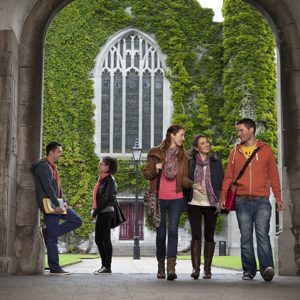
Choosing a course is one of the most important decisions you'll ever make! View our courses and see what our students and lecturers have to say about the courses you are interested in at the links below.
-
University Life
University Life
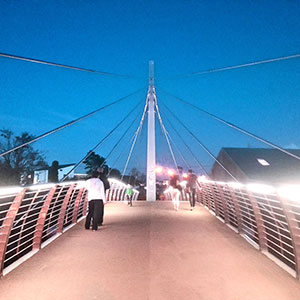
Each year more than 4,000 choose University of Galway as their University of choice. Find out what life at University of Galway is all about here.
-
About University of Galway
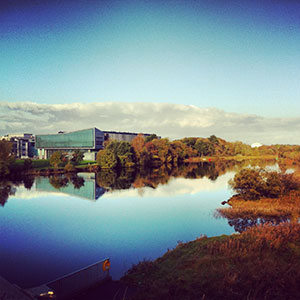
About University of Galway
Since 1845, University of Galway has been sharing the highest quality teaching and research with Ireland and the world. Find out what makes our University so special – from our distinguished history to the latest news and campus developments.
-
Colleges & Schools
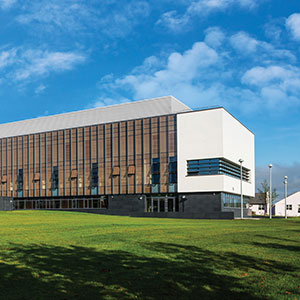
Colleges & Schools
University of Galway has earned international recognition as a research-led university with a commitment to top quality teaching across a range of key areas of expertise.
-
Research & Innovation
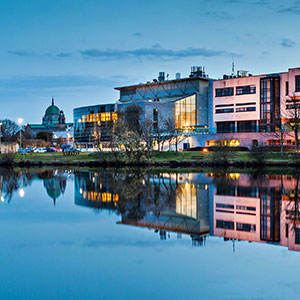
Research & Innovation
University of Galway’s vibrant research community take on some of the most pressing challenges of our times.
-
Business & Industry
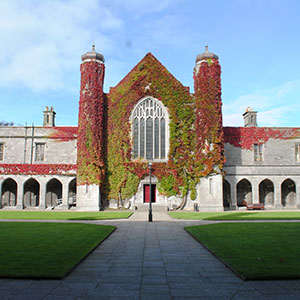
Guiding Breakthrough Research at University of Galway
We explore and facilitate commercial opportunities for the research community at University of Galway, as well as facilitating industry partnership.
-
Alumni & Friends

Alumni & Friends
There are 128,000 University of Galway alumni worldwide. Stay connected to your alumni community! Join our social networks and update your details online.
-
Community Engagement
Community Engagement
At University of Galway, we believe that the best learning takes place when you apply what you learn in a real world context. That's why many of our courses include work placements or community projects.
 Accessibility & Language
Marine and Freshwater Resources: Management (MSc)


MSc (Marine and Freshwater Resources: Management)
College of Science and Engineering- Title of Award
- Master of Science
- Course Code
- MSC-MFR
- Average Intake
- 20
- Delivery
- On Campus
- NFQ
- Level 9
- Award Type
- Major
- Next Intake
- September 2026
- Duration
- 1 year, full-time
- ECTS Weighting
- 90
Why Choose This Course?
Course Information
Who is this course for?
This course is ideally suited for graduates with a degree in science, engineering, or geography, or those with relevant work experience. It is also targeted at professionals in industry, government, and the regulatory sector who wish to upskill or further develop their resources and knowledge base. Realistically, anyone who has a passion for water or an interest in the topic is suited to this course. The course aims to equip students with the skills required to start addressing some of the critical challenges society will face regarding human impact on the aquatic environment during the 21st century.
What will I study?
The MSc is a 90 ECTS programme, based on a model that includes 60 ECTS from taught modules and a 30 ECTS research project in Semester 3.
The 60 ECTS taught component is comprised of 40 credits from core modules and 20 credits from optional modules, split across Semesters 1 and 2. Modules are delivered via lectures, seminars, workshops, teaching technologies, online participation, and individual research.
Core modules:
- Environmental Problems in Marine and Freshwater Environments: Methodological Aspects and Applications
- Environmental Problems & Solutions from Land to Sea
- Operational Oceanography
- Water Framework Directive (WFD)
- Environmental and Human Health
- Communicating Research
- Green Labs Principles & Practice
Optional modules:
- Sustainability Planning and Policy for Marine Environments
- Global Change
- Introduction to Data Analysis Tools for Earth and Ocean studies
- Invasive Species and Biodiversity
- Ecosystem Science
- Project Management
- Programming for Data Science
- Geospatial Techniques
- Data Analysis for Sustainability Research
- Legislation for Environmental Scientists
Students complete an individual research project (30 ECTS) in Semester 3, which involves preparing a literature review, identifying research questions, and writing a final report. This project offers an opportunity to conduct independent research and apply learning from the course content to original work.
This ‘Curriculum Information’ is an automatic sync with Akari and displays the current academic year curriculum as represented in AKARI. The next update to this will take place in Aug/Sept 2025 when the new academic year information is rolled over on AKARI. There are a couple of important notes on this:
- The information that was inputted into AKARI by the Apr 2024 deadline is what is currently appearing on the course pages. This will carry over to the new template.
- Any changes that are made throughout the year on Quercus are fed into Blackboard but not AKARI, therefore will not be presented on the course page of the website. Manual updates are not possible to the curriculum information that is synced between Akari and website.
- You may notice that the AKARI Curriculum Information is not displaying at all on your course page. Please advise us of this and the sync can be turned back ‘on’.
- There are some courses where the AKARI feed is not suitable for display (due to complex course structures etc.). For these courses, the previous section ‘What will I study?’ will be the place where detail should be added.
- In time this will be replaced with CourseLeaf content.
Curriculum Information
Curriculum information relates to the current academic year (in most cases).Course and module offerings and details may be subject to change.
Glossary of Terms
- Credits
- You must earn a defined number of credits (aka ECTS) to complete each year of your course. You do this by taking all of its required modules as well as the correct number of optional modules to obtain that year's total number of credits.
- Module
- An examinable portion of a subject or course, for which you attend lectures and/or tutorials and carry out assignments. E.g. Algebra and Calculus could be modules within the subject Mathematics. Each module has a unique module code eg. MA140.
- Optional
- A module you may choose to study.
- Required
- A module that you must study if you choose this course (or subject).
- Semester
- Most courses have 2 semesters (aka terms) per year.
Year 1 (90 Credits)
RequiredEV6104: Environmental and Human Health
EV6104: Environmental and Human Health
Semester 1 and Semester 2 | Credits: 5
This module explores the relationships between environment, biodiversity and health. It focuses on key topics within SDG3, SDG11, SDG14, SDG15, and supports SDG6, SDG7, Students become competent in assessing key aspects of environmental quality. Students evaluate linkages between emerging research, policy makers and practitioners at international and European levels to inform evidence based policy and practice in relation to health and environment.
(Language of instruction: English)
Learning Outcomes
- Assess the key aspects of environmental quality and interactions between environment, health and wellbeing. This supports topics in SDG3, SDG11, SDG14, SDG15.
- Critically appraise existing evidence in relation to benefits to health from the environment. This addresses key topics in SDG3, SDG11, SDG14, SDG15.
- Evaluate the provision of green spaces and benefits to health. This addresses key topics in SDG3, SDG6, SDG7, SDG11, SDG14, SDG15.
- Critique the effectiveness of governmental policies and legislation to benefit human health and wellbeing in relation to the environment. This supports targets within SDG3, SDG14, SDG15 and SDG17.
Assessments
- Continuous Assessment (100%)
Teachers & Administrators
Click a name to search for their researcher profile. Note: Only teachers publish research profiles.
Reading List
- "Forests, Tree and Human Health." by Editors: Nilsson, K., Sangster, M., Gallis, C., Hartig, T., de Vries, S., Seeland, K., Schipperijn, J. (Eds.)
ISBN: ISBN 978-90-4.
Publisher: Springer
Note: Module offerings and details may be subject to change.
RequiredEV6103: Environmental Problems & Solutions From Land To Sea
EV6103: Environmental Problems & Solutions From Land To Sea
Semester 1 and Semester 2 | Credits: 10
This module utilises case studies to focus on environmental problems and their solutions. It explores best practice in the use of mitigation strategies to ameliorate environmental damage. Special reference will be made to the complexities in solving environmental problems (e.g. social, economic & cultural factors and environmental policy drivers). Particular emphasis will be placed on enhancing student competences to develop innovative and sustainable solutions to environmental problems. This module supports all SDGS and focuses on SDGs 2,3,4, 6, 7,8,9 & 11 & 13, 14 & 15, and 17.
(Language of instruction: English)
Learning Outcomes
- Differentiate between good and poor environmental practice relating to a range of developments. This outcome is strongly focussed on SDG11, SDG13, SDG14, SDG15 and SDG16.
- Evaluate appropriate mitigation strategies for specific developments, with a strong focus on SDG11.
- Design sustainable solutions to environmental problems. This outcome supports all SDGs.
Assessments
- Continuous Assessment (100%)
Teachers & Administrators
Click a name to search for their researcher profile. Note: Only teachers publish research profiles.
Reading List
- "Effective Judicial Protection and the Environmental Impact Assessment Directive in Ireland (Modern Studies in European Law)." by Ryall, A.
Publisher: Hart Publishing.
Note: Module offerings and details may be subject to change.
RequiredEOS5109: Environmental Problems (M&F) in Methodological Aspects and Applications
EOS5109: Environmental Problems (M&F) in Methodological Aspects and Applications
Semester 1 and Semester 2 | Credits: 5
This module will provide students with training, technical competencies and critical thinking abilities in laboratory, field and research skills that focus on all aspects of water quality monitoring and management. This will equip participants with expertise in monitoring programme design, quality assurance, data analysis, monitoring and assessment of marine and freshwater (including groundwater) quality with chemical and ecological methods. The programme will also provide opportunities to participate in field workshops. Students will also learn about and get an insight into methodological analytical approaches and suitable instrumental techniques important in marine and freshwater environmental assessment.
(Language of instruction: English)
Learning Outcomes
- Describe the principles of environmental chemical analytical methods and the importance of environmental concepts, terms, principles, and methods
- Identify the need for interdisciplinary approaches to advancing knowledge and solving problems in marine and freshwater monitoring and develop your ability to adapt and apply methodology to the solution of environmental problems
- Plan, design and execute environmental assessment experiments, including good sampling practice, processing, and storage
- Undertake field investigations in a responsible and safe manner
- Prioritise of the suitable modern analytical instrumentation required to determine the concentration of different contaminants in the aquatic environment
- Develop and apply appropriate data collection processes and demonstrate an ability to select appropriate techniques and procedures for environmental monitoring
- Critically apply appropriate analysis methods to research questions and data
- Define the role of biomonitors and bioindicators in environmental assessment, recognising their ecological basis in the EU Water Framework Directive and the Marine Strategy Framework Directive
- Prepare for professional employment or doctoral studies in the marine and freshwater sciences
Assessments
- Continuous Assessment (70%)
- Oral, Audio Visual or Practical Assessment (30%)
Teachers & Administrators
Click a name to search for their researcher profile. Note: Only teachers publish research profiles.
Reading List
- "Environmental Monitoring and Characterization" by Janick Artiola Ian Pepper Mark Brusseau
ISBN: 9781483299792.
Note: Module offerings and details may be subject to change.
RequiredEOS5108: Operational Oceanography
EOS5108: Operational Oceanography
Semester 1 | Credits: 5
This module provides postgraduate students undertaking MSc or PhD studies with an introduction to Operational Oceanography, an evolving multi-disciplinary field which involves the application of archived and near real time oceanography data for operational applications (e.g. climate change studies, detection of harmful algal blooms etc.). The course consists of two lectures a week on topics related to practical and applied aspects of operational oceanography. Topics include the following: application, maintenance and data analysis of common instrumentation in oceanography (e.g. Seabird CTD data, Argo floats), databases and dataflags, time series data, bio-optics, CO2 parameters, nutrients and satellite derived data. The students will also complete fortnightly practical exercises. This module in particular will focus on the UN SDG 14 indicators and the UN Decade for Ocean Science Global Challenges. Where possible guest lecturers from the Marine Institute and other Irish institutions will be invited to talk/discuss their research related to operational oceanography. International guest lecturers working in SOLAS, IMBER, GEOTRACES or other SCOR related projects will also be included where possible.
(Language of instruction: English)
Learning Outcomes
- Evaluate and assess the role of Operational Oceanography in oceanographic research involving Essential Ocean Variables (EOVs) and Essential Climate Variables (ECVs) in the context of UN SDG 14 and the UN Decade for Ocean Science.
- Summarise and critique the basic science behind the measurement of EOVs and ECVs in the ocean.
- Have a working knowledge and understanding of the current availability of data for EOVs and ECVs related to specific case studies in operational oceanography and be able to analyze and interpret these datasets in order to create new data products.
Assessments
- Continuous Assessment (100%)
Teachers & Administrators
Click a name to search for their researcher profile. Note: Only teachers publish research profiles.
The above information outlines module EOS5108: "Operational Oceanography" and is valid from 2023 onwards.Note: Module offerings and details may be subject to change.
RequiredEOS5106: Marine and Freshwater Resources: Monitoring and Management Dissertation Project
EOS5106: Marine and Freshwater Resources: Monitoring and Management Dissertation Project
12 months long | Credits: 30
Each student will conduct and individual research project within the area of marine and freshwater resources: monitoring and management. This involves preparing a literature review, identifying knowledge gaps, research questions and hypotheses and writing a final report of the research findings. This offers an opportunity for the students to apply learning from the course content to conduct independent research and original work. This module involves a series of discussions with supervisors and stakeholder and progress reporting to supervisors within agreed timeframes.
(Language of instruction: English)
Learning Outcomes
- Conduct effective and independent research for a project
- Critically analyse research data and critically discuss the results and outcomes of the research with an emphasis on how the findings add to the current understanding of the topic in marine and freshwater science and present them in an appropriate manner
- Generate new knowledge through the application of specific research and experimental methods
- Demonstrate an ability to conduct scientific research, formulate research questions and apply these advances skills in the delivery of a quality research project
- Make a presentation of the findings of the research Thesis and know how to describe and disseminate the research
- Write a scientific paper based on research according to the guidelines of an appropriate journal
Assessments
- Continuous Assessment (90%)
- Oral, Audio Visual or Practical Assessment (10%)
Teachers & Administrators
Click a name to search for their researcher profile. Note: Only teachers publish research profiles.
The above information outlines module EOS5106: "Marine and Freshwater Resources: Monitoring and Management Dissertation Project" and is valid from 2023 onwards.Note: Module offerings and details may be subject to change.
RequiredBI5108: Green Lab Principles and Practice
BI5108: Green Lab Principles and Practice
Semester 1 | Credits: 5
This module aims to provide a general overview of key environmental concepts such as climate change, plastic pollution, principles of sustainability, sustainable development goals, and biodiversity. It will briefly explore how perspectives from psychology, sociology, communication, circular and doughnut economy, and the study of ethics and governance provide us with insights into how perception and behaviour influence responses to environmental issues. In addition, the life-cycle of materials, and the environmental impact of the resources and equipment typically used in scientific laboratories will be examined in some detail. These ideas will form the backdrop to a focused study on how the organisation of, and practices in, scientific laboratories can be reformed to reduce their environmental footprint and be established on a more sustainable basis.
(Language of instruction: English)
Learning Outcomes
- Use what you have learned about the key factors influencing the earth’s climate- and eco-systems to list lab-related activities/operations that are contributing to the global climate and biodiversity crisis.
- List the psycho-social barriers to your own and others’ behaviour when it comes to implementing sustainable practices within labs and with these in mind, apply best practices when communicating the need to adopt and expand lab greening policies.
- Express the day-to-day operations of a typical lab in terms of the core principles of sustainability, planetary boundaries and associated metrics.
- List lab plastic resins in terms of their capacity to be recycled or reused and propose ways that the principles of the circular economy and doughnut economic actions could be applied to reduce all types of lab waste.
- Explain how this module aligns with SDGs 11-13 and how you could imagine yourself having a leadership role in assisting compliance with national and international policies that mitigate the negative impacts that lab work has on the environment.
Assessments
- Department-based Assessment (50%)
- Research (50%)
Teachers & Administrators
Click a name to search for their researcher profile. Note: Only teachers publish research profiles.
Reading List
- "Sustainability: the basics" by Peter Jacques
ISBN: 978-04156084.
Publisher: Routledge
Chapters: All - "Don't even think about it: why our brains are wired to ignore climage change" by George Marshall
ISBN: 978-163286102.
Publisher: Bloomsbury
Chapters: All - "Half-Earth: Our planet's fight for life" by E.O. Wilson
ISBN: 978-163149252.
Publisher: Liveright
Chapters: All - "On Fire: the burning question of the green new deal" by Naomi Klein
ISBN: 978-198212991.
Publisher: Simon & Schuster
Chapters: All - "This changes everything: capitalism v the climate" by Naomi Klein
ISBN: 978-145169739.
Publisher: Simon & Schuster
Chapters: All - "Out of the wreckage: a new politics for an age of crisis" by George Monbiot
ISBN: 978-178663289.
Publisher: Verso
Chapters: All - "Doughnut Economics: Seven ways to think like a 21st century economist" by Kate Raworth
ISBN: 847941397.
Publisher: Random House - "Half-Earth" by Edward O. Wilson
ISBN: 9781631492525.
Publisher: Liveright - "The Ethics of Climate Change: Right and Wrong in a Warming World" by James Garvey
ISBN: 0826497373.
Publisher: A&C Black - "The Climate Book" by Greta Thunberg
ISBN: 9780141999043.
Publisher: Penguin Press - "A Field Guide to Climate Anxiety" by Sarah Jaquette Ray
ISBN: 9780520343306.
Publisher: Univ of California Press
Note: Module offerings and details may be subject to change.
RequiredEV5105: Communicating Research
EV5105: Communicating Research
Semester 2 | Credits: 5
Research communication aims to effectively present research, to generate support for engaged research, to inform decision making and policy, and to engage the general public. This module provides an introduction to research communication and community engagement and enables students to critically engage with different communication methods. The module explores different ways and technologies for communication in relation to different audiences and examines the range of tools available and their use in a communication/public engagement context.
(Language of instruction: English)
Learning Outcomes
- Demonstrate a comprehensive knowledge and understanding of the thoretical background that underpins research communication with different audiences.
- Assess the efficiency and relevance of different approaches to research communication
- Define current practice in relation to communication and social media use and relate this to best practice.
- Appraise the principles of communication as they pertain to empirical research findings and to evaluate how respective research might best be communicated.
- Demonstrate ability to apply appropriate communication methods relative to different audiences.
- Appraise the merit and value of science and research communication activities to help improve communication practices
- Apply all the learning outcomes above to benefit the environmental and to promote sustainability.
Assessments
- Continuous Assessment (100%)
Teachers & Administrators
Click a name to search for their researcher profile. Note: Only teachers publish research profiles.
The above information outlines module EV5105: "Communicating Research" and is valid from 2024 onwards.Note: Module offerings and details may be subject to change.
RequiredEV5101: Water Framework Directive (WFD)
EV5101: Water Framework Directive (WFD)
Semester 2 | Credits: 5
This module explores the linkages between the Water Framework Directive (WFD) and conserving biodiversity. It outlines how different EU countries have defined targets such as "good ecological status". Case studies illustrate that increases in the resilience of biodiversity in aquatic ecosystems can be achieved by balancing sustainable water use with the long-term protection of available resources, while recognising limitations to the legislation. Emphasis will be placed on understanding the WFD and connections with other plans and programmes.
Learning Outcomes
- Summarise and compare the components of the Water Framework Directive
- Determine the ecological requirements of water-dependent habitats and species designated under the Habitats Directive
- Identify and critique the limitations of the Water Framework Directive
- Review a range of monitoring programmes devised to meet the obligations of the Water Framework Directive
- Identify and assess linkages with other nature conservation obligations
- Evaluate the effectiveness of the Water Framework Directive
Assessments
- Continuous Assessment (100%)
Teachers & Administrators
Click a name to search for their researcher profile. Note: Only teachers publish research profiles.
Reading List
- "The implications of the EU Water Framework Directive for plans, plan making and development control." by Brooke, J. & Cork, M.
Publisher: Department for Communities and Local Government - "Introduction to the new EU Water Framework Directive" by European Commission
- "CIS Guidance Document No. 11: Planning Process," by European Commission
Publisher: EC - "Water Framework Directive Monitoring Programme." by Environmental Protection Agency
Publisher: EPA - "River Basin Management Planning - A practical Guide for Public Authorities," by Department of the Environment, Heritage and Local Government
Publisher: DEHLG - "Classifying ecological status under the European Water Framework Directive: the need for monitoring to account for natural variability. Aquatic Conservation:Marine and Freshwater Ecosystems" by Irvine, K.
Chapters: 14: pp. 107–112 - "Using historical data, expert judgement and multivariate analysis in assessing reference conditions and benthic ecological status,according to the European Water Framework Directive." by Muxika, I., Borja, A., Bald, J.
Chapters: Marine Pollution Bulletin Volume 55; Issues 1-6: pp. 16-29
Note: Module offerings and details may be subject to change.
OptionalEOS6101: Global Change
EOS6101: Global Change
Semester 1 | Credits: 5
This course introduces students to multi-disciplinary studies of the physical forcings and earth/ocean system responses that induce and drive environmental change on different temporal and spatial scales. Emphasis here is placed on understanding and communicating the basic science behind both natural climate cycling (e.g. Milankovitch/ENSO) and more recent anthropogenic forcings (e.g. fossil
fuel burning and agricultural practices).
(Language of instruction: English)
Learning Outcomes
- Critically discuss the basic science behind the natural processes that impact global climate
- Recognize and interprete geological and chemical indicators of present and past global change in the environment (atmosphere, water, sediment/mineral).
- Evaluate and appraise how human activities can be drivers of global change
- Explain the role of the IPCC and how it works
- Develop knowledge of current climate change adaptation strategies
- Compile scientific information from multiple sources and prepare a briefing document for a general audience.
- Present scientific perspectives on global change to both a specific scientific audience and to the general public
Assessments
- Written Assessment (70%)
- Continuous Assessment (30%)
Teachers & Administrators
Click a name to search for their researcher profile. Note: Only teachers publish research profiles.
Reading List
- "Introduction to Modern Climate Change" by Andrew Dessler
ISBN: 9780521173155.
Publisher: Cambridge University Press - "Climate Change and Climate Modeling" by David Neelin
ISBN: 0521602432.
Publisher: Cambridge University Press
Note: Module offerings and details may be subject to change.
OptionalEV507: Ecosystem Science
EV507: Ecosystem Science
Semester 1 and Spring | Credits: 5
This module explores how the ecosystem can be assessed from a number of different perspectives including; i.e. geology, hydrology, soils, biodiversity, etc. Emphasis will be placed on understanding the connections between these parameters with a view to producing an overall integrated ecosystem assessment procedure.
(Language of instruction: English)
Learning Outcomes
- Recognise the influence of abiotic factors such as geology and hydrology on the ecology of the ecosystem
- Interrelate different parameters that comprise an ecosystem
- Differentiate between a number of different ecosystem types
- Examine ecosystem function and apprise ecosystem services provided
- Identify and assess main landscape features
Assessments
- Continuous Assessment (100%)
Teachers & Administrators
Click a name to search for their researcher profile. Note: Only teachers publish research profiles.
Reading List
- "Environmental science – Earth as a living planet" by Botkin, D.B. & Keller, E.A.
- "Ireland. New Naturalist Library." by Cabot, D.
- "Ecological concepts, pp. 43-78. British Ecological Society" by Cherrett, J.M.
Publisher: Blackwell Scientific Publishing - "Linking Geology and Biodiversity" by English Nature
- "Principles and methods in landscape ecology" by Farina, A
- "Land mosaics – The ecology of landscapes and regions." by Forman, T. R.T
Publisher: Cambridge University Press - "The making of the Irish landscape since the ice age" by Hall, V.
Publisher: Collins Press. - "Collins Press." by Holland, C.H. & Sanders, I.S.
Publisher: Edinburgh: Dunedin Press. - "Millennium ecosystem assessment" by n/a
Publisher: Island Press - "Ecology: The experimental analysis of distribution and abundance." by Krebs, C.J.
Publisher: Pearson Education. - "Measuring biological diversity." by Magurran, A. E.
Publisher: Blackwell Publishing.
Note: Module offerings and details may be subject to change.
OptionalEOS610: Introduction to Data Analysis Tools for Earth and Ocean studies
EOS610: Introduction to Data Analysis Tools for Earth and Ocean studies
Semester 1 | Credits: 5
This module provides students undertaking research in Oceanography, Earth sciences or Environmental projects with some of the key skills they will need for their Masters or PhD project work. These skills include mathematics for scientists, MATLAB and Labview programming, analysis of large oceanographic and earth science data (ODV and GMT) and an introduction to applying these tools to key earth and ocean processes (e.g. tides, seismic waves, climate time series etc). The course will consist of a weekly lecture over the course of the semester which will provide guidance on practical exercises to be completed by the class. Course load is 10 hours per week; 1 hour of lectures, 2 hours of practical, 3 hours for practical assignments and 4 hours of directed reading: 12 x10 = 120 hours over the semester.
(Language of instruction: English)
Learning Outcomes
- Demonstrate an understanding of the mathematical methods used to analyze Earth, Marine and Environmental sciences on spatial and temporal scales.
- write computer programs in Matlab or Labview (R and Python optional) for processing and displaying data.
- Analyse common oceanographic data, including Sentinel, ARGO, WOCE, CDIAC and GEOTRACES IODP datasets, using ODV or Matlab.
- locate and use online data sources for essential ocean variables (EOVs).
- Collect and display data from a variety of data formats (netcdf, HDF, ascii etc)
Assessments
- Continuous Assessment (100%)
Teachers & Administrators
Click a name to search for their researcher profile. Note: Only teachers publish research profiles.
Reading List
- "Modeling Methods for Marine Science" by Glover, Jenkins and Doney
ISBN: 9780521867832.
Publisher: Cambridge University Press - "Matlab Recipes for Earth Scientists" by Trauth
ISBN: 9783662462430.
Publisher: Springer - "Data Analysis Methods in Physical Oceanography" by Thomson and Emery
ISBN: 9780123877826.
Publisher: Elsevier
Note: Module offerings and details may be subject to change.
OptionalIE446: Project Management
IE446: Project Management
Semester 1 | Credits: 5
Engineering and scientific projects are increasingly conducted in environments characterised by technological disruption, stakeholder complexity, and high levels of uncertainty. Traditional project management approaches, which emphasise detailed upfront planning and strict adherence to predefined scope, are often insufficient for addressing these conditions. Evidence suggests that many project failures stem not from technical deficiencies but from poorly defined problems, limited understanding of user needs, and an inability to adapt as new information emerges.
This course introduces a value-based approach to project management, placing emphasis on identifying the right problem before designing solutions. Students learn to engage stakeholders, frame complex problems, and translate insights into adaptive project plans. Drawing on principles from agile project management, design thinking, and systems thinking, the course equips students with practical tools for managing projects in uncertain and rapidly changing environments.
A central premise of the course is that successful projects are those that create meaningful value for users and stakeholders, rather than merely delivering outputs according to schedule. Students therefore develop the ability to move from problem discovery to iterative solution development, continuously testing assumptions and refining project direction based on feedback and evidence.
Through hands-on workshops, real-world case studies, and collaborative projects, participants gain experience using contemporary project management tools such as stakeholder mapping, problem framing methods, agile planning frameworks, and value measurement techniques. The course emphasises experimentation, reflection, and teamwork, enabling students to develop the adaptive capabilities required to lead complex engineering and scientific initiatives.
By the end of the course, students will be equipped to design and manage projects that are user-centred, value-driven, and resilient in the face of uncertainty.
(Language of instruction: English)
Learning Outcomes
- Analyse stakeholder ecosystems to identify user needs, project constraints, and sources of value.
- Frame complex project problems by synthesising stakeholder insights, root cause analysis, and strategic objectives.
- Translate project opportunities into structured plans, including user stories, requirements backlogs, and minimum viable solutions.
- Apply agile project management methods, including Scrum and Kanban, to plan, organise, and manage project work.
- Evaluate project progress using qualitative and quantitative metrics, including agile performance indicators and stakeholder feedback.
- Design adaptive project strategies that respond effectively to uncertainty, changing requirements, and emerging risks.
- Collaborate effectively in multidisciplinary teams, demonstrating leadership, communication, and reflective learning.
Assessments
- Continuous Assessment (100%)
Teachers & Administrators
Click a name to search for their researcher profile. Note: Only teachers publish research profiles.
The above information outlines module IE446: "Project Management" and is valid from 2026 onwards.Note: Module offerings and details may be subject to change.
OptionalEV534: Invasive Species & Biodiversity
EV534: Invasive Species & Biodiversity
Semester 2 | Credits: 5
This module explores how the local biodiversity can be impacted by a range of invasive species. In particular, this module focuses on the impacts of invasive species on native biodiversity and on the role of humans as vectors of invasive species and minimising the impacts of invasive species. In addition, it outlines the role of planning authorities in supporting resilient ecosystems through invasive species eradication or control programmes. Emphasis will be placed on understanding how invasive species become established and will look at case studies highlighting current thinking on control or eradication measures.
Learning Outcomes
- Apply legislative obligations and implement policy measures against invasive species
- Identify a number of invasive plants and animals, and determine the role of humans in different mechanisms of dispersal/spread and colonisation
- Assess impacts of invasive species on a range of habitat types
- Evaluate eradication and biosecurity strategies in terms of cost-effectiveness, time, efficacy, local community participation and implementation
- Prepare, produce and implement control and eradication guidelines
- Apply all the learning outcomes above to benefit species management to promote the protection of terrestrial and aquatic species and ecosystems in line with SDGs 14 and 15.
Assessments
- Continuous Assessment (100%)
Teachers & Administrators
Click a name to search for their researcher profile. Note: Only teachers publish research profiles.
Reading List
- "Alien invasive species in Irish water bodies. pp 61-69. EPA (2007-W-MS-2-S1) STRIVE End of Project Report" by Maguire, C., Gallagher, K., Christine Maggs, C., Dick, J., Caffrey, J. O’Flynn, C., Fitzpatrick, U., Kelly, J. & Harrod, C.
- "The ecology, distribution and invasiveness of Gunnera L. species in Connemara, western Ireland. Biology and Environment: Proceedings of the Royal Irish Academy 111B. 3" by Sheehy Skeffington, M. and Hall, K.
- "Invasive species in Ireland. Unpublished report to Environment & Heritage Service and National Parks & Wildlife Service." by Stokes, K., O'Neill, K. & McDonald, R.A.
Publisher: Quercus, Queens University Belfast, - "Ecophysical traits of invasive and non-invasive introduced Impatiens species." by Ugoletti, P., Stout, J.C. and Jones, M.B.
Publisher: Biology and Environment: Proceedings of the Royal Irish Academy 111B. pp1-14
Note: Module offerings and details may be subject to change.
OptionalEV515: Biodiversity Legislation & Policy
EV515: Biodiversity Legislation & Policy
Semester 2 | Credits: 5
This module explores how conservation legislation and biodiversity policy can be linked into day to day planning work at a strategic and local level. Emphasis is placed on understanding the connections between national biodiversity actions, species action plans and local biodiversity action plans.
(Language of instruction: English)
Learning Outcomes
- Apply a range of measures to meet policy drivers and legal obligations in day-to-day work
- Interrelate different articles that comprise the Habitats Directive with measures to conserve the wider countryside and climate change adaptation strategies
- Critique the success of species action plans and conservation strategies to contribute to favourable conservation status
- Assess the effectiveness of site designation to benefit conservation
- Evaluate European Court Judgements issued throughout Europe including Ireland for failure to transpose the terms of the Habitats Directive
- Apply all the learning outcomes above to benefit biodiversity at national and local levels, promoting the protection of habitats and species in line with SDGs 14 and 15.
Assessments
- Continuous Assessment (100%)
Teachers & Administrators
Click a name to search for their researcher profile. Note: Only teachers publish research profiles.
Reading List
- "Nature and Biodiversity cases: Ruling of the European Court of Justice" by European Communities
- "Biodiversity in the Coastal Zone: Status and Governance: A Report for the Working and Educating for Biodiversity (WEB) Group" by Flannery, W, Kindermann, G, Lynch, K & Potito, A
- "Guidance on the maintenance of landscape features of major importance for wild flora and fauna – Guidance on the implementation of Article 3 of the Birds Directive" by Kettunen, M., Terry, A., Tucker, G. & Jones, A.
- "How effective are European agri-environment schemes in conserving and promoting biodiversity?’ Journal of applied ecology, 40(6)" by Kleijn, D. & Sutherland, W.
- "‘Does conservation on farmland contribute to halting the biodiversity decline?’ Trends in ecology & evolution, 26(9)" by Kleijn D., Rundlöf M., Scheper, J., Smith, H.G. & Tscharntke, T.
- "‘Bringing politics back in’. Domestic conflict and the negotiated implementation of EU nature conservation legislation in Ireland. Journal of environmental policy & planning" by Laffan, B. & O' Mahony, J.
- "Development and design of locally targeted HNV programmes in Ireland - The Aran Islands Case Study, pp. 74-75. In “Conserving Farmland Biodiversity – Lessons learned and future prospects. Teagasc" by McGurn, P. & Moran, J.
- "The status of EU protected habitats and species. Backing documents, maps, Article 17 forms. Volumes 1-3. National Parks and Wildlife Service. Department of the Environment, Heritage and Local" by NPWS
- "‘The ecological status of grasslands on lowland farmlands in western Ireland and implications for grassland classification and nature value assessment’, Biological" by Sullivan, C., Sheehy-Skeffington, M., Gormally, M. & Finn, J.
Note: Module offerings and details may be subject to change.
OptionalPAB5128: Data Analysis for Sustainability Research
PAB5128: Data Analysis for Sustainability Research
Semester 2 | Credits: 5
This module introduces learners to the foundations and applications of statistical data analysis in the context of sustainability research. The course is divided into two phases: the first phase will build foundational understanding through theoretical lectures and tutorials, while the second phase will focus on applying statistical methods using Python. The module culminates in a real-world data analysis hackathon to evaluate students’ ability to apply skills under time constraints and the preparation of a secondary data review applying critical analysis of existing datasets to extract insights and support evidence-based conclusions.
(Language of instruction: English)
Learning Outcomes
- Evaluate sustainability-focused datasets using statistical reasoning and foundational concepts such as correlation, regression, and significance testing.
- Apply hypothesis testing and model validation techniques to interpret quantitative results with scientific rigour.
- Demonstrate effective data visualisation skills to enhance the interpretation and communication of analytical findings.
- Design and implement Python-based workflows for data cleaning and statistical modelling using libraries such as pandas, matplotlib, and statsmodels.
- Critically assess and communicate the strengths and limitations of data analysis results through code notebooks, reports, and presentations.
- Collaborate under real-world constraints to develop and present a data-driven solution to a sustainability challenge.
Assessments
- Continuous Assessment (100%)
Teachers & Administrators
Click a name to search for their researcher profile. Note: Only teachers publish research profiles.
The above information outlines module PAB5128: "Data Analysis for Sustainability Research" and is valid from 2026 onwards.Note: Module offerings and details may be subject to change.
OptionalLW3124: Legislation for Environmental Scientists
LW3124: Legislation for Environmental Scientists
Semester 2 | Credits: 5
This module exposes students to the considerable amount of environmental legislation that exists in Ireland. It encourages students to think about how the legislation is implemented and how it could be used in their future careers.
This module will examine the legal aspects of a number of different sources of pollution including water pollution (inland and coastal), air pollution, waste, noise etc. The common law nuisance principles and the rule in Rylands v Fletcher will be examined, as well as recent case law in this area. Relevant domestic legislation (in particular the Water Pollution Act and the Air Pollution Act) as well as EU developments will be considered, particularly from the point of view of monitoring and penalties for breach.
At the end of the module, students will have knowledge of the central principles of pollution control law and the structure of the system including the institutional arrangements, the role of the Environmental Protection Agency, and the development of Integrated Pollution Controls. In addition, special attention will be paid to specific topics such as wildlife protection, climate change, eco-system management, and access to information.
(Language of instruction: English)
Learning Outcomes
- Consider both national and European legislation in the context of its impact on environmental quality
- Deconstruct legislation with reference to the purpose of the legislation, the powers within the legislation, the offences and penalties contained in the legislation construct
- Consider, using real life scenarios, the legislation that could be used in such scenarios for the betterment of the environment
Assessments
- Written Assessment (100%)
Teachers & Administrators
Click a name to search for their researcher profile. Note: Only teachers publish research profiles.
Reading List
- "Yvonne Scannell, Environmental and Land Use Law (Thomson Round Hall, 2006)" by n/a
Note: Module offerings and details may be subject to change.
OptionalMI5106: Environmental Resilience
MI5106: Environmental Resilience
Semester 2 | Credits: 5
The module is future oriented and explores the intersection of global change, nature and public health from a resilience perspective. It encompasses a wide range of theory and debate spanning social and environmental issues, and links international examples to local context and relevance. The module will challenge students to use an interdiscipli-nary approach, drawing especially from resilience thinking, to critically reflect on current academic and public, civic, policy debates for a range of social-environment-development topics. Students will be introduced to theoretical concepts and methods of resilience thinking, and will conduct group and individual assignments that utilise these concepts and methods. The module supports topics within SDGs 2, 4, 6, 7, 8, 9 and focusses on targets within SDGs 3 11, 13, 14, 15, 17.
(Language of instruction: English)
Learning Outcomes
- Define and explain key aspects of resilience thinking that relate to SDG 2, SDG3, SDG4, SDG6, SDG7, SDG8, SDG11, SDG13, SDG14, SDG15, SDG16, and SDG17.
- Critically assess existing evidence in relation to how interacting systems of people and nature can best be managed in the face of uncertainty and shocks in support of SDG2, SDG3, SDG6 SDG7, SDG9, SDG11 SDG13, SDG14, and SDG15.
- Evaluate the importance of the approaches employed to communicate social-environmental issues and how that impacts on stakeholders’ responses. This relates to inclusion and education (SDG4, SDG16 and SDG17)
- Apply and appraise resilience techniques that are used to help to reduce work/life-based pressures and promote health and well-being in the context of SDG3, SDG4 and SDG8.
- Demonstrate use and application of interactive formats, dialogue techniques and reflective practice to explore concepts, understand lived realities or identify knowledge gaps as they apply to the SDGs.
Assessments
- Continuous Assessment (100%)
Teachers & Administrators
Click a name to search for their researcher profile. Note: Only teachers publish research profiles.
Reading List
- "Navigating Social-Ecological Systems" by Fikret Berkes,Johan Colding,Carl Folke
ISBN: 1139434799.
Publisher: Cambridge University Press - "Principles for Building Resilience" by Reinette Biggs
ISBN: 9781107082656.
Publisher: Cambridge University Press
Note: Module offerings and details may be subject to change.
OptionalTI6147: Sustainability Planning and Policy for Marine Environments
TI6147: Sustainability Planning and Policy for Marine Environments
Semester 2 | Credits: 10
This module critically reviews how society has viewed and used the marine environment through history, examines evolving views on how these systems have been valued, evaluates various policies and practices employed in its management, and explores current and future issues that threaten marine system functionality. Students will be introduced to a range of tools used in managing the marine environment, investigate policy and practice suitability at multiple scales, and gain theoretical insights on sustainability in a marine and coastal context, using Ireland as a case study.
(Language of instruction: English)
Learning Outcomes
- Critique and apply a range of geographical concepts and discourse to marine spatial planning debates
- Develop and employ a practical understanding of relevant EU Directives related to the planning and use of marine and coastal systems, as well as related Irish legislation, policies, plans, and strategies
- Apply and critique the use of various regulatory and participatory tools that promote concepts of sustainability in relation to established policy goals
- Develop and interpret spatial data through GIS to critically analyse emerging discourses on sustainability in marine and coastal systems
- Write in a way that explores, synthesises, and critiques academic material while relating it to advancements in the field of marine spatial planning
- Demonstrate independent thinking and strategic planning through group activities and discussion
- Demonstrate the ability to apply the knowledge gained throughout the course through various critical lenses to critique efforts that define and pursue sustainability within contemporary planning and policies of marine and coastal systems
Assessments
- Continuous Assessment (55%)
- Oral, Audio Visual or Practical Assessment (45%)
Teachers & Administrators
Click a name to search for their researcher profile. Note: Only teachers publish research profiles.
Reading List
- "Ocean Zoning: Making Marine Management More Effective" by Agardy, T.
ISBN: 1844078221.
Publisher: Earthscan
Note: Module offerings and details may be subject to change.
OptionalCT5198: Programming for Data Science
CT5198: Programming for Data Science
Semester 2 | Credits: 5
Using the R programming language and tidyverse libraries for exploratory data analysis, data visualisation, data modelling and data transformation.
(Language of instruction: English)
Learning Outcomes
- Evaluate the functionality of R and Python for data science
- Perform data cleaning, manipulation and wrangling techniques to specified data problems.
- Implement appropriate data visualisation techniques to examine real world datasets.
- Investigate statistical modelling techniques.
- Develop best practice in terms of reproducible documentation and version control.
- Gain an introductory level understanding of machine learning for data science
Assessments
- Written Assessment (70%)
- Continuous Assessment (30%)
Teachers & Administrators
Click a name to search for their researcher profile. Note: Only teachers publish research profiles.
The above information outlines module CT5198: "Programming for Data Science" and is valid from 2024 onwards.Note: Module offerings and details may be subject to change.
- Unique Combined Focus: This Master’s is unique because it combines both the marine environment and the freshwater environment, taking a holistic approach to the source-to-sea (land-to-sea) pathways.
- Industry-Informed Design: The course structure was developed based on a feasibility study and survey findings from prospective employers in both the private and public water science sectors.
- Cross-Sector Employability: The program provides training in cross-sector skills and competences that support national and international occupational mobility and enable graduates to work in and lead multidisciplinary teams.
- Practical & Field Experience: Students receive hands-on practical experience, including laboratory work, environmental sensitivity mapping, and time sampling on boats.
- Policy and Legislation: Training provides comprehensive knowledge regarding international directives and national legislation related to marine and freshwater resources, and the legal frameworks that underpin them.
- Scientific Leadership: The curriculum is designed to develop the capacity and capability for scientific leadership and solution-based approaches relevant to graduates' career trajectories.
The MSc in Marine and Freshwater Resources: Management will produce well-rounded, dynamic problem-solvers and leaders who can work in any area related to the marine and freshwater environments and associated industry. Graduates often gain meaningful employment immediately in the sector.
Sectors and Employers: Opportunities exist in sectors such as government, NGOs, and private companies, all driven to meet environmental targets set within international agreements. The course is relevant to professionals in Local Authorities, regulatory sectors, and environmental consultancy firms.
Examples of Roles: Graduates acquire multidisciplinary skills in science, communication, and management. Career paths include roles such as project managers, consultants, and advisors within public and private sectors in Ireland and internationally.
Further Study: The course provides a strong foundation and a portfolio of generic skills that help graduates compete for PhD programmes and improve their ability for other research roles in academia. The subject knowledge, transferable skills, and thesis elements are designed to provide the opportunity to carry out further research.
- Dr Liam Morrison
- Dr Gesche Kindermann
- Dr Caitriona Carlin
- Dr Robert Kennedy
- Peter Croot
- Dr Una FitzGerald
- Dr Oisín Callery
- Dr Kathryn Cormican
- Dr Rónán Kennedy
- Dr Napron Popattanachai
- Dr Karl Mason
- Dr Liam Carr
And also a series of Guest Lecturers
How will I learn?
You will learn through a mix of lectures, seminars, workshops, teaching technologies, online participation, and individual research. Students get lots of hands-on practical experience, including intensive laboratory work and fieldwork such as sampling on boats and environmental sensitivity mapping. The program fosters the development of advanced problem solving, analytical, and management skills necessary for scientific leadership.
How Will I Be Assessed?
Assessment is module specific but is primarily conducted through continual assessment, assignment, and project work. The overall combination of coursework and assessments provides a rational balance for students to excel. The major assessment component is the 30 ECTS Research Project in Semester 3.
Course queries:
lorna.larkin@universityofgalway.ie
Programme Director(s):
Dr Liam Morrison
School of Natural Sciences and the Ryan Institute
College of Science and Engineering
E: liam.morrison@universityofgalway.ie
T: 091 493 200
University of Galway recognises that knowledge and skills can be acquired from a range of learning experiences. This is in line with the National Framework of Qualifications (NFQ) goals which aim to recognise all learning achievements by supporting the development of alternative pathways to qualifications (or awards) and by facilitating the recognition of prior learning (RPL).
The Programme Board for Marine and Freshwater Resources: Management will consider non-standard applications, where both the appropriate discipline and required relevant experience are at the discretion of the Programme Board.
Further information is available on the University’s Recognition of Prior Learning website
Graduates of the MSc in Marine and Freshwater Resources Management will acquire key knowledge and transferable skills that they can utilize in any workplace, whether in academia or industry. Graduates develop the capacity for scientific leadership and solution-based approaches. Key skills include:
- Advanced problem solving, management, analytical and communication skills.
- The ability to apply analytical and technical skills required for research and application in marine and freshwater systems.
- Planning, organising and controlling activities to ensure successful project completion.
- Data assessment skills necessary to inform decision-making and management.
- Communicating results of monitoring, research and innovation, and engaging the public on ocean literacy.
- Transversal and multidisciplinary skills essential for national and international occupational mobility.
Accreditations & Awards


I have always had a great interest in the aquatic environment and how our interactions may have an impact on the health of its diverse ecosystems. This particular course provides a unique opportunity to study such interactions and their impacts across multiple disciplines for both freshwater and marine environments. It also provides excellent practical experience both in the field and laboratory, which is hugely beneficial in developing key transferable skills for the workplace. I would highly recommend this Masters course to anyone interested in improving their understanding of the processes.
Moya O'Donnell
Student
I am one of the inaugural students in the MSc Marine and Freshwater Quality and Resource Management. The program combines theory with excellent fieldwork, giving hands-on experience with ecological water testing, and offers optional modules from Project Management to Environmental Legislation and coding. It highlights the pressures on fresh and marine water, deepening appreciation of this precious resource. Liam’s engaging lectures and helpful guidance make the course highly recommended for future postgraduates.
Steve Lane
Student

With a background in social sciences and watershed science, I was drawn to this Master’s program for its interdisciplinary approach to environmental issues. The program exceeded my expectations, offering comprehensive, up-to-date coursework in a flexible learning environment. The small, diverse cohort fostered a strong sense of community, and learning from professors and industry guest speakers—especially program advisor Dr. Liam Morrison—was invaluable. His guidance helped me confidently discuss Irish-specific issues in interviews, leading to a role with Uisce Éireann before graduation.
Daniel McGuire
UISCE Eireann
One of my most meaningful academic experiences was completing the MSc in Marine and Freshwater Resources: Management and Monitoring at the University of Galway. With a background in chemistry and environmental regulation, I sought a programme linking freshwater and marine systems, which this MSc delivered. The balance of lectures, research, and expert guest speakers connected theory to practice and aligned with EU water regulations. The programme broadened my international perspective on water management and inspired the research that now forms the basis of my PhD.
Meet our Employers


.png)






Entry Requirements and Fees
Minimum Entry Requirements
Proposed 2.1 honours (or equivalent) in a related subject area is the minimum academic standard, though 2.2 students (or equivalent) with relevant experience will also be considered. The Programme Board will consider non-standard applications. The appropriate discipline and required relevant experience are at the discretion of the Programme Board.
Academic entry requirements standardised per country are available here.
English Language Entry Requirements
For applicants whose first language is not English, an English language proficiency of IELTS score of 6.5 is required (with no less than 6.5 in Writing and no less than 6.0 in any other band) or equivalent.
More information on English language test equivalency are available here.
Supporting Documents
You will be required to provide supporting documentation as part of your application. You can check here what supporting documents are required for this course.
You can apply online to the University of Galway application portal here.
Please review the entry requirements set out in the section above.
You will be required to upload supporting documentation to your application electronically. See the section above on entry requirements for further information on the supporting documentation required for this course.
Closing Dates
For this programme, there is no specific closing date for receipt of applications. Applications will be accepted on a rolling basis and course quotes will be reviewed continuously throughout the application cycle.
Notes
- You will need an active email account to use the website and you'll be guided through the system, step by step, until you complete the online form.
Browse the FAQ's section for further guidance.
Fees for Academic Year 2026/27
| Course Type | Year | EU Tuition | Student Contribution | Non-EU Tuition | Levy | Total Fee | Total EU Fee | Total Non-EU Fee |
|---|---|---|---|---|---|---|---|---|
| Masters Full Time | 1 | €8,900 | €28,500 | €140 | €9,040 | €28,640 |
For 26/27 entrants, where the course duration is greater than 1 year, there is an inflationary increase approved of 1.8% per annum for continuing years fees.
Postgraduate students in receipt of a SUSI grant – please note an F4 grant is where SUSI will pay €4,500 towards your tuition (2026/27). You will be liable for the remainder of the total fee. A P1 grant is where SUSI will pay tuition up to a maximum of €6,270. SUSI will not cover the student levy of €140.
Note to non-EU students: learn about the 24-month Stayback Visa here.
This scholarship is valued at €1,500 for EU students applying for full-time taught master's postgraduate courses. You will be eligible if:
- You have been accepted to a full-time taught master's course at University of Galway,
- You have attained a first class honours (or equivalent) in a Level 8 primary degree.
An application for the scholarship scheme is required (separate to the application for a place on the programme). The application portal for 2026 is now open and available here. Applications will close on the 30th September 2026. Full details available here.
Global Scholarships (standard text for all courses)
University of Galway offers a range of merit-based scholarships to students from a number of countries outside of the EU. Visit here for schemes currently available.
School of Natural Sciences Scholarship
Application Process
Students applying for full time postgraduate programmes from outside of the European Union (EU), You can apply online to the University of Galway application portal here.
Our application portal opens on the 1st October each year for each the following September.
Further Information
Please visit the postgraduate admissions webpage for further information on closing dates, documentation requirements, application fees and the application process.
Why University of Galway?
World renowned research led university nestled in the vibrant heart of Galway city on Ireland's scenic West Coast.
Contact the College of Science and Engineering
University of Galway, University Road, Galway, Ireland, H91 TK33


Downloads


Meet Our Alumni
Course Introduction
The Marine and Freshwater Resources: Management Master's program combines marine and freshwater resources management, assessing the vital land-to-sea pathway. You will gain advanced knowledge and skills to address critical 21st-century challenges like population expansion, climate change, and environmental pollution. It examines the impacts that both human and natural causes have on water quality and various contaminants and pathways. The course helps society manage water quality for future generations to come.
Marine and Freshwater Resources Management (MSc) Brochure