-
Courses
Courses
Choosing a course is one of the most important decisions you'll ever make! View our courses and see what our students and lecturers have to say about the courses you are interested in at the links below.
-
University Life

University Life
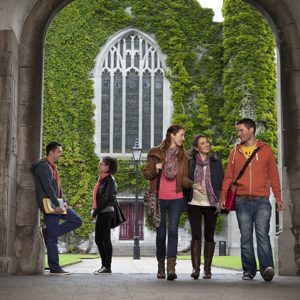
Each year more than 4,000 choose University of Galway as their University of choice. Find out what life at University of Galway is all about here.
-
About University of Galway

About University of Galway
Since 1845, University of Galway has been sharing the highest quality teaching and research with Ireland and the world. Find out what makes our University so special – from our distinguished history to the latest news and campus developments.
-
Colleges & Schools
Colleges & Schools
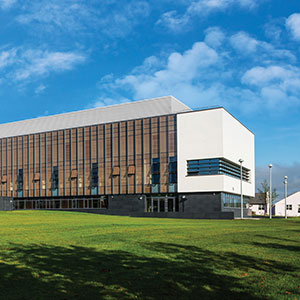
University of Galway has earned international recognition as a research-led university with a commitment to top quality teaching across a range of key areas of expertise.
-
Research & Innovation

Research & Innovation
University of Galway’s vibrant research community take on some of the most pressing challenges of our times.
-
Business & Industry
Guiding Breakthrough Research at University of Galway
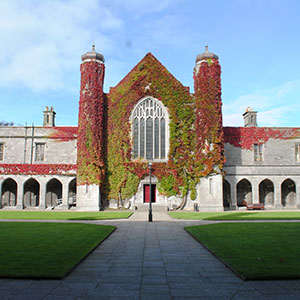
We explore and facilitate commercial opportunities for the research community at University of Galway, as well as facilitating industry partnership.
-
Alumni & Friends

Alumni & Friends
There are 128,000 University of Galway alumni worldwide. Stay connected to your alumni community! Join our social networks and update your details online.
-
Community Engagement
Community Engagement
At University of Galway, we believe that the best learning takes place when you apply what you learn in a real world context. That's why many of our courses include work placements or community projects.
 Accessibility & Language
Second Year
Entry requirements: A pass in First Arts Philosophy or its equivalent in the case of exchange and visiting students.
Please make sure that you are familiar with:
- The Discipline of Philosophy's Visiting Students' Handbook 2026-27.pdf.
- QA616 University of Galway Student Code of Conduct Policy.
Contact:
Dr. Tsarina Doyle, Visiting Students' Academic Coordinator for the Discipline of Philosophy
tsarina.doyle@universityofgalway.ie
Provisional Timetables
Check the Handbook for the latest information. Please note that the Semester Two timetable will not be finalised until November 2026.
Academic dates
| Semester One | Orientation | TBC |
|---|---|---|
| Teaching | 7th September - 27th November | |
| Exams | 7th - 18th December 2026 | |
| Semester Two | Teaching | 11th January - 2nd April 2027 |
| Study week | 12th - 16th April 2027 | |
| Exams | 19th April - 6th May 2027 |
Course details
Themes in the History of Modern Philosophy: Rationalism
|
Code |
Semester |
Contact hours / weekly |
ECTS |
|
PI2111 |
1 |
2 (Tutorials not included) |
5 |
Lecturers: Prof. F. Ó Murchadha
Course Description : This course discusses the rationalist philosophy of René Descartes, Baruch Spinoza and Gottfried Wilhelm Leibniz. These philosophers each attempted to give a solid grounding to science, ethics and theology through a thoroughgoing rationalist metaphysics. In examining these accounts, we will pay special attention to the historical context of their respective systematic accounts of knowledge and reality.
Prerequisites: None
Teaching and learning methods: The course is lecture-based, supplemented by compulsory tutorials.
Methods of assessment and examination: Overall assessment is by written exam, plus continuous assessment based on participation in Lectures and in small group exercises.
Core Texts:
Selected passages from the following text will be considered:
Roger Ariew & Eric Watkins (eds) Modern Philosophy: An Anthology of Primary Sources (Indianapolis: Hackett Publishing Co., 1998).
Supplementary Reading: Felix Ó Murchadha: The Formation of the Modern Self: Reason, Happiness and the Passions (London: Bloomsbury, 2022)
Themes in the History of Modern Philosophy: Empiricism and Beyond
|
Code |
Semester |
Contact hours / weekly |
ECTS |
|
PI2112 |
2 |
2 (Tutorials not included) |
5 |
Lecturer: Dr. T. Doyle
Course description: This course examines the empirical philosophy of John Locke, George Berkeley, and David Hume, along with Immanuel Kant’s response to empiricism. Thematically, the course focuses on the relation between empirical science and metaphysics. It does so by investigating the influence of the experimental methodology of the natural sciences on the thinking of the four philosophers and assesses its implications for their accounts of the human mind and the possibility of knowledge.
Prerequisites: None
Teaching and learning methods: This course is lecture-based, supplemented by compulsory tutorials.
Methods of assessment and examination: Overall assessment is by written exam, plus continuous assessment based on participation in Lectures and in small group exercises.
Recommended Book Resources:
John Locke 1996, An Essay Concerning Human Understanding, Hackett Publishing Company Incorporated [ISBN: 087220216X]
David Hume, An Enquiry Concerning Human Understanding [ISBN: 1546545263]
George Berkeley 1988, Principles of Human Knowledge and Three Dialogues Between Hylas and Philonous, Penguin UK [ISBN: 9780140432930]
Immanuel Kant 1998, Critique of Pure Reason, Cambridge University Press [ISBN: 0521657296]
Moral & Political Philosophy
|
Code |
Semester |
Contact hours / weekly |
ECTS |
|
PI210 |
2 |
2 (Tutorials not included) |
5 |
Lecturer: Dr. O. Richardson
Course description: This module is an introduction to several important topics and questions in political and moral philosophy, such as: What, if anything, legitimises governmental authority and the exercise of political power? What is justice? What is the nature of citizenship? Is a free market a necessary component of a free society? What principles ground our fundamental notions of property rights, freedom, and equality? To explore these questions, we will begin by reading extracts from the Ancients, primarily Plato. We will then examine the ideas of Thomas Hobbes, John Locke, and Jean Jacques Rousseau. Finally, we will review texts by nineteenth century authors, like J.S. Mill and Karl Marx. Overall, the aim of this course is to trace the ideas that have shaped our contemporary political systems and to equip us to think critically about what conditions make ‘the good society’ possible.
Prerequisites: None
Teaching and learning methods: The course is lecture-based, supplemented by tutorials.
Methods of assessment and evaluation: Six discussion questions distributed over the course of the semester. (6 questions in total). Each discussion question is worth 5% = total of 30%. The written exam is worth 70%.
Core Texts:
Excerpts will be taken mainly from the following sources:
Steven M. Cahn, ed., Classics of Political and Moral Philosophy. (Oxford University Press, 2011)
Topics in Ancient Philosophy
|
Code |
Semester |
Contact hours / weekly |
ECTS |
|
PI2113 |
1 |
2 (Tutorials not included) |
5 |
Lecturer: Dr. Lucy Elvis
Course description:
This module focusses on what Plato, in the Republic, called ‘the ancient quarrel between poetry and philosophy’, culminating in his famous banishment of the poets. Students will explore this age-old dispute, considering the relationship between philosophy and poetry in antiquity and its relevance for our own times, as well as the distinctions that might be drawn between them.
The course is structured around three close readings:
a) Plato’s Apology (which establishes the foundations of Plato’s Socratism and his critique of his times) and Republic (Books II and X), where his critique of poetry is developed.
b) Aristotle’s Poetics, which offers a defence of poetry against Plato’s charges.
c) Boethius’ Consolation of Philosophy, written in late antiquity on the eve of his execution, which exemplifies the interwoven use of philosophy and poetry.
These readings will be complemented by reflections from later philosophers who, in different ways, engaged with the legacy of this quarrel, including Nietzsche, Heidegger, Kierkegaard, Sartre, Adorno, and Iris Murdoch.
Prerequisites: None
Teaching and learning methods: This course is lectured-based supplemented by tutorials.
Methods of assessment and evaluation: Students will be assessed via continuous reflection, analysis and writing activities in class (30%) oral assessment (30%) and a final essay (40%) This means that attendance in class is key to success in this module as it will help you to a) build your grade and b) practice the skills that allow you to bring the content beyond the classroom.
Core Texts:
Plato. The Last Days of Socrates: Euthyphro, Apology, Crito, Phaedo. Translated by Christopher Rowe. New ed. London: Penguin Classics, 2010.
______The Republic. Translated by Desmond Lee. 2nd ed. London: Penguin Classics, 2007.
Aristotle. Poetics. Translated by Malcolm Heath. London: Penguin Classics, 1996.
Boethius. The Consolation of Philosophy. Translated by V. E. Watts. London: Penguin Classics, 1969.
Supplementary reading:
Gould, Thomas. The Ancient Quarrel Between Poetry and Philosophy. Princeton: Princeton University Press, 2016.
Murdoch, Iris. The Fire and the Sun: Why Plato Banished the Artists. Oxford: Oxford University Press, 1978.
History of Irish Thought
|
Code |
Semester |
Contact hours / weekly |
ECTS |
|
PI241 |
2 |
2 (Tutorials not included) |
5 |
Lecturer: Dr. J. O'Reilly
Course Description: The course History of Irish Thought introduces the student to the thought of Irish men and women who have made a contribution to philosophical thought. This year the course will focus on two particular individuals, the 18th parliamentarian and writer Edmund Burke (1729 –1797) and the contemporary political philosopher Philip Pettit. Our main concern shall be to examine their respective contributions to questions of liberty, good government, and the sources of a just and stable society.
Prerequisites: None
Teaching and learning methods: The course is lecture-based.
Methods of assessment and examination: The course will be evaluated by continuous assessment and final essay.
Core texts:
Burke, Edmund. Reflections on the Revolution in France, Penguin.
Burke, Edmund. Pre-Revolutionary Writings, CUP, 2009.
Pettit, Philip. Republicanism: A Theory of Freedom and Government, Oxford, 1999.
Pettit, Philip. On the People’s Terms: A Republican Theory and Model of Democracy, CUP, 2012.
Themes in American Philosophical Thought
|
Code |
Semester |
ECTS |
|
PI2114 |
1 |
5 |
Lecturer: Dr. Tsarina Doyle
Course Description: This module examines a distinctively American contribution to philosophy by focusing on themes in American Pragmatism. It has been said that the development of Pragmatism ‘is to philosophy what the western is to cinema and jazz is to music – a peculiarly American addition to the genre.’ (Kenan Malik, ‘The closing of the mind’, New Statesman, London, Volume 14, Issue 679, October 2001, 52-53). The module will examine the emergence of Pragmatism in America in the nineteenth-century and trace the development of neo-pragmatism in the twentieth century. It will focus on Pragmatism’s attempt to offer a method to address issues in moral philosophy, epistemology, philosophy of science, philosophy of religion, philosophy of mind and the history of philosophy. Particular attention will be paid to the Pragmatist’s emphasis on conversation as a democratic vehicle to resolve disputes in these areas. Finally, the success of the Pragmatist method will be subjected to critical scrutiny.
Prerequisites: None
Teaching and learning methods: The course is lecture-based, supplemented by tutorials.
Methods of assessment and examination: Assessment is based on a written essay at the end of the semester with continuous assessment added to the evaluation.
Recommended Book resources:
- Louis Menand 2001, The Metaphysical Club, Macmillan [ISBN: 0374199639]
- Michael Bacon 2012, Pragmatism, Polity [ISBN: 9780745646657]
- Cheryl Misak 2013, The American Pragmatists, Oxford University Press [ISBN: 9780199231201]
Nietzsche and Philosophy
|
Code |
Semester |
ECTS |
|
PI247 |
1 |
5 |
Lecturer: Dr. Tsarina Doyle
Course description: This course shall introduce students to some of the central themes informing the philosophical writings of Friedrich Nietzsche. Comprising a close reading of his writings, it offers students an opportunity to explore such concepts as perspectivism, the will to power, nihilism, the death of God, master and slave morality, genealogy, the Ubermensch and eternal recurrence. Nietzsche’s response to traditional philosophical problems of truth and knowledge and his use of the language of falsification and illusion shall also be considered. All students shall be expected to engage in class discussions.
Prerequisites: None
Teaching and learning methods: The course is lecture-based, supplemented by tutorials.
Methods of assessment and examination: Overall assessment is by written essay.
Core Texts:
Ansell Pearson, Keith and Large, Duncan (eds) 2006, The Nietzsche Reader, Blackwell.
Clarke, Maudemarie 1990, Nietzsche on Truth and Philosophy, Cambridge University Press.
Ansell Pearson, Keith, (ed.) 2006, A companion to Nietzsche, Blackwell.
May, Simon 1999, Nietzsche's Ethics and his War on 'Morality', Clarendon Press.
Schacht, Richard 1983, Nietzsche, Routledge and Kegan Paul.
Solomon, Robert C., and Higgins, Kathleen M. 1988, Reading Nietzsche, Oxford University Press.
Phenomenology
| Code | Semester | Contact hours / weekly | ECTS |
|---|---|---|---|
| PI248 | 1 | 2 | 5 |
Lecturer: Prof. Felix Ó Murchadha
Course description: This course will familiarize students with the methods and themes Phenomenology focusing on the work of Husserl, Heidegger, Merleau-Ponty and Levinas. The course will concentrate especially on such themes as consciousness, intentionality, reduction, embodiment, time and the other.
Prerequisites: None
Teaching and learning methods: The course is lecture-based, supplemented by tutorials.
Methods of assessment and examination: Continuous Assessment (35%) and a Final Assignment (Essay) (65%)
Core texts:
Heidegger, Martin: Being and Time (various translations)
Husserl, Edmund: The Essential Husserl (Indiana University Press, 1999)
Husserl, Edmund The Idea of Phenomenology (Nijhoff 1973), available at https://babel.hathitrust.org/cgi/pt?id=mdp.49015002052539;view=1up;seq=7
Lévinas, Emmanuel: Totality and infinity: an essay on exteriority (Pittsburgh: Duquesne University Press 2005)
Merleau-Ponty, Maurice: Phenomenology of Perception (Routledge, 2005)
Philosophy in Irish Schools (1)
|
Code |
Semester |
Contact hours / weekly |
ECTS |
|
PI2108 |
1 |
2 (Tutorials not included) |
10 (4-6 US credits) |
Lecturer: Dr. O. Richardson
Course description: Philosophy in Irish Schools PI 2108 is a service learning module for Visiting Students. This semester-long module is worth 5 ECTS credits (approximately 2-3 US credits) and is delivered via a series of academic lectures and reflective seminars. This module has a practice-based element which requires fourteen hours of service at a local primary school (elementary school).
This module utilises an educational approach to learning called Philosophy for Children (P4C). P4C is a form of inquiry-based learning that encourages critical thinking through democratic dialogue. The module will provide students with a theoretical introduction to the P4C pedagogy, the opportunity to experience the pedagogy as a member of a community of inquiry, and the skills needed to become a P4C facilitator. Students will develop their own facilitation practice by delivering P4C workshops (in pairs) to groups of 3rd, 4th and 5th class students (7-11 year olds) from a primary school located in Galway city.
Prerequisites: None. But please note below.
- This module is capped at 21 students. Students should choose the module at registration and complete the following form: https://forms.office.com/e/Lr2wfuwJyT .
- There will be two training events on Friday, 26th and Saturday, 27th of September 2025. Attendance at these training events is compulsory for any student registered for PI2108.
- As part of this module, students will be working with young children. Therefore, students wishing to participate in PI2108 will require police clearance. Students should plan to bring police clearance documentation with them to Ireland.
Teaching and learning methods: This course is lecture-based, supplemented by tutorials.
Methods of assessment and examination:
1) Satisfactory participation in all classes – including assigned facilitation of P4C workshops – is required.
2) Students are required to submit a detailed “theory-to-practice” journal. In this journal, students will engage in theoretical reflection on the P4C pedagogy in response to short readings and will assess the impact of that reflection on their classroom practices.
3) Book module and associated lesson plan.
Core Texts: You are not required to purchase a textbook. All extracts from primary texts will be available on Blackboard. However, there is a list of suggested preparatory readings below:
Gregory, Maughn, Joanna Haynes, and Karin Murris. The Routledge International Handbook of Philosophy for Children. New York: Routledge, 2017.
Gregory, Laverty, Gregory, Maughn, and Laverty, Megan. In Community of Inquiry with Ann Margaret Sharp: Childhood, Philosophy and Education. Routledge International Studies in the Philosophy of Education, 2018.
Lipman, Matthew. Thinking in Education. Cambridge: Cambridge University Press, 2003.
Lipman, Matthew, Ann Margaret Sharp, and Frederick S. Oscanyan. Philosophy in the Classroom. 2nd ed. Philadelphia, [Pa.]: Temple University Press, 1980
Lyons, A., McIlrath, L. & Munck, R. Higher Education and Civic Engagement: Comparative Perspectives. UK: Palgrave MacMillan, 2012.
Naji, Rosnani Hashim, and Naji, Saeed. History, Theory and Practice of Philosophy for Children: International Perspectives. Routledge Research in Education. 2017.
Philosophy in Irish Schools (2)
|
Code |
Semester |
Contact hours / weekly |
ECTS |
|
PI2109 |
2 |
2 (Tutorials not included) |
10 (4-6 US Credits) |
Lecturer: Dr. L. Elvis
Course description: Philosophy in Irish Schools, PI2109 is a service learning module for Visiting Students. This semester-long module is worth 5 ECTS credits (approximately 2-3 US credits) and is delivered via a series of academic lectures and reflective seminars. This module has a practice-based element which requires fourteen hours of service at a local primary school (elementary school).
This module utilises an educational approach to learning called Philosophy for Children (P4C). P4C is a form of inquiry-based learning that encourages critical thinking through democratic dialogue. The module will provide students with a theoretical introduction to the P4C pedagogy, the opportunity to experience the pedagogy as a member of a community of inquiry, and the skills needed to become a P4C facilitator. Students will develop their own facilitation practice by delivering P4C workshops (in pairs) to groups of 3rd, 4th and 5th class students (7-11 year olds) from a primary school located in Galway city.
Prerequisites: None. But please note below.
- This module is capped at 21 students. Students should choose the module at registration and complete the following form: https://forms.office.com/e/Lr2wfuwJyT .
- There will be two training events (times and dates TBC). Attendance at these training events is compulsory for any student registered for PI2109.
- As part of this module, students will be working with young children. Therefore, students wishing to participate in PI2109 will require police clearance. Students should plan to bring police clearance documentation with them to Ireland.
Teaching and learning methods: This course is taught through a mixture of lectures and seminar-based learning.
Methods of assessment and examination:
1) Satisfactory participation in all classes – including assigned facilitation of P4C workshops – is required.
2) Students are required to submit a detailed “theory-to-practice” journal. In this journal, students will engage in theoretical reflection on the P4C pedagogy in response to short readings and will assess the impact of that reflection on their classroom practices.
3) Book module and associated lesson plan.
Core Texts: You are not required to purchase a textbook. All extracts from primary texts will be available on Blackboard. However, there is a list of suggested preparatory readings below:
Gregory, Maughn, Joanna Haynes, and Karin Murris. The Routledge International Handbook of Philosophy for Children. New York: Routledge, 2017.
Gregory, Laverty, Gregory, Maughn, and Laverty, Megan. In Community of Inquiry with Ann Margaret Sharp: Childhood, Philosophy and Education. Routledge International Studies in the Philosophy of Education, 2018.
Lipman, Matthew. Thinking in Education. Cambridge: Cambridge University Press, 2003.
Lipman, Matthew, Ann Margaret Sharp, and Frederick S. Oscanyan. Philosophy in the Classroom. 2nd ed. Philadelphia, [Pa.]: Temple University Press, 1980
Lyons, A., McIlrath, L. & Munck, R. Higher Education and Civic Engagement: Comparative Perspectives. UK: Palgrave MacMillan, 2012.
Naji, Rosnani Hashim, and Naji, Saeed. History, Theory and Practice of Philosophy for Children: International Perspectives. Routledge Research in Education. 2017.
Philosophy of Art
|
Code |
Semester |
Contact hours / weekly |
ECTS |
|
PI207 |
2 |
2 (Tutorials not included) |
5 |
Lecturer: Dr. L. Elvis
Course description: This modules is an introduction to philosophical approaches to various artforms across Western history of ideas. It gives students the skills to rigourously understand relevant key texts as well as critically discuss them in relation to a range of art practices and artworks. Whether pre-modern, modern, or contemporary, the philosophical approaches considered cover a variety of methods including from the analytic and interpretive traditions. Similarly, the artforms discussed span a variety of historical periods, movements and categories.
Prerequisites: None
Teaching and learning methods: This course is lecture-based, supplemented by tutorials.
Methods of assessment and examination: Students are assessed in three ways in this course: in-class participation (10%), interactive oral examination (40%) and final essay (50%).
Core Texts:
Gracyk, T.,, The Philosophy of Art, Polity Press
Carroll, N.,, Philosophy of Art: A Contemporary Introduction, Routledge
Hofstadter, A. and Kuhns, R.,, Philosophies of Art and Beauty: Selected Readings in Aesthetics from Plato to
Heidegger, University of Chicago Press
Bredin, H. and Santoro-Brienza, L.,, Philosophies of Art and Beauty: Introduction Aesthetics, Edinburgh
University Press.
Bioethics
|
Code |
Semester |
Contact hours / weekly |
ECTS |
|
PI240 |
1 |
2 (Tutorials not included) |
5 |
Lecturer: Dr. Nora Ward
Course description: This seminar is concerned with contemporary issues in Bioethics. It will introduce a variety of normative ethical theories to provide a foundation for the critical analysis of a range of issues arising from the biological and medical sciences. These are likely to include abortion, euthanasia/physician assisted suicide, disability, genetic modification and resource allocation. It is intended that students will gain knowledge of moral philosophy that equips them to evaluate some of the most pressing dilemmas facing biomedical practice
Prerequisites: None
Teaching and learning methods: The course is lecture-based, supplemented by tutorials
Methods of assessment and evaluation: Overall assessment is by essay
Core texts:
Beauchamp, T., & Childress, J., Principles of Biomedical Ethics, OUP, 1994.
Singer, P. (Ed), A Companion to Ethics, Blackwell, 1993.
Professional Philosophy: Academic event organisation and management
| Code | Semester | Contact hours / weekly | ECTS |
|---|---|---|---|
| PI2115 | 2 | 2 | 5 |
Lecturer: Dr. Tsarina Doyle
Description: The module aims to equip students with practical experience of and the necessary skills to organise and manage an academic event with a philosophical focus. The outcome may range in form and scope from a small in-house event, such as a symposium or series of seminars, to a larger scale public-facing conference. The module will provide students with the necessary competencies to organise and manage all aspects of the event, including its design, coordination and implementation. They will learn how to issue a call for papers and conduct peer-reviews, and will acquire skills in effective programme planning and promotion of events. They will become proficient in budgeting, chairing, scheduling, website and social media management, and master coordinating logistics to ensure effective event delivery. Students will become practiced in applying the highest professional and ethical standards to event management with key consideration given to the environmental impact of event organisation and to equality, diversity and inclusion issues as they pertain to people management and public relations. On successful completion of the module and subject to satisfactory performance, students may be issued with a skills passport, which will be beneficial for future employment prospects.
Prerequisites: None
Methods of assessment and evaluation: CA
Recommended Book resources:
- Anthony Weston 2009, A rulebook for arguments, Hackett Pub. Indianapolis, Ind. [ISBN: 0872209]
- Fiona Campbell,Alison Robinson,Sally Browna 2003, Essential Tips for Organizing Conferences & Events, Routledge [ISBN: 0749440392]
- Amy E. Zelmer,A. C. Lynn Zelmer, Organising Academic Conferences, Higher Education Research and Development Society of Australasia Campbelltown, N.S.W. [ISBN: 0-908557-18-3]
Information Ethics
| Code | Semester | Contact hours / weekly | ECTS |
|---|---|---|---|
| PI2101 | 2 | 2 | 5 |
Lecturer: Yvonne Förster
Description: This module aims to provide students with a critical understanding of current and emerging ethical concerns in relation to the role information technologies play in our everyday lives, including issues such as privacy, surveillance capitalism, online interaction, and engagement with artificial agents. Philosophical reflection of core concepts will underlie the discussion of emerging concerns. Preparation of weekly readings is an essential requirement for participation.
Method of assessment and examination: Essay, Oral examination and CA
Recommended book resources:
- Markus Dubber, Frank Pasquale, Sunit Das (eds) 2020, The Oxford Handbook of Ethics of AI, OUP
- Virginia Eubanks 2018, Automating Inequality, St Martin's Press
- Luciano Floridi (Ed) 2010, The Cambridge Handbook of Information and Computer Ethics
- Helen Nissenbaum 2009, Privacy in Context: Technology, Policy, and the Integrity of Social Life, Stanford University Press
- Carissa Veliz (ed.) 2021, The Oxford Handbook of Digital Ethics, OUP
- Shoshanna Zuboff 2019, The Age of Surveillance Capitalism, Profile Books
Formal Logic
|
Code |
Semester |
Contact hours / weekly |
ECTS |
|
PI2102 |
2 |
2 (Tutorials not included) |
5 |
Lecturer: Dr. N. Tosh
Course description: Formal logic is the systematic study of deductive reasoning. It is motivated by such questions as 'what does it mean to say that a piece of reasoning is "correct"?', 'how can we tell when a piece of reasoning is correct?', and 'could we program a machine to do the job for us?' The course begins with the concept of validity, and then moves on to cover sentence logic, truth tables, natural deduction, and elementary predicate logic. Throughout, we lean heavily on Paul Teller's Logic Primer, now freely available online (http://tellerprimer.ucdavis.edu/). No previous knowledge is assumed, but good study habits are essential. Readings and practice exercises will be set each week, and students who fall behind may find it difficult to catch up.
Prerequisites: None
Teaching and learning methods: This course is lecture-based, supplemented by tutorials.
Methods of assessment and examination: Overall assessment is by written exam.
Core Texts: Paul Teller, A Modern Formal Logic Primer, http://telleprimer.ucdavis.edu/