-
Courses

Courses
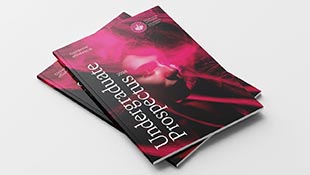
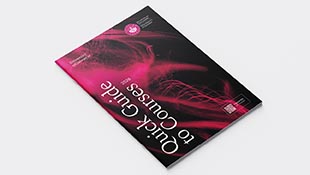
Choosing a course is one of the most important decisions you'll ever make! View our courses and see what our students and lecturers have to say about the courses you are interested in at the links below.
-
University Life

University Life
Each year more than 4,000 choose University of Galway as their University of choice. Find out what life at University of Galway is all about here.
-
About University of Galway

About University of Galway
Since 1845, University of Galway has been sharing the highest quality teaching and research with Ireland and the world. Find out what makes our University so special – from our distinguished history to the latest news and campus developments.
-
Colleges & Schools
Colleges & Schools
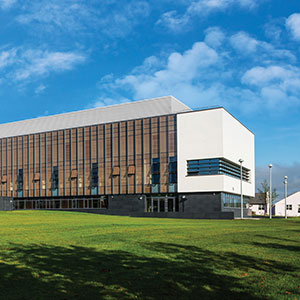
University of Galway has earned international recognition as a research-led university with a commitment to top quality teaching across a range of key areas of expertise.
-
Research & Innovation

Research & Innovation
University of Galway’s vibrant research community take on some of the most pressing challenges of our times.
-
Business & Industry
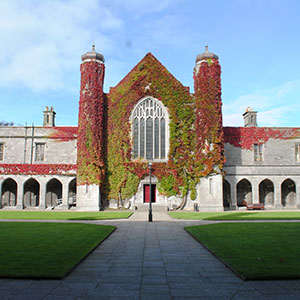
Guiding Breakthrough Research at University of Galway
We explore and facilitate commercial opportunities for the research community at University of Galway, as well as facilitating industry partnership.
-
Alumni & Friends

Alumni & Friends
There are 128,000 University of Galway alumni worldwide. Stay connected to your alumni community! Join our social networks and update your details online.
-
Community Engagement
Community Engagement
At University of Galway, we believe that the best learning takes place when you apply what you learn in a real world context. That's why many of our courses include work placements or community projects.
 Accessibility & Language
Tab 3 Content
Final Year
Welcome to your Final Year
It is good to have you back for the final year of your degree. All modules are optional in Final Year, but please note that there is a requirement to have at least a 2.1 in your second year Philosophy in order to register for the Extended Essay modules (PI399). If you are thinking of going on to Postgraduate study in Philosophy, the Extended essay module may be a good choice for you.
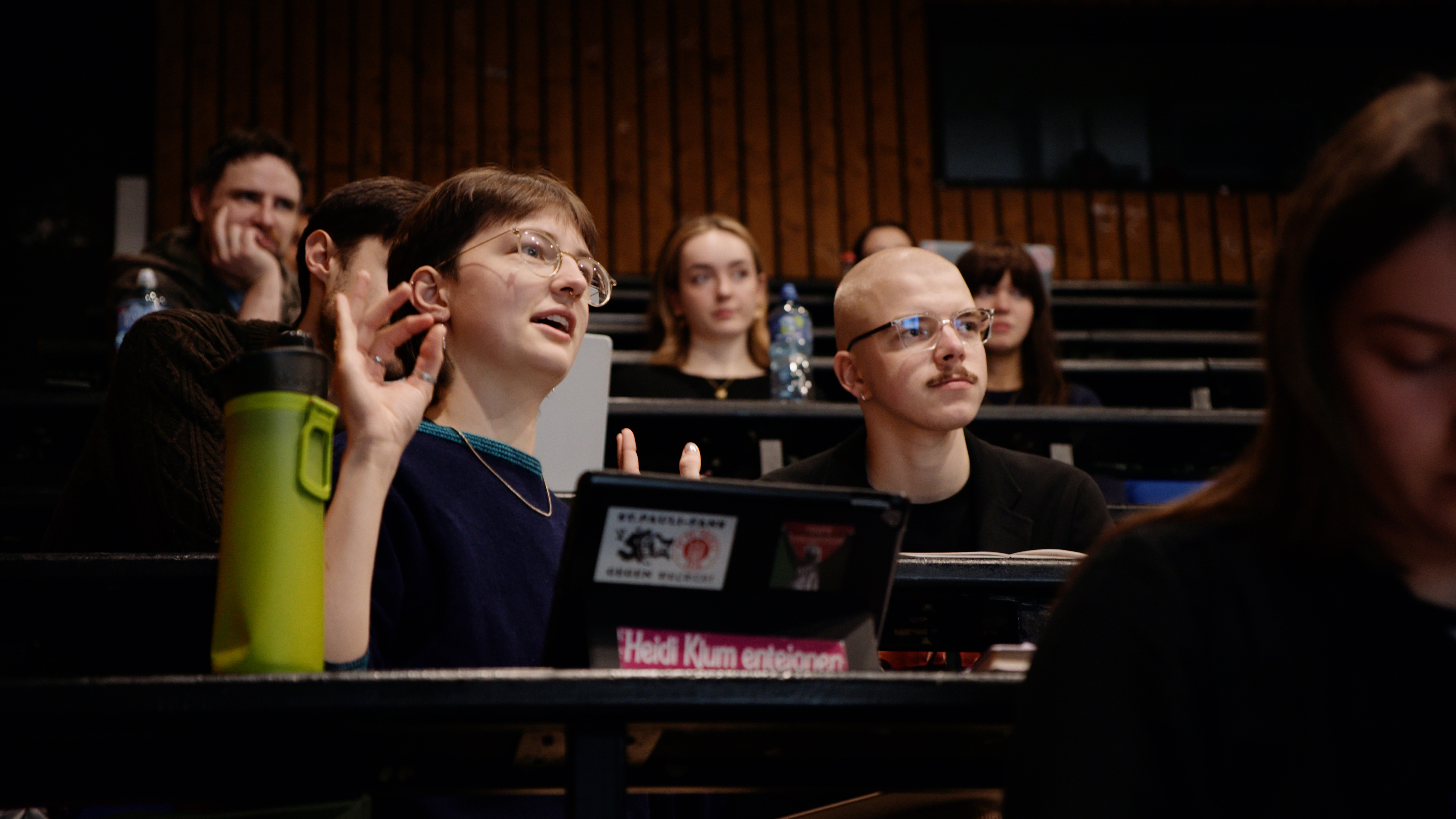
Entry requirements: A pass in Second Arts Philosophy or its equivalent in the case of visiting and exchange students. Students registered for the B.A. (International) must also have attained a satisfactory academic performance during their year abroad.
Please make sure you are familiar with our Final Year Handbook (available in late July 2026).
Answers to queries regarding online learning available here
Queries about learning answered here (English and Irish versions).
QA616 University of Galway Student Code of Conduct Policy.
Semester dates
| SEMESTER ONE | STARTS | ENDS |
|---|---|---|
| Teaching (12 weeks) | 7th September 2026 | 27th November 2026 |
| Study week | 30th November 2026 | 4th December 2026 |
| Semester 1 exams | 7th December 2026 | 18th December 2026 |
| SEMESTER TWO | ||
| Teaching (12 weeks) | 11th January 2027 | 2nd April 2027 |
| Study week | 12th April 2027 | 16th April 2027 |
| Semester 2 exams | 19th April 2026 | 6th May 2027 |
**Autumn Repeat exams: 3rd – 13th of August 2027 (9 days of exams) **
Third Year Modules 2026/2027
All third-year courses are optional. You should pick three modules each semester. Familiarity with Canvas is essential for your learning this year.
Please note that to register for year-long module PI399 Extended Essay, you must have achieved a Second-Year grade of 2:1 or higher in Philosophy.
Semester 1:
- PI315 Philosophy of Mind (Dr. O'Reilly)
- PI327 Philosophy of Religion (Prof. Ó Murchadha)
- PI3103 Environmental Ethics (Dr. Ward)
- PI3104 Philosophy and Culture in Context (with placement) (Dr. Elvis & Dr. Yvonne Förster)
- PI3106 Formal Logic 2 (Dr. Tosh)
- PI3111 Topics in Philosophy of Science (Dr. Tosh)
- PI399 Extended Essay (Dr. Felzmann) (*)
Semester 2:
- PI399 Extended Essay (Dr. Felzmann) (*)
- PI310 Topics in Applied Philosophy (Dr. Hull)
- PI3108 Topics in Post-Kantian Philosophy (Dr. Doyle)
- PI3109 Readings in European Philosophy (Post-Kantian) Prof. Ó Murchadha
- PI3110 Philosophy of Literature (Dr. Dianetti)
- PI3112 Paradoxes (Dr. Tosh)
* PI399 is a year-long 5ECTS module for which you register in Semester 1 and which you will attend over both semesters. Semester 2 will require more work to complete your research and writing; for workload reasons it is advisable to pick PI399 and three other modules in Semester 1 and two modules in Semester 2.
Provisional timetables
3rd Arts Semester One 2026/27
| Code | Title | Lecturer | Lecture |
| PI399 | Extended Essay | Dr Heike Felzmann |
Mondays, 12-1 |
| PI315 | Philosophy of Mind | Dr. John O'Reilly |
Monday, 9-11 |
| PI327 | Philosophy of Religion | Prof. Felix Ó Murchadha |
Wednesdays, 4-6, |
| PI3100 | Kant's Theoretical Philosophy | Dr. Tsarina Doyle |
Tuesdays, 11-1 |
| PI3103 | Environmental Ethics | Dr. Nora Ward |
TBA |
| PI3104 |
Philosophy and Culture in Context |
Dr. Lucy Elvis & Dr. Yvonne Förster |
|
| PI3106 |
Formal Logic 2 |
Dr. Nick Tosh |
Tuesdays, 5-7 |
| PI3111 |
Topics in Philosophy of Science |
Dr. Nick Tosh |
Mondays, 4-6 |
(**) Please note, students must attend all scheduled PI3104 workshops. Venues TBC. There is a choice of continuous assessment within this module.
3rd Arts Semester Two 2026/2027
| Code | Title | Lecturer | Lecture |
| PI399 | Extended Essay | Dr. Heike Felzmann |
Mondays, 12-1 |
| PI310 |
Topics in Applied Philosophy: Disability, Poverty And Human Freedom |
Dr. Richard Hull |
Tuesdays, 12-1, CSB-1007 Wednesdays, 3-4, AC213 |
| PI3108 | Topics in Post-Kantian Philosophy | Dr. Tsarina Doyle |
Tuesdays, 10-12, |
| PI3109 | Readings in European Philosophy (Post-Kantian) | Prof. Felix Ó Murchadha |
Thursdays, 3-5 |
| PI3110 | Philosophy of Literature | Dr. Michela Dianetti |
TBA |
| PI3112 | Paradoxes | Dr. Nick Tosh |
Tuesdays, 2-3 (AC214) |
There is no need to sign up to tutorials at the beginning of the year - lecturers will make and communicate any arrangements that might be in place with regard to splitting their classes for tutorials. All modules will provide an interactive component to students.
Head of Third Years:
- Dr. Tsarina Doyle: tsarina.doyle@universityofgalway.ie
Individual Course Details
SEMESTER 1
Extended Essay (year-long module)
| Code | Semester | ECTS |
|---|---|---|
| PI399 | 1 & 2 | 5 |
Lecturer: Dr. Heike Felzmann
Course description: The extended essay is an independent piece of research, intended to allow you to demonstrate the full range of your research skills and philosophical understanding of a topic of your choice. While you should not be afraid of being ambitious in terms of the argument that you present, you are expected to identify a clearly defined and specific research question, demonstrate high standards in literature research and present a well-supported and specific argument. You are required to discuss the choice of research question with a Philosophy lecturer during the first six weeks of Semester 1 and obtain their agreement to be your supervisor, and you will be developing your research and writing step-by-step over the two semesters. Work for this module consists in progressing your research and writing in defined stages, reflecting on different research-related issues within the group, presenting your work-in-progress to the class and attending supervisory meetings several times during the year. It will be assessed by a portfolio of continuous assessment and the final essay.Prerequisites: 2.1 average in Year 2 Philosophy. For exceptions consult the Head of Final Year, Dr. Tsarina Doyle.
Philosophy of Mind
| Code | Semester | ECTS |
|---|---|---|
| PI315 | 1 | 5 |
Lecturer: Dr. John O'Reilly
Course Description: The course begins with an introduction to three influential approaches to mental phenomena – Logical Behaviourism, Identity Theory, and the emergence of Functionalism. The second part of the course builds on these foundations via an exploration of David Lewis’ Analytic Functionalism and Jerry Fodor’s Psycho-functionalism. At this stage, we are ready to look at the Computational Theory of Mind and Daniel Dennett’s Intentional Stance. The final section of the course focuses on John Searle’s critique of the Computational approach to the mind with his “Chinese Room” thought experiment and on the advent of Embodied Cognition as a criticism of overly mind-centred accounts of cognition.
PI327 Philosophy of Religion
|
Code |
Semester |
ECTS |
|---|---|---|
|
PI327 |
1 |
5 |
Lecturer: Prof. Felix Ó Murchadha
Course description: This course will discuss one of the principal problems of the philosophy of religion, namely the relation of faith and reason. The relation of faith and reason has been a matter of controversy since the early Christian thinkers. In modernity, with a revised account of reason and rationality, the question became increasingly complex and the philosophical positions on this issue increasingly divergent. We will look at two philosophers: Kant and Kierkegaard. Following upon that, we will discuss a number of themes including forgiveness, language, love, violence and time.
Prerequisites: None
Teaching and learning methods: The course is lecture-based, supplemented by tutorials.
Methods of assessment and examination: Continuous Assessment (35%) and a Final Assignment (Essay) (65%)
Kant's Theoretical Philosophy
|
Code |
Semester |
ECTS |
|
PI3100 |
1 |
5 |
Lecturer: Dr. Tsarina Doyle
Course description: This module examines Kant's theoretical philosophy by focussing on his arguments for transcendental idealism in the Critique of Pure Reason. Particular attention will be paid to Kant's ambitious aim to establish the objectivity of Newtonian science whilst leaving room for the possibility of God, freedom and immortality by focussing on his arguments for the transcendental ideality of space and time, his argument for the transcendental deduction of the categories, his distinction between phenomena and noumena, the argument of the Analogies and Antinomies. The modules also incorporates a number of revision exercises to help with student learning and understanding of the text.
Prerequisites: None
Teaching and learning methods: The course is lecture-based, supplemented by tutorials.
Methods of assessment and examination: Assessment is based on a written essay at the end of the semester with continuous assessment added to the evaluation.
Environmental Ethics
| Code | Semester | ECTS |
|---|---|---|
| PI3103 | 1 | 5 |
Lecturer: Dr. Nora Ward
Course description: This class will focus on the ethical, ecological and social dimensions of environmental issues. We begin with an exploration of the perception of nature in Western thought, through a review of texts that shaped the field of environmental ethics. As such, we will explore the relationship between human and non-human nature, addressing questions such as "Does non-human nature matter for its own sake, or simply for the sake of fulfilling human interests? What about the value of holistic entities such as ecosystems? What is intrinsic value anyway, and how does it differ from instrumental value?" Towards the latter half of the course, we will focus on the philosophical implications of international environmental issues such as climate change, indigenous rights, ecofeminism, environment justice and eco-terrorism.
Philosophy and Culture in Context
| Code | Semester | ECTS |
|---|---|---|
| PI3104 | 1 | 5 |
Lecturers: Dr. Lucy Elvis & Dr. Yvonne Förster
Course description: This module explores philosophical approaches to the production and consumption of art and culture in contemporary society through an examination of four themes. Culture and reality, culture and technology, culture, culture and alienation and culture and violence. For each theme two different philosophical perspective will be explored to examine the dynamics of contemporary cultural production and consumption.
Teaching and learning methods: This course is workshop based. Four workshops on four Thursday afternoons across the semester. One introductory lecture and one essay writing tutorial will also be offered to help students navigate the course. In-person attendance at all teaching is mandatory.
Methods of assessment and examination: Students are offered a choice of two assessment streams assessment model A: Placement (at TULCA festival of visual Arts), Reflection and Final Essay, model B Workshop, Podcast and Final Essay.
Formal Logic 2
| Code | Semester | ECTS |
|---|---|---|
| PI3106 | 1 | 5 |
Lecturer: Dr. Nick Tosh
Course description: This course is the sequel to the 2nd-year Formal Logic module PI2102. It introduces a new proof method -- truth trees -- and a mostly new formal language -- predicate logic with identity. The course text is Paul Teller's _Logic Primer_, freely available online (http://tellerprimer.ucdavis.edu/). Readings and practice exercises will be set each week. Familiarity with material taught in PI2102 is assumed.
Prerequisites: You need to have passed PI2102 Formal Logic or have an equivalent level of experience with formal logic.
Topics in Philosophy of Science
| Code | Semester | ECTS |
|---|---|---|
| PI3111 | 1 | 5 |
Lecturer: Dr. Nick Tosh
Course description: This module introduces students to a selection of major topics in contemporary philosophy of science, including the problem of induction, confirmation theory, and theories of causation.
Methods of assessment and examination: Overall assessment is by written exam, supplemented by some short in-class written tests.
Recommended Book Resources:
- David Hume 1757, An Enquiry Concerning Human Understanding, Sections 4, 5, 7
- Peter Godfrey-Smith 2021, Theory and Reality: An Introduction to the Philosophy of Science, 2 Ed., University of Chicago Press [ISBN: 978-022661865]
- A. C. Grayling, Philosophy 1: A Guide Through the Subject, 3, Oxford University Press [ISBN: 9780198752431]
SEMESTER 2:
Topics in Applied Philosophy: Disability, Poverty and Human Freedom
| Code | Semester | ECTS |
|---|---|---|
| PI310 | 2 | 5 |
Lecturer: Dr. Richard Hull
Course description: This course is concerned with the application of the study of philosophy to issues of public concern. It takes the experiences of disability and social deprivation as case studies and looks at how such experiences can best be theoretically articulated. Particular attention is given to rival theories of human freedom and their relevance to contemporary social and political debates. Attention is also focused on how different theories of justice and morality imply very different social responses to the issues of disability and deprivation. Subjects covered include Rawls’ theory of freedom, Nozick's libertarianism, the acts/omissions distinction and the doctrine of double effect. The course is designed to give students an analytical background that can be used to explore other contemporary social and political issues.
Paradoxes - new module in 26/27
| Code | Semester | ECTS |
|---|---|---|
| PI3112 | 2 | 5 |
Lecturer: Dr. Nick Tosh
Course description: This module introduces students to paradoxes of decision theory, paradoxes relating to the concept of a set/collection, and (briefly) a paradox about truth.
Prerequisites: None
Teaching and learning methods: The course is lecture-based
Methods of assessment and examination: Overall assessment is by written exam, supplemented by some short in-class written tests.
Core Texts:
R. M. Sainsbury 1995, Paradoxes, 2 Ed., Cambridge University Press [ISBN: 978-05214834]
Raymond Smullyan 2009, Satan, Cantor and Infinity, Dover [ISBN: 978-048647036]
PI3108 Topics in post-Kantian Philosophy
|
Code |
Semester |
ECTS |
|
PI3108 |
2 |
5 |
Lecturer: Dr. Tsarina Doyle
Course description: This module engages in an in-depth investigation of the possibility of metaphysics in post-Kantian philosophy with particular emphasis on Friedrich Nietzsche’s philosophical thought. The first part of the module investigates Nietzsche’s interpretation of the meaning and significance of Kant’s transcendental idealism. It also explores how Nietzsche’s own philosophical writings, both early and late, are informed by his understanding of and response to Kant. The second part of the module explores prominent interpretations of Nietzsche’s metaphysics, including the panpsychist, ontic structural realist, neo-Darwinian, constructivist and dispositional readings. The implications of these interpretations for how we should understand Nietzsche’s philosophical psychology, philosophy of value and political philosophy will be explored in detail. Students taking this module will be expected to prepare in advance for class and to actively participate in class discussions.
PI3109 Readings in European Philosophy (Post-Kantian) -new module in 26/27
|
Code |
Semester |
ECTS |
|
PI3109 |
2 |
5 |
Lecturer: Prof. Felix Ó Murchadha
Course description: This module will a text-based course concentrating on fundamental texts from German and French philosophers over the past two hundred years or so. Guided by in-depth study of a specific text, questions concerning being, freedom, truth, time and nature will be discussed. The discussion will be both informed by historical scholarship and focused on the systematic questions and issues as they arise in the respective texts.
Core Texts:
Kearney, Richard; Rainwater, Mara 1995, The Continental Philosophy Reader, Routledge [ISBN:9780415095266]
David West 1996, An Introduction to Continental Philosophy, Polity [ISBN: 0745611842]
PI3110 Philosophy of Literature - new module in 26/27
|
Code |
Semester |
ECTS |
|
PI3110 |
2 |
5 |
Lecturer: Dr. Michela Dianetti
Course description: Course description: This module explores the complex and evolving relationship between philosophy and literary forms and its significance not only for literary studies but also for drama and cinema. One part of the module explores philosophical thinking about literature, exploring its purpose, value, and function, and issues such as the ethics of authorship and readership, the nature of truth in fiction, literature’s epistemic and moral potential, the paradox of tragic pleasure. These debates will also be extended to drama and cinema, engaging with theories of spectatorship and performance. A second part explores philosophical thinking within and through literary forms drawing on authors such as Jean Paul Sartre and Iris Murdoch. Assessment offers a choice between critical philosophical analysis and creative philosophical writing: students will either write a philosophical essay about a novel, movie, or play, or create and workshop their own creative writing, giving life to philosophical ideas.
Core Texts:
Eileen John,Dominic McIver Lopes 2004, The Philosophy of Literature, Wiley-Blackwell [ISBN: 1405112093]
Iris Murdoch 1978, The Fire & the Sun, Oxford University Press, USA [ISBN: 0198245807]