-
Courses

Courses
Choosing a course is one of the most important decisions you'll ever make! View our courses and see what our students and lecturers have to say about the courses you are interested in at the links below.
-
University Life

University Life
Each year more than 4,000 choose University of Galway as their University of choice. Find out what life at University of Galway is all about here.
-
About University of Galway

About University of Galway
Since 1845, University of Galway has been sharing the highest quality teaching and research with Ireland and the world. Find out what makes our University so special – from our distinguished history to the latest news and campus developments.
-
Colleges & Schools
Colleges & Schools
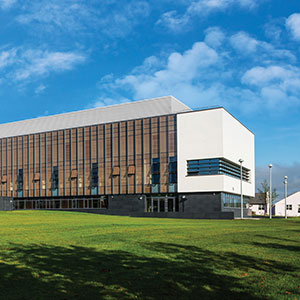
University of Galway has earned international recognition as a research-led university with a commitment to top quality teaching across a range of key areas of expertise.
-
Research & Innovation

Research & Innovation
University of Galway’s vibrant research community take on some of the most pressing challenges of our times.
-
Business & Industry
Guiding Breakthrough Research at University of Galway
We explore and facilitate commercial opportunities for the research community at University of Galway, as well as facilitating industry partnership.
-
Alumni & Friends

Alumni & Friends
There are 128,000 University of Galway alumni worldwide. Stay connected to your alumni community! Join our social networks and update your details online.
-
Community Engagement
Community Engagement
At University of Galway, we believe that the best learning takes place when you apply what you learn in a real world context. That's why many of our courses include work placements or community projects.
 Accessibility & Language
Vacancies
Current Open Research Positions:
Updated: 03/02/2026
Ph.D./M.Sc. Research fellowship (For 2026):
Applications are invited for a fully funded PhD (or MSc) research position commencing between June and September 2026. The post is part of a larger comprehensive project that involves investigating and developing the use of novel 4 and 5-dimensional fluorescence measurement methods for the quantitative analysis of macromolecules in complex environments, particularly for Downstream Processing (DSP). The research straddles both fundamental and applied research domains and builds on our recent investigations which showed that polarized Excitation Emission Matrix (pEEM) measurements which is combination of scatter and polarized emission, provides a unique methodology for monitoring simultaneously both physical and chemical changes in therapeutic proteins. These positions are part of the Downstream Protein Analysis - Polarized Emission Spectroscopy (DPA-PES), project funded by Science Foundation Ireland (grant 22/FFP-A/10271).
NBL-P4: Quantitative analysis of liposome payload effects by Polarized Excitation Emission Matrix (pEEM) spectroscopy: Liposomes are being used for a variety of applications including drug delivery (e.g., vaccines) and as models for cell membranes. We have an interest in exploring how pEEM can be used to monitor and measure how liposomes interact with small proteins and/or peptides in the internal cavity. Being able to analyse protein-liposome complexes without dye labelling via measuring the intrinsic protein fluorescence using pEEM offers a unique non-contact, non-destructive method which has many applications in drug delivery and formulation. The focus of this project is to look at the encapsulated payload molecules (including peptides and proteins) in liposomes. Initially the research will look at the photophysics of encapsulated small molecule fluorophores and see how pEEM can effectively analyse these systems. This project combines aspects of both fundamental and applied research, first trying to understand the exact nature of the light-liposome-payload interactions and second utilising this knowledge to apply pEEM as a robust Process Analytical Technology (PAT) for liposome based drug delivery system manufacture. pEEM provides a rapid, non-contact, non-destructive method of analysis that could be integrated into manufacturing processes to observe/monitor adverse effects. pEEM has several unique advantages for protein analysis in that it can provide information about size and stability.
References: See www.universityofgalway.ie/nanoscale/publications/ for more details about pEEM.
Academic Entry Requirements:
A first or upper second class honours undergraduate degree (or equivalent) in Physical Sciences (Chemistry, Physics, or Biochemistry), or have completed an M.Sc. degree in (Bio)Analytical Chemistry or Biophysics. Previous relevant research or industry experience is particularly valuable. Non-native English speakers must satisfy the University of Galway English Language Entry Requirements available here. IELTS score of >6.5 or TOEFL IBT scores of >92.
Experience in the following techniques would be very beneficial: Dynamic Light Scattering, HPLC, Fluorescence spectroscopy, protein purification & analysis, multivariate data analysis.
Living allowance (Stipend): €25,000 per annum, tax-exempt scholarship award.
University fees: Four years EU fees are funded for the PhD psoition (or two years for an M.Sc.). A student levy applies (currently €140 per annum). Exceptional non-EU students can avail of a PhD International Merit Scholarship to waiver the non-EU fee component.
Start date: 01/June/2026 (or as soon as possible thereafter).
To Apply for the Scholarship:
Expressions of interest comprising submission of:
- A covering letter (outlining interests, and motivation for pursuing a PhD or MSc), max 1-page,
- A detailed CV (2-5 pages) describing your academic and research (or industry) experience,
- Evidence for proficiency in the English Language (e.g. TOFL scores/certificate):
- A pdf copy of your degree transcripts, and
- Names and contact details for three referees willing to provide a confidential reference.
to be submitted as a single pdf file via e-mail to the contact below. Please indicate your choice of projects in order of preference.
Contact Name: Prof. Alan G. Ryder Contact Email: alan.ryder@universityofgalway.ie
In addition to the specific funded positions we also have opportunities for research in several other areas of fluorescence and Raman spectroscopy. Funding for this research is available from both the Irish Research Council postgraduate scholarship scheme and from the Hardiman PhD Scholarships offered by the University of Galway. These are awarded by open competition. These awards provides a maintenance award of up to €25,000, pays fees, and some travel/training expenses. The awards are open to all EU citizens and very exceptional candidates from outside the EU.
The Hardiman call for 2027 will open later this year (check the website).
The 2027 GOIPG campaign will open in Sept. 2026. Details are available HERE.
Interested candidates should have at least a 2:1 degree in chemistry or physics (or another relevant science or engineering degree), or preferably have an M.Sc. qualification. English language proficiency is a requirement.
Other Postdoctoral Positions:
We welcome applications for the Irish Research Council GOIPD postdoctoral fellowship programme.The next (2026) GOIPD call will open in Sept. 2026. Details are available HERE.
We are also always interested in Marie Curie Incoming Fellowship applications from suitably qualified candidates in the areas of biophysics, fluorescence spectroscopy, chemometrics, instrumentation, and process analytical technologies. The call will have a deadline in Oct. 2026.
Much of our research involves fluorescence EEM and multi-way chemometric methods for the analysis of proteins, cell culture media, and other complex biogenic samples from bio-pharmaceutical manufacturing processes. We are always interested in potential candidates who are proficient in the following: Biophysics, Optical Instrumentation, Multi-way chemometrics ), analytical chemistry, fluorescence spectroscopy (specifically EEM), and analytical method development, and scientific. Other desirable skills include: practical experience of protein analysis, industrial bio-analysis.We are particularly interested in candidates with experience of building spectroscopic instrumentation
Interested candidates should send a detailed CV with the names of at least three referees. E-mail: alan.ryder nuigalway.ie
Please include details of relevant research and/or work experience and a list of publications.
Undergraduate Research Internships.
We will also from time to time host visiting undergraduate researchers under EU (e.g. Erasmus+) or other programmes. Interested parties should get in contact by email.
The Royal Society of Chemistry operate an Analytical Chemistry Summer Studentships funding scheme. The deadline is normally in January every year. This is ideal for third year UoG physics or chemistry undergraduate students and will cover a stipend for 8 weeks research in a laboratory. This is a competitive application process.
Useful Links
- Physics at Galway: www.universityofgalway.ie/physics/
- Postgraduate prospectus & information about NUI-Galway: www.universityofgalway.ie/choose-postgrad/prospectus/ This contains a lot of useful information about studying at the University of Galway.
- Visit Galway.
- University Vacancies Ireland.
Contact
Prof. Alan G. Ryder
Nanoscale Biophotonics Laboratory,
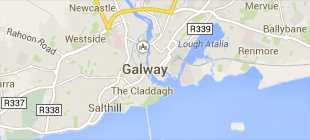
University of Galway, University Road, Galway, H91TK33, Ireland.
Tel: +353 (0)91 492943 or ext. 2943 (internal) E-mail: alan.rydernuigalway.ie
Nanoscale Biophotonics Laboratory,
University of Galway, University Road, Galway, H91TK33, Ireland.
Tel: +353 (0)91 492943 or ext. 2943 (internal) E-mail: alan.ryder
nuigalway.ie 
Photo taken in Connemara on an NUIG MC hike. ©A. Ryder
This page was last updated 12/03/2026