-
Courses
Courses
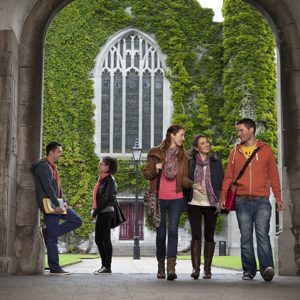
Choosing a course is one of the most important decisions you'll ever make! View our courses and see what our students and lecturers have to say about the courses you are interested in at the links below.
-
University Life

University Life
Each year more than 4,000 choose University of Galway as their University of choice. Find out what life at University of Galway is all about here.
-
About University of Galway
About University of Galway
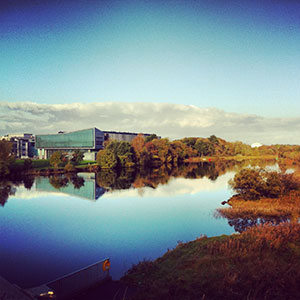
Since 1845, University of Galway has been sharing the highest quality teaching and research with Ireland and the world. Find out what makes our University so special – from our distinguished history to the latest news and campus developments.
-
Colleges & Schools
Colleges & Schools
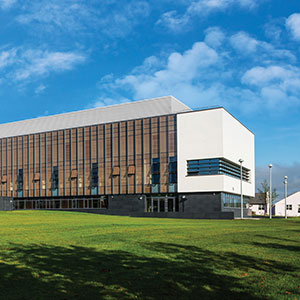
University of Galway has earned international recognition as a research-led university with a commitment to top quality teaching across a range of key areas of expertise.
-
Research & Innovation
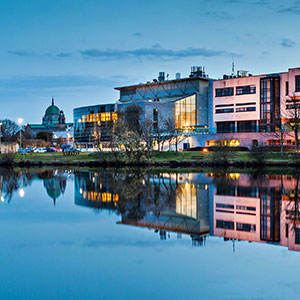
Research & Innovation
University of Galway’s vibrant research community take on some of the most pressing challenges of our times.
-
Business & Industry
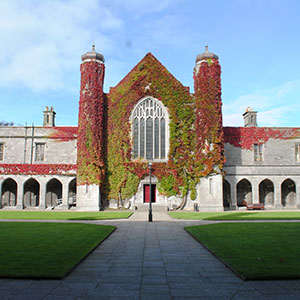
Guiding Breakthrough Research at University of Galway
We explore and facilitate commercial opportunities for the research community at University of Galway, as well as facilitating industry partnership.
-
Alumni & Friends
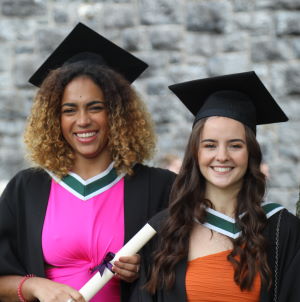
Alumni & Friends
There are 128,000 University of Galway alumni worldwide. Stay connected to your alumni community! Join our social networks and update your details online.
-
Community Engagement
Community Engagement
At University of Galway, we believe that the best learning takes place when you apply what you learn in a real world context. That's why many of our courses include work placements or community projects.
 Accessibility & Language
News & Events
Regional sanctions governance: cooperation, leadership and adaptation
Feb
03
2026
Posted: 10:48 GMT
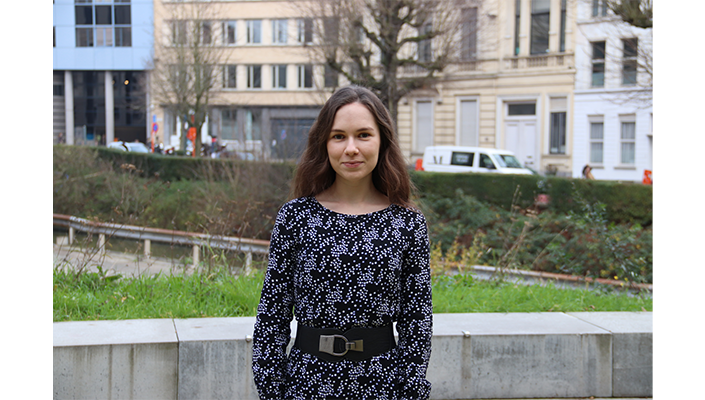
Join us for 'Regional sanctions governance: cooperation, leadership and adaptation' with Iana Ovsiannikova.
When: 1-2pm, Friday, 6 February 2026
Where: Seminar Room, Irish Centre for Human Rights, University of Galway
Regional sanctions governance: cooperation, leadership and adaptation
Recently, there has been a surge in the use of economic sanctions, whether imposed by states or regional organisations. They are used as a tool to address breaches of international law, domestic conflicts or promote democracy and governance objectives. This phenomenon creates implications for global governance structures and regional actors in the geographical realm of the country targeted by such sanctions. This paper analyses regional agency in response to sanctions through three theoretical mechanisms: coordination, leadership and adaptation. Overpassing the Western-centric binary of target-sanctioning state relations, this paper puts forward the agency of regions. Looking at Africa and Central Asia, this paper discusses how regions interact with sanctions, and asks the broader question of whether sanctions stipulate any process of regionalisation across various axes of sanctions.
Speaker Bio:
Iana Ovsiannikova is a PhD Fellow at the Department of Political Science at Ghent University affiliated with United Nations University-Institute on Comparative Regional Integration Studies (UNU-CRIS). Iana’s research focuses on regional sanctions governance, namely, how sanctions shape regional agency. Within the scope of her doctoral research, Iana explores regional leadership in the UN Security Council sanctions on African countries, the role of sanctions in regional governance and how sanctions impact regional political and institutional frameworks in Central Asia in view of the EU's more assertive use of positive incentives and secondary sanctions. Her other research interests include human rights accountability via sanctions and the role of regional organisations in peace building and post-conflict transition.
Iana obtained her MA degree in EU International Relations and Diplomacy Studies at the College of Europe where she performed comparative research on the EU and UK sanctions policies after Brexit on the case study of Belarus. In the past two years, she worked as an expert and project manager at a development cooperation consultancy based in Brussels, working on EU-funded projects on CSOs, transitional justice and media support in Africa.