-
Courses
Courses
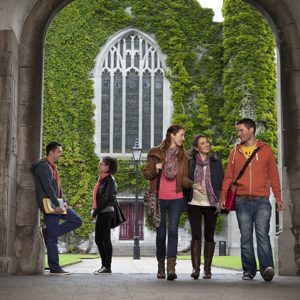
Choosing a course is one of the most important decisions you'll ever make! View our courses and see what our students and lecturers have to say about the courses you are interested in at the links below.
-
University Life
University Life
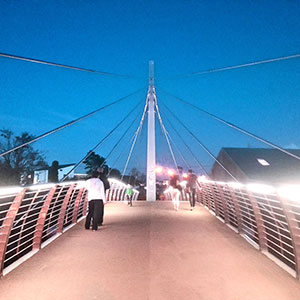
Each year more than 4,000 choose University of Galway as their University of choice. Find out what life at University of Galway is all about here.
-
About University of Galway
About University of Galway
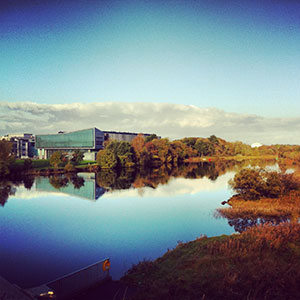
Since 1845, University of Galway has been sharing the highest quality teaching and research with Ireland and the world. Find out what makes our University so special – from our distinguished history to the latest news and campus developments.
-
Colleges & Schools
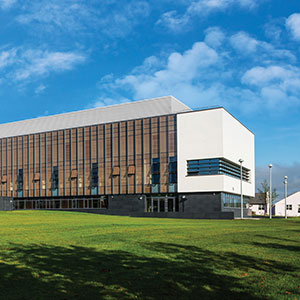
Colleges & Schools
University of Galway has earned international recognition as a research-led university with a commitment to top quality teaching across a range of key areas of expertise.
-
Research & Innovation
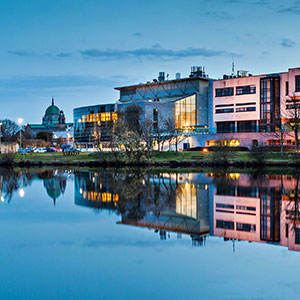
Research & Innovation
University of Galway’s vibrant research community take on some of the most pressing challenges of our times.
-
Business & Industry
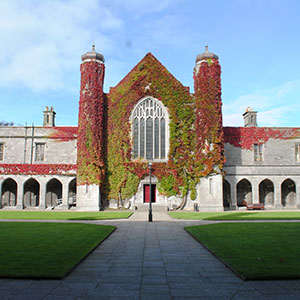
Guiding Breakthrough Research at University of Galway
We explore and facilitate commercial opportunities for the research community at University of Galway, as well as facilitating industry partnership.
-
Alumni & Friends
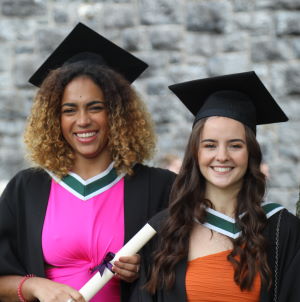
Alumni & Friends
There are 128,000 University of Galway alumni worldwide. Stay connected to your alumni community! Join our social networks and update your details online.
-
Community Engagement
Community Engagement
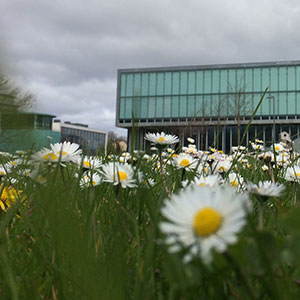
At University of Galway, we believe that the best learning takes place when you apply what you learn in a real world context. That's why many of our courses include work placements or community projects.
 Accessibility & Language
Active Projects
Universal interoperate sustainable agri-water management system
.jpeg)
Start date: 1/5/24. End date: 31/4/28
Funder: Horizon Europe
Principal Investigators (for University of Galway): Prof Mark Healy
Objectives:
Water quality and quantity are under arising pressure from agricultural activities that may cause overexploitation of natural waters and pollutants runoffs (e.g., nutrients, pesticides). These stresses are also compounded by climate change effects. To address the complex challenges of agri-water management, the UNIVERSWATER consortium will adopt a ‘system of systems’ approach by developing and improving technologies designed to optimise water resources uses in a fully integrated way. A dedicated interdisciplinary and intersectoral consortium of 15 partners from six European countries will: a) develop innovative portable and in- situ sensors for a number of parameters and pollutants (salinity, nutrients, CEC, microbiological indicators) and b) couple them with earth observation imaging and advanced explainable and robust artificial intelligence techniques, as well as c) develop cost-effective, sustainable methods based on nature-based and technology-based solutions for water remediation at the point of need and d) promote the adoption of the developed methods through pricing incentive provision. These technologies will be integrated into decision support systems (DSSs) that will be tested at three case studies tackling on-farm treatment of dairy soiled water, mitigation of soil salination through water reuse, and optimisation of fertiliser/pesticide application for freshwater preservation. Going beyond, UNIVERSWATER will upscale these local DSSs into a common platform where a suite of DSS tools can be adapted to different situations after being tailored to the local factors, thereby developing a modular, extensible and holistic universal DSS.
Twinning microplastics-free environment
Start date: 1/9/22. End date: 31/8/25
Funder: Horizon Europe
Principal Investigators: Dr Liam Morrison, Prof Mark Healy
Objectives:
GREENLand will use a multi-disciplinary approach to increase knowledge and technologies in microplastics prevention, detection and purification of soil, water, and microorganisms, and therefore result in food and environment safety. Activities will strengthen and foster the development of researchers in the region, and will promote the establishment of open, inclusive and responsible national research and innovation systems, support an institutional change through the development of inclusive gender equality plans in line with Horizon Europe and the European Research Area objectives, as well as provide support to evidence-based policy making.
Watertable management on carbon rich soils

State date: 01/3/22 End date: 31/3/26
Funder: DAFM
Principal Investigators: Dr Eve Daly, Prof Mark Healy, Dr Pat Tuohy (Teagasc), and Prof Owen Fenton (Teagasc)
Objective:
Artificial drainage of carbon-rich soils is a common practice where waterlogging and poor surface condition hinders agronomic production potential. However, soils with high organic matter, when drained, can release carbon dioxide into the atmosphere. There is an estimated 300,000 ha of permanent grassland on drained carbon-rich soils where the carbon pool is vulnerable. There is now recognition of the intrinsic value of such soils to provide other services and functions related to carbon storage and sequestration. Plans to restore these soils will rely on manipulating the water table by removing and blocking existing artificial drainage features in a process described as “rewetting”. While such works are proposed (for 40,000 ha of drained organic grasslands) research to date has focused on potential benefits (assuming significant changes in the hydrologic regime on such sites) and less so on practical implementation. There remains a lack of clear information with regard to where such works would be appropriate and feasible; how, in practice, such works would be carried out, and thereafter, what net benefit these works would provide, what the implications would be for the surrounding landscape and what land use options are feasible after rewetting. REWET seeks to assess the suitability and availability of lands for rewetting, by utilizing existing GIS data and new remotely sensed data, examine practical means of rewetting, by undermining the functionality of open and subsurface drainage channels, assess the effects on hydrology, both at the designated sites and surrounding lands, and quantify associated impacts. This work will provide a deeper understanding of a workable methodology to facilitate rewetting on appropriate placed land parcels, outline the scale of the challenge, quantify its potential benefits and provide a decision support tool to guide best practice methodologies, and quantify full costs and effects associated with such land use changes.
Journal papers:
Pierce, H., Fenton, O., Daly, E., Shnel, A., O'Leary, D., Healy, M.G., Tuohy, P. 2025. Assessing localised rainfall and water table depth relationships in grassland peat soils. Science of the Total Environment 994: 180074 Pierce_STOTEN_2025
Re-wetting of peatlands for enhanced restoration (WET-PEAT)
State date: 01/3/22 End date: 31/3/26
Funder: EPA
Principal Investigators: Prof Mark Healy, Dr Mingming Tong, Dr Samir Vinchurkar, Niall O'Brolchain, Alastair McKinstry (University of Galway), Prof Laurence Gill and Dr Bidisha Ghosh (Trinity College Dublin)
Objective:
Bord na Móna has recently transformed into a sustainable, green business, which now emphasises the use of its land assets for renewable energy and resource recovery in support of government policy and national decarbonisation commitments. As part of this transformation, the Peatlands Climate Action Scheme (PCAS) will, over the coming years, establish engineering and ecology works on 33,000 ha of bogs to accelerate natural restoration processes. These actions will increase carbon storage and reduce carbon emissions, improve water quality and water attenuation, and will enhance biodiversity while mitigating the risk of wildfires. The PCAS process involves stakeholder engagement, the development of drainage management and rehabilitation plans, and a range of other types of assessments (archaeological and appropriate assessments). To date, this work has been extensive and has involved extensive consultation with various stakeholders, as well as a thorough flow and water quality monitoring regime.
Re-wetting of Peatlands for Enhanced Restoration (“WET-PEAT”) will work in parallel with the PCAS by providing an independent monitoring programme that will (1) assess and supplement the work of PCAS (2) deliver recommendations and, where needed, carry out changes in the management and execution of rehabilitation measures in up to five sites (3) provide an evaluation of the water quality and hydrological improvements, and (4) disseminate all knowledge gained to stakeholders and the general public.
To do this, WET-PEAT has brought together specialists with backgrounds in civil engineering, earth observation, hydrology and hydrogeology, ecosystem services, mathematical modelling, data analytics, and policy. Working with Bord na Móna and other key stakeholders, WET-PEAT will harness all the knowledge collected to date, including information from currently funded EU and national peatlands projects in which the proposers are involved (national: SMARTBOG, SWAMP; international: WATERPEAT), to (1) screen and identify potential study sites for particular focus and provide early feedback on works completed to date (2) monitor the study sites both before and after intervention from water quality, hydrology, hydrogeology, earth observation and policy aspects, and (3) communicate the study findings to various audiences.
Outputs:
Journal papers:
Reddin, E., Hanafin, J., Tong, M., Gill, L., Healy, M.G. 2025. Modelling water table depth at rewetted peatlands using Sentinel-1 and Sentinel-2. Science of Remote Sensing 11: 100238. Reddin et al. Sci Rem Sensing
Silva, M.P., Healy, M.G., Gill, L. 2024. Evaluating the potential application of eco hydrological models for northern peatland restoration: a scoping review. Biogeosciences 21(13): 3143 - 3163. Silva et al. 2024
Opoku-Agyemang, E., Healy, M.G., Tong, M. 2025. Evaluation of the performance and complexity of water quality models for peatlands. Journal of Hydrology 648: 132421. Opoku-Agyemang et al. JoH
Chemical and microbial safety of organic waste - organics
State date: 01/11/21 End date: 31/10/25
Funder: DAFM/Teagasc
Principal Investigator: Dr Liam Morrison and Prof Mark Healy (with Prof Owen Fenton and Dr Martin Danaher, Teagasc)
Objective:
This project will identify, quantify and develop mitigation strategies to control chemical and biological hazards in animal waste and wastewater treatment sludge. Cattle, pig, sheep and poultry slurry and/or manure will be tested for veterinary drug residues, biocide residues and disinfectants. Slurry nutrient content will be determined including dissolved reactive phosphorus (DRP), nitrate (NO3-N), nitrite (NO2-N), ammonium (NH4- N), total dissolved phosphorus (TDP), total phosphorus and total reactive phosphorus (TRP). Wastewater treatment sludge will be tested for general biocides, disinfectants and metals (cadmium, chromium, copper, iron, mercury, molybdenum, nickel, lead, antimony, selenium, tin and zinc). All sample types will be tested for Salmonella, STEC/E. coli O157, Listeria monocytogenes, Campylobacter spp., Clostridium spp., Cryptosporidium and norovirus. Other wastes and hazards will be included in the scope of this project, informed by the literature survey (task 2). Risk ranking (task 4) will focus targeted mitigation by identifying the most relevant (in terms of food safety/public health) waste-hazard combinations. Mitigation studies on the most relevant hazards will be undertaken including storage, anaerobic digestion (AD), composting, thermal and chemical treatments and other control strategies identified in task 2. Risk pathways, the effects of land application method and food processing on each hazard, and differences in policy and practice for controlling chemical hazards in sludge will be investigated. The deliverables include; data on the types, prevalence and concentration of chemical and biological hazards in waste for land spreading, risk-ranking of each waste- hazard combination, novel methods for the analysis of veterinary drugs and biocides in animal waste, practical control technologies/strategies for each hazard, and a decision support tool (DST) to identify optimal waste usage. These will inform farmers, AD operators, regulators and other relevant stakeholders about the hazards in wastes intended for land spreading in Ireland as well as best practice and policy for their control.
Chemical and microbial safety of organic waste - metals
State date: 01/11/21 End date: 30/9/27
Funder: DAFM
Principal Investigator: Prof Mark Healy and Dr Liam Morrison (with Prof Owen Fentona and Dr Martin Danaher, Teagasc)
Objective:
This project will identify, quantify and develop mitigation strategies to control chemical and biological hazards in animal waste and wastewater treatment sludge. Cattle, pig, sheep and poultry slurry and/or manure will be tested for veterinary drug residues, biocide residues and disinfectants. Slurry nutrient content will be determined including dissolved reactive phosphorus (DRP), nitrate (NO3-N), nitrite (NO2-N), ammonium (NH4- N), total dissolved phosphorus (TDP), total phosphorus and total reactive phosphorus (TRP). Wastewater treatment sludge will be tested for general biocides, disinfectants and metals (cadmium, chromium, copper, iron, mercury, molybdenum, nickel, lead, antimony, selenium, tin and zinc). All sample types will be tested for Salmonella, STEC/E. coli O157, Listeria monocytogenes, Campylobacter spp., Clostridium spp., Cryptosporidium and norovirus. Other wastes and hazards will be included in the scope of this project, informed by the literature survey (task 2). Risk ranking (task 4) will focus targeted mitigation by identifying the most relevant (in terms of food safety/public health) waste-hazard combinations. Mitigation studies on the most relevant hazards will be undertaken including storage, anaerobic digestion (AD), composting, thermal and chemical treatments and other control strategies identified in task 2. Risk pathways, the effects of land application method and food processing on each hazard, and differences in policy and practice for controlling chemical hazards in sludge will be investigated. The deliverables include; data on the types, prevalence and concentration of chemical and biological hazards in waste for land spreading, risk-ranking of each waste- hazard combination, novel methods for the analysis of veterinary drugs and biocides in animal waste, practical control technologies/strategies for each hazard, and a decision support tool (DST) to identify optimal waste usage. These will inform farmers, AD operators, regulators and other relevant stakeholders about the hazards in wastes intended for land spreading in Ireland as well as best practice and policy for their control.
Outputs:
Farid, S., Healy, M.G., Danaher, M., Fenton, O., Morrison, L. 2025. The presence and fate of priority pollutant metals in animal manure: legislation, impact and mitigation. Ecotoxicology and Environmental Safety 305: 119211. Farid et al. 2025