-
Courses

Courses
Choosing a course is one of the most important decisions you'll ever make! View our courses and see what our students and lecturers have to say about the courses you are interested in at the links below.
-
University Life

University Life
Each year more than 4,000 choose University of Galway as their University of choice. Find out what life at University of Galway is all about here.
-
About University of Galway

About University of Galway
Since 1845, University of Galway has been sharing the highest quality teaching and research with Ireland and the world. Find out what makes our University so special – from our distinguished history to the latest news and campus developments.
-
Colleges & Schools

Colleges & Schools
University of Galway has earned international recognition as a research-led university with a commitment to top quality teaching across a range of key areas of expertise.
-
Research & Innovation

Research & Innovation
University of Galway’s vibrant research community take on some of the most pressing challenges of our times.
-
Business & Industry
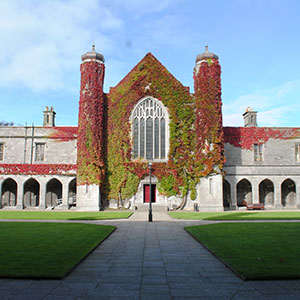
Guiding Breakthrough Research at University of Galway
We explore and facilitate commercial opportunities for the research community at University of Galway, as well as facilitating industry partnership.
-
Alumni & Friends

Alumni & Friends
There are 128,000 University of Galway alumni worldwide. Stay connected to your alumni community! Join our social networks and update your details online.
-
Community Engagement

Community Engagement
At University of Galway, we believe that the best learning takes place when you apply what you learn in a real world context. That's why many of our courses include work placements or community projects.
 Accessibility & Language
Taxation
Taxation
This section of the website contains general tax information that may be beneficial to the University staff and students from time to time. For example:
- Information on Value Added Tax (VAT)
- Tax Resident Campus Visitors and Non Tax Resident Campus Visitors
- Information on Professional Services Withholding Tax (PSWT)
- University of Galway's Tax Clearance Details - see Revenue's Website using University of Galway's Reference Number 0022578J and Access Number (TCAN) 517227
- University of Galway's EORI number is IE0022578J
- Relevant Contracts Tax (RCT) - see Revenue's Website
- Important notice for budget‑holders: Before engaging any individual, managers and budget‑holders must determine whether the person is an employee or self‑employed. Revenue now requires the use of the five‑step decision‑making framework when determining employment status.
Employee or Self-Employed – Key Points
Before engaging any individual, managers must determine whether the person should be classified as an employee or self‑employed.
This ensures correct payment processes and compliance with Revenue requirements.
Revenue distinguishes between:
- Contract of service → Employee
- Contract for service → Self‑employed
Following the Karshan Supreme Court judgment, all organisations must now use Revenue’s five‑step decision‑making framework when determining employment status.
As a result, some individuals previously treated as self‑employed may now need to be reclassified as employees, requiring PAYE to be operated.
Revenue’s Five‑Step Framework
Full guidance: Determining the employment status of an individual
The following five questions will assist in determining whether a contract is one “of service” or “for service”:
-
Is the individual receiving a wage or other form of remuneration for work?
-
Has the individual agreed to provide their services personally (with little or no option to delegate the work)?
-
Does the business control what, how, when, or where the work is carried out?
- If the answer to any of the above questions is No, the individual is likely self‑employed (subject to Step 5).
- If Yes to all three, move to Steps 4 and 5.
-
What do the actual facts and circumstances indicate about the true nature of the relationship?
Do they suggest the individual is working on their own account or as an employee? -
Is there legislation that would override any of the above answers?
Example: Section 112 of the Taxes Consolidation Act 1997 states that office holders are always treated as employees for tax purposes.
Further guidance on applying the framework is available in: Tax and Duty Manual Part 05‑01‑30
Examples Of Employment-Type Roles
The following examples help identify when an individual’s engagement should be treated as employment within University of Galway. An individual is considered to be in an employment-type role when they:
- Have University of Galway infrastructure, such as a university email address, phone extension, or office/desk.
- Are paid to work with a Principal Investigator on a research project (e.g., collecting, collating, or presenting data).
- Provide teaching, training, workshops, or tutorials to University of Galway students as part of academic programmes
(these individuals should use the PTTA forms). - Carry out administrative duties for a University unit.
- Provide support services under the direction of a University employee.
Budget-holders are strongly advised to review the five-step framework and seek clarification before engaging any individual.
* The term “individual” also includes people trading under a business name. For example, if “P. Murphy” provides lecturing to an evening B.Comm class and invoices as “P. Murphy Financial Services,” this is not appropriate. The nature of the work requires processing through payroll with PAYE/PRSI deducted at source.