-
Courses
Courses
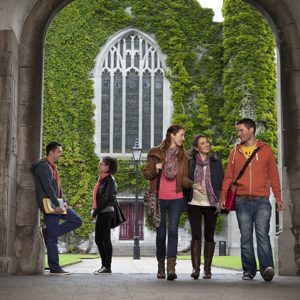
Choosing a course is one of the most important decisions you'll ever make! View our courses and see what our students and lecturers have to say about the courses you are interested in at the links below.
-
University Life

University Life
Each year more than 4,000 choose University of Galway as their University of choice. Find out what life at University of Galway is all about here.
-
About University of Galway
About University of Galway
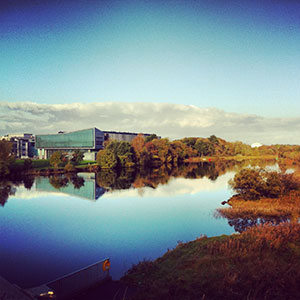
Since 1845, University of Galway has been sharing the highest quality teaching and research with Ireland and the world. Find out what makes our University so special – from our distinguished history to the latest news and campus developments.
-
Colleges & Schools
Colleges & Schools
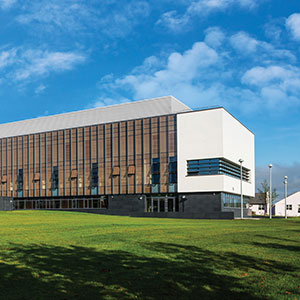
University of Galway has earned international recognition as a research-led university with a commitment to top quality teaching across a range of key areas of expertise.
-
Research & Innovation
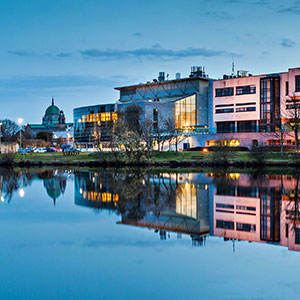
Research & Innovation
University of Galway’s vibrant research community take on some of the most pressing challenges of our times.
-
Business & Industry
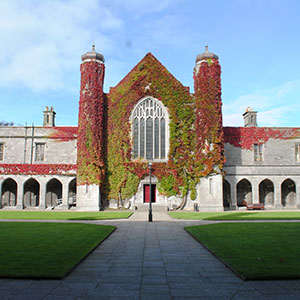
Guiding Breakthrough Research at University of Galway
We explore and facilitate commercial opportunities for the research community at University of Galway, as well as facilitating industry partnership.
-
Alumni & Friends
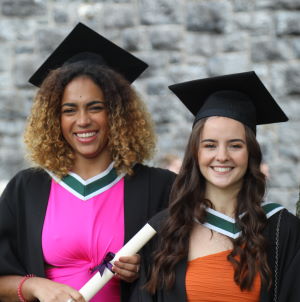
Alumni & Friends
There are 128,000 University of Galway alumni worldwide. Stay connected to your alumni community! Join our social networks and update your details online.
-
Community Engagement
Community Engagement
At University of Galway, we believe that the best learning takes place when you apply what you learn in a real world context. That's why many of our courses include work placements or community projects.
 Accessibility & Language
News Archive
Thursday, 15 May 2025
Cuireann an Institiúid Náisiúnta don Taighde ar Ailse Chíche na milliúin euro i bhfoirm maoinithe ar fáil d’Ollscoil na Gaillimhe chun cúram agus torthaí othair a chur chun cinn Sheol an tAire Sláinte, Jennifer Carroll MacNeill T.D., infheistíocht charthanach mhaoinithe de chuid na hInstitiúide Náisiúnta don Taighde ar Ailse Chíche (NBCRI), arbh fhiú €4 mhilliún é, chun tabhairt faoi thaighde in Ollscoil na Gaillimhe ar fhorbairtí a d’fhéadfadh saol na n-othar a athrú chun feabhais ó thaobh cúraim agus torthaí de. Déanfaidh infheistíocht na hInstitiúide Náisiúnta don Taighde ar Ailse Chíche éascaíocht do thaighde feabhsaithe agus do dhiagnóisic a rachaidh chun tairbhe othar, agus san áireamh leis sin beidh íomháú digiteach nach bhfuil fáil air in Éirinn faoi láthair, leathnú trialacha cliniciúla agus tuilleadh comhoibrithe idirnáisiúnta i dtaobh samplaí cliniciúla a anailísiú. Tá an maoiniú carthanach seo, arbh fhiú na milliúin euro é, á chur ar fáil mar chuid de Chomhpháirtíocht Shainiúil idir an NCBRI agus an Ollscoil, agus beidh poist ríthábhachtacha nua, idir acadúil agus taighde, mar thoradh air. Tá an daonchairdiúlacht seo, agus an chomhpháirtíocht atá taobh thiar di, bunaithe ar na caidrimh sheanbhunaithe idir an dá eagraíocht ar cuireadh tús leo os cionn tríocha bliain ó shin, agus fócas ar leith acu le 15 bliana anuas ar thaighde eolaíoch agus cliniciúil a chumasú. Síníodh an Chomhpháirtíocht Shainiúil go hoifigiúil agus seoladh go foirmeálta í ag ócáid a reáchtáladh in Institiúid Lambe don Taighde Aistritheach de chuid na hOllscoile. Seo mar a labhair an tAire Sláinte, Jennifer Carroll MacNeill, T.D.: “Tá an-áthas orm an chomhpháirtíocht thábhachtach seo idir an Institiúid Náisiúnta don Taighde ar Ailse Chíche (NCBRI) agus Ollscoil na Gaillimhe a sheoladh. Ní hamháin go gcuirfidh an infheistíocht €4 mhilliún seo i dtaighde ailse chíche le cúram agus torthaí othar, ach réiteoidh sé an bealach d’fhionnachtana ceannródaíocha i dtaighde agus i ndiagnóisic. Ceann de na hailsí is coitianta is ea ailse chíche agus déantar bean amháin as gach seachtar in Éirinn a dhiagnóisiú leis an ngalar seo i gcaitheamh a saoil. Céim mhór chun tosaigh is ea fógra an lae inniu maidir le tacú le mná a bhfuil an galar seo ag gabháil dóibh.” Dúirt Uachtarán Eatramhach Ollscoil na Gaillimhe, an tOllamh Peter McHugh: “Cuireann Ollscoil na Gaillimhe fáilte roimh an maoiniú seo atá curtha ar fáil ag an NCBRI agus roimh an athrú suntasach chun feabhais a bheidh mar thoradh ar an gcomhoibriú fadtéarmach agus feidhmeach seo ar an taighde ailse chíche. Tá ár gcomhpháirtíocht ar an bhfód le fada an lá agus níl aon amhras orainn ach go ndéanfaidh an infheistíocht dhaonchairdiúil fhlaithiúil seo difear suntasach dóibh siúd a bhfuil ailse orthu, agus go mbeidh tionchar níos leithne ag an Ollscoil mar institiúid diantaighde a bhfuil fréamhacha sa phobal aici agus í tiomanta do leas an phobail.” Tá ról lárnach á chomhlíonadh le fada ag an Institiúid Náisiúnta don Taighde ar Ailse Chíche (NBCRI), ar carthanas náisiúnta é, i bhforbairt na gclinicí scagthástála cíche agus siomptómacha a chur chun cinn in Ospidéal na hOllscoile, Gaillimh agus i bhforbairt buntaighde agus taighde chliniciúil ar ailse chíche in Institiúid Lambe in Ollscoil na Gaillimhe. Tacóidh infheistíocht mhaoinithe an NBCRI leis na réimsí taighde seo a leanas: Taighde aistritheach ar ailse chíche de chuid Ollscoil na Gaillimhe, ailse chíche mheiteastáiseach san áireamh; riosca géiniteach; fionnachtain agus brath bithmharcóirí; cumarsáid ó chill go cill laistigh de shiadaí; gaschealla agus teiripe chille. An Bithbhanc Ailse agus oibriú i gcomhar le comhpháirtithe náisiúnta agus idirnáisiúnta, rud a éascóidh úsáid samplaí cliniciúla d’fhonn fiosrúchán a dhéanamh ar an gcaoi a bhforbraíonn an galar, a ndiagnóisítear é agus a gcuirtear cóir leighis air. Saindiagnóisic trí úsáid a bhaint as trealamh íomháithe dhigitigh spásúil. Trialacha cliniciúla a bhaineann le réimse na diagnóisice, cóireálacha leighis agus leo siúd a thagann slán, agus san áireamh leis sin tá máinliacht chíche agus teilealeigheas. Forbairt ionaid ailse chuimsithigh a mbeidh creidiúnú Eorpach aige tríd an gclár taighde chomh maith le habhcóideacht a dhéanamh d’infreastruchtúr feabhsaithe do chóireáil ailse mar chuid de FSS an Iarthair agus an Iarthuaiscirt - ainmniúchán Ionad Ailse Ollscoil na Gaillimhe mar Ionad Ailse de chuid Eagraíocht Institiúidí Ailse na hEorpa (OECI). Ceapacháin agus róil acadúla agus taighde lena n-áirítear Ceann na hOinceolaíochta Leighis; Stiúrthóir Eolaíochta; altraí do thrialacha cliniciúla; eolaithe iardhochtúireachta agus mic léinn PhD; scoláireachtaí samhraidh taighde ailse. Bhí an méid seo le rá ag Caroline Loughnane, Cathaoirleach na hInstitiúide Náisiúnta don Taighde ar Ailse Chíche: “An misean atá ag an Institiúid Náisiúnta don Taighde ar Ailse Chíche airgead a bhailiú chun tacú le taighde ailse chíche den chéad scoth a mbeidh fíorthionchar aige, agus tionchar intomhaiste, ar thorthaí d’othair le hailse chíche. Tá an-áthas orainn a bheith in ann an infheistíocht seo, arbh fhiú €4 mhilliún í, a dhéanamh sa chlár taighde ailse chíche in Ollscoil na Gaillimhe faoi stiúir an Ollaimh Michael Kerin agus a fhoireann. An toradh a mbítear ag súil leis ó thaighde ná fionnachtana nua, cóireálacha leighis níos éifeachtaí agus torthaí níos fearr d’othair atá ag fulaingt le hailse chíche. Tá an NBCRI ag tacú le taighde ar ailse chíche le breis agus tríocha bliain agus tá an-áthas orainn a bheith in ann cur lenár dtiomantas do chlár taighde ailse chíche in Ollscoil na Gaillimhe agus céim nua á tógáil aige mar ionad ailse le creidiúnú Eorpach i gcomhpháirtíocht le FSS an Iarthair agus an Iarthuaiscirt.” Dúirt an tOllamh Michael Kerin, Ollamh le Máinliacht in Ollscoil na Gaillimhe, Máinlia Comhairleach in Ospidéil na hOllscoile, Gaillimh agus Stiúrthóir Taighde NBCRI: “Tacóidh an maoiniú seo le clár cuimsitheach taighde agus tógann sé ar a bhfuil bainte amach, a bhuíochas le tacaíocht an NBCRI, i dtaighde ailse chíche, na géinte atá ina n-údar don ghalar, mar shampla, na bithmharcóirí atá in ann cúrsa an ghalair a thuar, agus léirmhíniú radaighníomhach níos fearr. Tá sé tar éis ligean dúinn cur le comhoibrithe cliniciúla agus taighde ar an oileán seo agus ar fud an domhain. Tá an fhoireann taighde thar a bheith buíoch dár mBord agus dár nOibrithe Deonacha a thugann an-tacaíocht agus spreagadh dúinn. An toradh atá ar an gcaidreamh seanbhunaithe idir Ollscoil na Gaillimhe agus an NBCRI ná isteach is amach le €8 milliún i bhfoirm maoiniú daonchairdiúil agus infheistíocht i dtaighde a bheith curtha ar fáil ó 2010 i leith d'Institiúid Lambe san Ollscoil. Athdhearbhú is ea tiomantas nua seo an NBCRI ar an bhfócas atá ag an gcarthanas ar chur chuige a fhaigheann faisnéis ó thaighde féachaint le torthaí níos fearr a fháil d’othair. Críoch
Thursday, 15 May 2025
Minister for Health Jennifer Carroll MacNeill T.D. today formally launched a €4million charitable funding investment by National Breast Cancer Research Institute (NBCRI) for research into life-changing advancements in patient care and outcomes at University of Galway. The NBCRI philanthropy will enable enhanced research and diagnostics for the benefit of patients, including digital imaging currently not available in Ireland, the expansion of clinical trials and more international collaboration on the analysis of clinical samples. The multimillion-euro charitable funding is being provided as part of a new Signature Partnership between NBCRI and the University which will provide for new, critical academic and research posts. The partnership and philanthropy build on a legacy of relations between the two organisations going back more than three decades, with a specific focus on enabling scientific and clinical research over the last 15 years. The Signature Partnership was officially signed and formally launched at an event in the University’s Lambe Institute for Translational Research. Minister for Health, Jennifer Carroll MacNeill, T.D.: “I am delighted to launch this important partnership between the National Breast Cancer Research Institute (NBCRI) and the University of Galway. This investment of €4 million in breast cancer research will not only enhance patient care and outcomes but also pave the way for groundbreaking advancements in research and diagnostics. As breast cancer is one of the most common cancers, with 1 in 7 women in Ireland receiving a diagnosis during their lifetime, today’s announcement marks another important step forward in supporting women affected by this disease.” Professor Peter McHugh, Interim President of University of Galway, said: “University of Galway welcomes this funding by NBCRI and the step change it creates in a longstanding and impactful collaboration on breast cancer research. Our partnership goes back many years and we have no doubt that this generous philanthropic investment will make a significant difference to outcomes for cancer patients, as well as the wider impact that our University can have as a research-intensive institution, rooted in the community and committed to the public good.” A national charity, the National Breast Cancer Research Institute (NBCRI) has been instrumental in advancing the development of the breast screening and symptomatic clinics at University Hospital Galway and the development of clinical and fundamental breast cancer research at the Lambe Institute at University of Galway. The new NBCRI funding investment will support: University of Galway’s translational breast cancer research, including metastatic breast cancer; genetic risk; biomarker discovery and detection; cell communication within tumours; stem cells and cell therapy. The Cancer Biobank and collaboration with expert national and international partners which enables the use of clinical samples to investigate how the disease develops, is diagnosed and is treated. Specialist diagnostics through state-of-the-art digital spatial imaging equipment. Clinical trials into diagnostics, treatment and survivorship, including breast surgery and telemedicine. The development of a European-accredited comprehensive cancer centre through the research programme and advocacy for improved cancer treatment infrastructure as part of the HSE West and North-West - University of Galway Cancer Centre designation as an Organisation of European Cancer Institutes (OECI) Cancer Centre. Academic and research appointments and roles including a Chair of Medical Oncology; Scientific Director; clinical trials nurses; postdoctoral scientists and PhD students; cancer research summer scholarships. Chairperson of the National Breast Cancer Research Institute, Caroline Loughnane, said: “The mission of the National Breast Cancer Research Institute is to raise funds in support of world-class breast cancer research that has a real and measurable impact on outcomes for breast cancer patients. We are delighted to be making this investment of €4million in the breast cancer research programme at University of Galway, led by Professor Michael Kerin and his team. Research means new discoveries, more effective treatments and better outcomes for breast cancer patients. Building on more than three decades of support, NBCRI is excited to extend its commitment to the breast cancer research programme at University of Galway as it enters a new phase as a European accredited cancer centre in partnership with the HSE West and North-West.” Professor Michael Kerin, Professor of Surgery at University of Galway, Consultant Surgeon at Galway University Hospitals and Research Director at NBCRI, said: “This funding underpins an expansive programme of research and builds on the legacy of the NBCRI contribution to major discoveries in breast cancer ranging from the genes that cause it, biomarkers that predict outcome, improved radiological interpretation. It has allowed us to contribute to major clinical and research collaborations on this island and across the globe. The research team are immensely grateful to our Board and Volunteers whose support is immense and inspirational.” University of Galway’s longstanding relationship with NBCRI has enabled approximately €8million of philanthropic funding and investment in research at the Lambe Institute at the University since 2010. The new commitment by the NBCRI reaffirms the charity’s focus on a research-informed approach to improving patient outcomes. Ends
Tuesday, 6 May 2025
University of Galway’s Tax Clinic has been recognised with the Excellence in Education award at the prestigious Irish Accountancy Awards 2025. The win celebrates its outstanding contribution to tax education and social inclusion in Ireland. The Irish Accountancy Awards celebrate the most innovative individuals and organisations driving excellence across the accounting profession. The Excellence in Education award for the Tax Clinic at University of Galway’s J.E Cairnes School of Business and Economics recognises its commitment to delivering impactful learning opportunities while serving a vital social function. The University of Galway Tax Clinic provides free, confidential tax information and support to students and members of marginalised communities. Through this initiative, tax student volunteers, under the supervision of qualified tax professionals, help and educate individuals better understand and manage their tax affairs. Emer Mulligan, Director of the Tax Clinic and Personal Professor of Taxation and Finance at University of Galway, said: “I am delighted to receive this award on behalf of the Tax Clinic. Our tax students working in the clinic are getting an exceptional professional tax experience, whilst assisting marginalised citizens with their tax compliance and correspondence with the Revenue. I am confident our Tax Clinic is making a real difference, empowering our citizens in this critical aspect of fiscal citizenship. I look forward to further expansion of the tax clinic, building on this external recognition. I am grateful to our professional tax advisors who give their time and expertise to this initiative on a pro bono basis.” For more information on the University of Galway Tax Clinic visit https://www.universityofgalway.ie/taxclinic/. Ends
Tuesday, 6 May 2025
Publication sets out actions for Ireland to achieve membership of BBMRI-ERIC – one of Europe’s largest research infrastructures A research team at University of Galway has led the development of a roadmap which charts the path for Ireland to join the European research infrastructure for biobanking and biomolecular resources. The new publication, A Roadmap Towards Ireland’s Membership of BBMRI-ERIC, was developed by a multidisciplinary team led by University of Galway on joining the Biobanking and Biomolecular Resources Research Infrastructure - European Research Infrastructure Consortium. The roadmap reflects a growing national consensus that joining BBMRI-ERIC is essential for advancing health research and delivering long-term benefits for patients and society. BBMRI-ERIC facilitates access to nearly 500 biobanks across Europe, enabling collaborative, high-impact research. Biobanking enables the collection and storage of biological samples and health data from patients and volunteers for future research. It underpins the development of new diagnostics and treatments for diseases such as cancer, cardiovascular conditions and neurodegenerative disorders. In September 2024, the BioBANC Symposium III took place at University of Galway, involving stakeholders from academia, healthcare, patient advocacy and industry where strong support was expressed for Ireland to become a BBMRI-ERIC member. The symposium underlined the urgency of integrating biobanking into Ireland’s national healthcare system, to create a sustainable infrastructure for future health research and innovation. Professor Peter McHugh, Interim President of University of Galway, said: “This roadmap reflects the kind of leadership and collaboration that defines University of Galway’s role in national and European research. I want to thank our colleagues for driving this strategic vision forward - placing Ireland in a position to realise the full potential of biobanking for public good. Securing BBMRI-ERIC membership is a national opportunity. It requires collective commitment across government, healthcare, research and patient communities, and we strongly support a positive outcome for all involved.” Dr Colm Henry, Chief Clinical Officer of the Health Service Executive, said: "Biobanking is a critical research tool which helps us understand illness and the different ways in which people respond to illness. Collaboration with BBMRI-ERIC will enhance the power of biobanking through collaboration and pooling of knowledge.” Dr Sonja Khan, Head of Education at the Institute for Clinical Trials at University of Galway, and Programme Director for the MSc Clinical Research at University of Galway said: “As biobanks continue to evolve, they are playing an increasingly critical role in advancing healthcare and addressing some of the world’s most pressing health challenges. This evolution is bringing changes in the relationship between biobanks and the biological samples and data they are entrusted to preserve by patients and participants. The Irish biobanking community is advocating that these changes are best navigated in alignment with our European partners through membership of BBMRI-ERIC.” Dr Avril Kennan, chief executive of Health Research Charities Ireland, said: “If we are serious about delivering truly patient-centered care, then research must be embedded as a core function of our health and social care system. Patients want to contribute to improvements - not just for themselves, but for others. By building research into routine care, we can turn every patient interaction into an opportunity to learn, to improve, and to innovate. The policy direction is clear; now we need collective commitment across the system to make it happen.” BBMRI-ERIC is headquartered in Graz, Austria, providing a harmonised framework for data quality, ethical and legal compliance, and responsible access to biological materials -accelerating scientific discovery while ensuring public trust. The report emphasises that a national biobanking infrastructure will require dedicated infrastructure funding, legislative backing, and stronger public awareness. Key Recommendations from the Roadmap Join BBMRI-ERIC: Position Ireland as a full member of the European biobanking network. Integrate biobanking into the health system: Embed biobanking in national healthcare policies to support ongoing research. Secure infrastructure funding: Move beyond short-term grants to a sustainable funding model. Strengthen public and political understanding: Launch awareness campaigns to enhance trust and transparency. Create a national biobanking node: Coordinate efforts and standardise best practices across the country. A federated and coordinated national approach will be essential, aligning Ireland’s biobanking capabilities with international standards while allowing regional strengths to flourish. The roadmap outlines the need to establish a national node to support integration, governance, and stakeholder collaboration. Professor Jens K. Habermann, Director General of BBMRI-ERIC, said: “Ireland’s membership will unlock the potential of biobanking and biomolecular resources to inspire the best research for the benefit of patients, the public, and the planet.” Billy McCann, patient advocate and member of the National Biobanking Working Group, said: “When you’re going through illness, so much is out of your control. But choosing to contribute to a biobank gives that experience meaning. You’re not just giving samples - you’re giving future researchers a key to unlock answers we don’t have yet. It’s a deeply personal decision, but it’s also a powerful act of hope - for yourself, for your family, and for people you’ll never meet. You’re part of something bigger than your own diagnosis.” The report is available at https://doi.org/10.12688/hrbopenres.14089.1 Ends
Monday, 30 June 2025
University achieves 13th Athena SWAN Award with Bronze for School of Political Science and Sociology University of Galway has earned further significant recognition in the advancement of gender equality, with the School of Political Science and Sociology securing an Athena SWAN award. The Athena SWAN Ireland - Bronze has been awarded to reflect the collective commitment of the School to equality, diversity and inclusion. The Bronze application highlighted a range of initiatives that will be taken at the School of Political Science and Sociology, including improvement in the representation of women in senior academic roles. This latest Athena SWAN accreditation sees a total of 11 Bronze Awards and two Silver Awards in the University, along with an institutional Bronze Award which was renewed in 2021. Thirteen out of the University’s eighteen Schools now hold Athena SWAN Awards. Dr Helen Maher, Vice-President for Equality Diversity and Inclusion, University of Galway, said: “We are delighted to share in the congratulations for the School of Political Science and Sociology. We are greatly encouraged by the significant progress our university continues to make on gender and additional equality grounds. “Achieving the School’s first Bronze Award is a testament to our colleagues’ vision, philosophy and commitment to gender equality and progressing equality, diversity and inclusion in our culture and our collective responsibilities.” Professor Michelle Millar, Head of the School of Political Science and Sociology, University of Galway, said: “This recognition is a significant milestone for the School of Political Science and Sociology. It reflects the collective commitment of our community to equality, diversity and inclusion and continuous improvement in our practices and culture." “I would like to acknowledge the hard work of the Schools’ EDI Committee, led by Dr Bernadine Brady and Dr Declan Coogan, who were instrumental in this success.” Ends
Thursday, 26 June 2025
University of Galway hosts annual Health Promotion Conference addressing progress and emerging threats in sexual health University of Galway today hosted the annual Health Promotion Conference, with the focus this year on advancing sexual health promotion. Led by the University’s Health Promotion Research Centre, in partnership with the Department of Health, the Health Service Executive Sexual Health Programme and Association for Health Promotion Ireland, the event brought together researchers, practitioners, policy leads and international experts to explore how Ireland can shape the future of sexual health and wellbeing. The conference – From Awareness to Action: Advancing Sexual Health Promotion – reflected on national policy developments, including the new National Sexual Health Strategy 2025–2035 and its accompanying Action Plan for 2025–2028, published this week by the Government and presented at the conference. It also considered the delivery of quality sexuality education, equitable access to healthcare, stigma reduction and emerging issues such as digital sexual behaviours and STI/HIV prevention. Discussions focused on how to build a more inclusive, evidence-driven and holistic approach to sexual and reproductive health. Ireland has seen substantial progress in sexual health – from declining teenage pregnancies to increased access to contraception and more open discussions of LGBTQ+ rights – but challenges continue in relation to sexual health, marked by rising HIV and STI rates internationally; the need to focus on prevention of domestic, gender based and sexual violence (DSGBV) and support for survivors; and to address stigma, which can be a barrier to accessing care. Minister of State for Public Health, Wellbeing and the National Drugs Strategy, Jennifer Murnane O’Connor, T.D. said: “The annual Health Promotion Research Conference is a great opportunity for knowledge exchange for all of us involved in protecting and promoting health. This year's theme of Sexual Health Promotion highlights the importance of normalising conversations about sexual health, to encourage people to access testing and care, and to ensure no one is left behind. We have achieved considerable progress in the development and implementation of sexual health services, and this work continues, with an additional €1.35m allocated to free home STI testing, HIV Pre-exposure Prophylaxis (PrEP) and the free contraception scheme in 2025. We are grateful today for the opportunity to present our new National Sexual Health Strategy and Action Plan to a wider audience.” Professor Peter McHugh, Interim President of University of Galway, said: “As a University with a proud tradition of leading public health and social change, we are honoured to host this national conversation on sexual health. This conference is both timely and necessary, as it brings to the fore a topic that has often been under-prioritised despite its centrality to human health, dignity and equality.” The conference featured contributions from international experts from Canada, Belgium, Uganda and the UK, offering a global perspective on the challenges around sexual and reproductive health. Participants explored how sexual health promotion can be strengthened, with a particular focus on reaching people of all genders and sexual orientations, ethnicities and identities and cultural/religious backgrounds. Professor Saoirse Nic Gabhainn, Professor of Health Promotion at the University of Galway, said: “Sexual health is about far more than the absence of disease. It is about relationships, consent, pleasure, identity, and rights. With the changing public discourse in Ireland, we have an opportunity to reimagine how sexual health is promoted – not only through health services, but across education, community and policy.” Dr András Költő, Senior Postdoctoral Researcher in Health Promotion at the University of Galway, said: “We are facing a hidden sexual health crisis. Despite numerous achievements in the last decades, honest and open discussions on sexual and reproductive health are still restricted by shame, silence and taboo. This conference provides a unique platform to share knowledge, identify evidence gaps, and shape future action in Sexual Health Promotion that is inclusive, effective and sustainable.” The conference features panel discussions, interactive workshops and keynote addresses including: Professor Kaye Wellings, The London School of Hygiene & Tropical Medicine – five decades of sexual health promotion and the challenges the field currently faces. Professor Philip Dodd, Deputy Chief Medical Officer, and Dr Fiona Mansergh, Sexual Health and Contraception Policy Lead, Department of Health – summaries of progress in the area of sexual health since the first Sexual Health Strategy was launched in 2015. Professor Fiona Lyons, St James’s Hospital and HSE Sexual Health Programme – current trends in Sexually Transmitted Infections and how to address the rise in STIs in Ireland. Full programme details are available at: www.hprcconference.ie The new National Sexual Health Strategy and first National Sexual Health Action Plan, 2025–2028 (single document), can be accessed at: https://www.gov.ie/en/healthy-ireland/policy-information/national-sexual-health-strategy-2025-2035/ Ends
Thursday, 26 June 2025
Research Ireland programme aims to fast-track research breakthroughs into commercial healthcare solutions ARC Hub for HeathTech led by University of Galway in partnership with Atlantic Technological University and RCSI University of Medicine and Health Sciences University of Galway is to be the headquarters for a new €34 million investment in healthcare technology solutions under Research Ireland’s ARC Hub programme - Accelerating Research to Commercialisation. The announcement of the ARC Hub for HealthTech was made today by Minister for Further and Higher Education, Research, Innovation and Science, James Lawless T.D. and forms part of wider initiatives and funding awards to drive the commercial impact of research. The ARC Hub for HealthTech is being led by University of Galway, in partnership with ATU and RCSI and starts with 23 research-led innovation projects selected for their strong potential to improve patient outcomes. The landmark funding investment of €34.3 million is provided by the Government of Ireland and the European Regional Development Fund (ERDF) to position the Northern and Western Region as a national and international leader in MedTech and connected health innovation. Primary objective of the ARC Hub programme is to drive regional development by accelerating novel, cutting-edge research and make it ready for commercial impact while also supporting the development of entrepreneurial scientists and engineers with the skills to realise commercial opportunities from research. The ARC Hub for HealthTech brings together clinical and commercial expertise, cutting-edge research and regional networks to develop impactful solutions to tackle chronic disease. Its focus will be on smart implants, advanced wearable medical devices, novel sensors and AI- and machine learning-driven modelling. The ARC Hub for HealthTech will support interdisciplinary teams, provide regulatory and market insight, accelerate clinical and commercial pathways and build partnerships with industry and healthcare stakeholders. It will act as a national testbed for innovation translation, guiding academic research teams through key steps towards commercialisation. Speaking at the announcement, Minister for Further and Higher Education, Research, Innovation and Science, James Lawless T.D., said: “The Research Ireland ARC Hub for HealthTech will help transform regional innovation and entrepreneurial training in the North West region and beyond. Enhancing the existing academic-enterprise healthcare and technology ecosystems, the ARC Hub will deliver a suite of impactful, on-the-ground supports, benefitting everyone in the process – researchers, engineers, technologists, manufacturers, clinicians, physicians and, critically, patients. The provision and delivery of appropriate and effective healthcare is, by its very nature, time-sensitive. The ARC Hub for HealthTech will play an instrumental role in accelerating the commercialisation of research and getting health solutions to those that need them faster.” Professor Peter McHugh, Interim President of University of Galway, said: “This investment recognises the power of regional collaboration and the strength of our academic and clinical talent pool. While our region faces significant challenges – scoring below the EU and national averages in regional competitiveness – we also have a unique and internationally-renowned ecosystem from which to build, and a proud history of achievement in the broad health technology domain. University of Galway’s long-established presence, including our network of medical academies, combined with ATU’s multi-campus reach and RCSI’s expertise, creates a formidable alliance. This ARC Hub will drive impact where it's needed most and working collaboratively it allows us to address shared challenges and harness the innovation potential that already exists in our communities.” Professor Garry Duffy, Professor of Health Technology Innovation at University of Galway, Professor of Anatomy at RCSI and Director of the ARC Hub for HealthTech, added: “We're excited to bring together regional and national expertise in connected health innovation. Our goal is to create solutions that will transform how we manage chronic disease in our communities. This is about building a global beacon for MedTech and connected health innovation - rooted in the Northern and Western region of Ireland. The Hub will allow us to scale up efforts already underway and build a nationally coordinated platform to fast-track technologies that can improve quality of life and care. At the heart of the ARC Hub are 23 innovation projects selected for their strong potential to improve patient outcomes. Each will undergo an accelerated pathway from research to market, designed to bring solutions to those who need them, faster." Professor Aoife Lowery, Professor of Surgery at University of Galway, Director of the Clinical Research Facility Galway and Clinical Lead of the ARC Hub for HealthTech, said: “Our aim is to connect breakthrough science with the people and systems who can translate it into patient benefit. By embedding clinical insight from the earliest stages of innovation, we will support technologies that are both impactful and implementable in real-world healthcare settings.” Ends
Thursday, 26 June 2025
Tá sé mar aidhm ag clár Taighde Éireann luas a chur faoi dhul chun cinn taighde i réitigh cúraim sláinte tráchtála An Mol ARC do Theicneolaíochtaí Sláinte faoi stiúir Ollscoil na Gaillimhe i gcomhpháirtíocht le hOllscoil Teicneolaíochta an Atlantaigh agus Ollscoil Leighis agus Eolaíochtaí Sláinte RCSI Beidh Ollscoil na Gaillimhe ina ceanncheathrú d'infheistíocht nua €34 milliún i réitigh theicneolaíochta cúraim sláinte faoi chlár Mhol ARC Taighde Éireann – faoi chlár Taighde Éireann, an Mol ARC – Ó Thaighde go Tráchtálú. Rinne an tAire Breisoideachais agus Ardoideachais, Taighde, Nuálaíochta agus Eolaíochta, James Lawless T.D. fógra faoin Mol ARC do Theicneolaíochtaí Sláinte inniu agus is cuid de thionscnaimh níos leithne agus de dhámhachtainí maoinithe é chun tionchar tráchtála an taighde a thiomáint. Tá an Mol ARC do Theicneolaíochtaí Sláinte á stiúradh ag Ollscoil na Gaillimhe, i gcomhpháirtíocht le ATU agus RCSI, agus beidh 23 tionscadal nuálaíochta atá faoi stiúir taighde ann ag an tús a roghnaíodh mar gheall ar a gcumas láidir chun torthaí othar a fheabhsú. Tá an infheistíocht mhaoinithe shuntasach €34.3 milliún curtha ar fáil ag Rialtas na hÉireann agus ag Ciste Forbraíochta Réigiúnaí na hEorpa (CFRE) chun áit a chinntiú do Réigiún an Tuaiscirt agus an Iarthair mar cheannaire náisiúnta agus idirnáisiúnta i réimse na Teicneolaíochta Leighis agus na nuálaíochta sláinte comhnasctha. Is é príomhchuspóir Mhol ARC forbairt réigiúnach a thiomáint trí thaighde úrnua, ceannródaíoch a bhrú chun cinn agus é a ullmhú le haghaidh tionchar tráchtála agus ag an am céanna tacú le forbairt eolaithe agus innealtóirí fiontraíocha a bhfuil na scileanna acu chun deiseanna tráchtála a eascairt as taighde. Tugann an Mol ARC do Theicneolaíochtaí Sláinte saineolas cliniciúil agus tráchtála, taighde ceannródaíoch agus líonraí réigiúnacha le chéile chun réitigh tionchair a fhorbairt chun dul i ngleic le galair ainsealacha. Beidh sé dírithe ar ionchlannáin chliste, ar fheistí leighis inchaite ardteicneolaíochta, ar bhraiteoirí nuálacha agus ar shamhaltú atá bunaithe ar intleacht shaorga agus ar mheaisínfhoghlaim. Tacóidh an Mol ARC do Theicneolaíochtaí Sláinte le foirne idirdhisciplíneacha, cuirfidh sé léargas rialála agus margaidh ar fáil, cuirfidh sé dlús faoi chonairí cliniciúla agus tráchtála agus forbróidh sé comhpháirtíochtaí le páirtithe leasmhara tionscail agus cúraim sláinte. Feidhmeoidh sé mar mheán tástála náisiúnta le haghaidh aistriú nuálaíochta, ag treorú foirne taighde acadúla trí chéimeanna tábhachtacha i dtreo tráchtálaithe. Bhí an méid seo a leanas le rá ag James Lawless, T.D., an tAire Breisoideachais agus Ardoideachais, Taighde, Nuálaíochta agus Eolaíochta: “Cabhróidh Mol ARC Taighde Éireann do Theicneolaíochtaí Sláinte le nuálaíocht réigiúnach agus oiliúint fiontraíochta a athrú ó bhonn i réigiún an Iarthuaiscirt agus níos faide i gcéin. Agus feabhas á chur ar na héiceachórais cúraim sláinte agus teicneolaíochta acadúla-fiontraíochta atá ann cheana féin, cuirfidh an Mol ARC sraith tacaí tionchair ar an láthair ar fáil, a rachaidh chun tairbhe gach duine sa phróiseas – taighdeoirí, innealtóirí, teicneolaithe, monaróirí, cliniceoirí, lianna agus, go ríthábhachtach, othair. Is rud é soláthar agus seachadadh cúraim sláinte iomchuí agus éifeachtach atá íogair ó thaobh ama de. Beidh ról ríthábhachtach ag an Mol ARC do Theicneolaíochtaí Sláinte i ndlús a chur faoi thráchtálú taighde agus réitigh shláinte a chur ar fáil dóibh siúd a bhfuil gá acu leo níos tapúla.” Dúirt Uachtarán Eatramhach Ollscoil na Gaillimhe, an tOllamh Peter McHugh: “Tugann an infheistíocht seo aitheantas do chumhacht an chomhoibrithe réigiúnaigh agus neart ár bpobail ardoilte acadúil agus chliniciúil. Cé go bhfuil dúshláin shuntasacha roimh ár réigiún – agus scór faoi bhun mheáin an AE agus na meán náisiúnta againn i dtaca le hiomaíochas réigiúnach – tá éiceachóras uathúil agus idirnáisiúnta againn ar féidir linn a fhorbairt, agus stair bhródúil againn as a bhfuil bainte amach againn i réimse leathan na teicneolaíochta sláinte. Cruthaíonn láithreacht fhadbhunaithe Ollscoil na Gaillimhe, lena n-áirítear ár n-acadaimh leighis, in éineacht le campais scaipthe ATU agus saineolas RCSI, comhghuaillíocht láidir. Cuirfidh an Mol ARC seo tionchar chun cinn san áit is mó a bhfuil gá leis agus trí oibriú le chéile, is féidir linn aghaidh a thabhairt ar na dúshláin chéanna agus leas a bhaint as an gcumas nuálaíochta atá cheana féin inár bpobail.” Dúirt an tOllamh Garry Duffy, Ollamh Bunaithe le Nuálaíocht Teicneolaíochta Sláinte in Ollscoil na Gaillimhe agus Stiúrthóir ar Mhol ARC do Theicneolaíochtaí Sláinte: “Tá ríméad orainn saineolas réigiúnach agus náisiúnta a thabhairt le chéile i nuálaíocht sláinte comhnasctha. Is é ár sprioc réitigh a chruthú a athróidh an chaoi a ndéileálaimid le galair ainsealacha sa phobal. Is éard atá i gceist anseo ná eiseamláir dhomhanda a fhorbairt don Teicneolaíocht Leighis agus do nuálaíocht sláinte comhnasctha – fréamhaithe i réigiún Thuaisceart agus Iarthar na hÉireann. Cuirfidh an Mol ar ár gcumas iarrachtaí atá ar bun cheana féin a mhéadú agus ardán comhordaithe go náisiúnta a fhorbairt chun tús áite a thabhairt do theicneolaíochtaí a fhéadfaidh feabhas a chur ar cháilíocht na beatha agus ar chúram. Cuid lárnach den Mhol ARC is ea 23 tionscadal nuálaíochta atá roghnaithe mar gheall ar a gcumas láidir torthaí othar a fheabhsú. Rachaidh gach ceann acu faoi mhearchosán ón taighde go dtí an margadh, atá deartha chun réitigh a chur ar fáil dóibh siúd a bhfuil gá acu leo níos tapúla." Dúirt an tOllamh Aoife Lowery, Ollamh le Máinliacht in Ollscoil na Gaillimhe, Stiúrthóir na Saoráide Taighde Cliniciúla i nGaillimh agus Ceannaire Cliniciúil ar Mhol ARC do Theicneolaíochtaí Sláinte: “Is é an aidhm atá againn ná an eolaíocht cheannródaíoch a nascadh leis na daoine agus na córais ar féidir leo í a úsáid ar mhaithe le leas na n-othar. Trí léargas cliniciúil a chur san áireamh ó na céimeanna is luaithe den nuálaíocht, tacóimid le teicneolaíochtaí a bhfuil tionchar acu agus ar féidir iad a chur i bhfeidhm i suíomhanna cúraim sláinte an tsaoil.” Críoch
Wednesday, 25 June 2025
Five researchers at University of Galway have been awarded funding from Research Ireland in a special investment in projects aligned with national priorities. As part of the Research Ireland Pathway programme, the five projects will, investigate climate misinformation in Ireland; analyse gender balance in Irish opera productions; determine the response of microbial communities to environmental change; re-define interpretations of obscure medieval texts; and study the seismic vibrations of highly magnetised neutron stars. The funding, covering a four-year period, will support the researchers to further establish their careers and allow for a postgraduate student to each project. The Pathway programme is a national investment announced by Minister for Further and Higher Education, Research, Innovation and Science, James Lawless T.D., with more than €3.2m awarded to University of Galway. The awardees are: Dr Brenda McNally, an Assistant Professor in communication and global media, and a Fulbright Ireland scholar in the University’s College of Arts Social Sciences and Celtic Studies. Her research project - Tackling Climate Misinformation in Ireland: An Evidence Base and Novel Resources for Journalists and Communications Professionals - will investigate the evolving forms of misinformation in Irish climate policy debates and examine how they are reproduced in news media. The findings will be used to co-create resources to tackle the crisis of climate misinformation with stakeholders. According to the UN Intergovernmental Panel on Climate Change, rampant misinformation is delaying climate action. This is because it confuses the public about the need for urgent action and weakens democratic debate about the necessary responses. Therefore, improving communication about climate policy is urgently required. However, climate misinformation is fast changing making it difficult for journalists and communication professionals to identify and easy to reproduce. The project is co-funded by the Environmental Protection Agency, Sustainable Energy Authority of Ireland and Met Éireann. Dr Ciaran Arthur, a postdoctoral researcher in the Classics Department in the University’s College of Arts Social Sciences and Celtic Studies. His research project - Connect 4: Uncovering Knowledge Exchange within the Early Medieval Insular World through Linguistic Idiosyncrasies in Obscure Letters, Words, Phrases, and Texts – seeks to re-define interpretations of obscure texts that exist between British and Irish communities in the medieval period, exposing commonalities between different cultures, and how they interconnect. This is based on many texts from early medieval Irish and British manuscripts containing ancient and foreign languages, strange words, exotic alphabets, and cryptic signs. Its digital repository will provide a thematic, multidisciplinary tool to cross-compare, critically analyse, and attempt to solve meanings in these mysterious texts. Dr Anna Trego, a postdoctoral researcher from the School of Biological and Chemical Sciences in the University’s College of Science and Engineering. Her research project - Modelling Metabolic Stress Response of Whole Microbial Communities to Environmental Cues – will determine and model the response of microbial communities to environmental change, including changing climates. This project will study how whole communities of bacteria, viruses and fungi interact and respond to a wide range of environmental stresses at the genetic level. It will combine a unique incubation with cutting edge strategies and community modelling to identify patterns and gradients in community stress response. This set-up will provide a high-throughput means of testing stress-response in whole microbial communities from the whole-community level, down to the level of individual metabolic pathways and even genes. Dr Michael Lydon, a postdoctoral researcher in the University’s College of Arts, Social Sciences and Celtic Studies. His research project - Knowing the Score: An Analysis of the Gender Balance of Opera Productions on the Island of Ireland (2000-25) – will quantify the extent to which imbalances exist in Irish opera and qualify the socio-cultural, political and economic factors that have supported inequality. The study will assess the gender balance of the key creative and leadership roles for Irish opera productions from 2000-2025. The outputs of this research will include a series of ready-to-implement research-informed equality initiatives and stimulate sustainable and systemic changes in Irish opera that will enrich creativity and culture. Dr Oliver Roberts, a researcher in the University’s College of Science and Engineering. His research project - Good Vibrations – Studying the Seismic Vibrations of Highly Magnetized Neutron Stars (AstroMagnets) - will develop infrastructure with NASA and European Space Agency missions and global radio networks to better understand the connection between fast radio bursts and magnetar flares/bursts in space, through timing analysis of their “starquakes”, as well as monitoring active galactic magnetars, and testing new hardware and methods required to observe magnetars from space. Magnetars are the smouldering remnants of an explosion of a star 10 times greater 10x more massive than our Sun. Magnetars produce episodic bursts, intermediate flares and rarely, giant flares. Professor Lokesh Joshi, Interim Vice-President for Research and Innovation, University of Galway, said: “Congratulations to our five successful researchers awarded this highly competitive Research Ireland funding that will further establish their research careers. This funding will also lead to the retention of postgraduate students to provide additional support to these diverse research projects and deliver meaningful societal impacts. Funding awards like this strengthen the University’s ongoing mission of being a teaching and research-led institution.” Minister Lawless said: “This investment, through Research Ireland’s Pathway programme, will support emerging researchers in their journey from postdoctoral work towards establishing themselves as independent investigators. The projects receiving funding span a broad range of disciplines, ensuring a broad impact on scientific discovery and societal progress. By aligning with Ireland’s national research priorities, these projects will help drive advancements in key sectors such as healthcare, environmental sustainability, history and education.” Celine Fitzgerald, Interim CEO, Research Ireland, said: “Our Pathway programme equips promising researchers with the resources needed to reach the next level and help drive impactful discoveries. These projects will contribute valuable insights into pressing global and national issues including public health policy, digital well-being, technological advancements, healthcare and more.” Ends
Tuesday, 24 June 2025
University of Galway student awarded CLS prize in new Biotechnology with Irish pathway Student Seán Casey has been awarded the CLS prize for Best Overall Academic Performance in the Irish language stream in the Bachelor of Science in Biotechnology at University of Galway. From Carna, Co Galway, Seán Casey earned First Class Honours in his first-year exams and was recognised for his outstanding results across a range of subjects including biology, biotechnology skills, chemistry, data science, employability for biotechnologists and Gaeilge don Bhith-theicneolaíocht. The award is sponsored by Complete Laboratory Solutions (CLS), which was founded in Ros Muc, Co Galway and actively supports the use of the Irish language in science education. University of Galway’s BSc in Biotechnology has been a core programme in the biosciences for more than 30 years, with established streams for students with French and German. In 2024 an Irish language pathway was introduced in response to several factors: increased student demand, alignment with the University's strategic commitment to promoting Irish in STEM education, increasing employment opportunities in Gaeltacht-based bioscience companies and government policy aimed at expanding the number of public sector employees who are proficient in Irish. Seán Casey said: “As a native Irish speaker, it meant a lot to me to be able to use Irish as part of my Biotech studies. I’m really delighted and proud to receive this award. It’s great to see more opportunities for students to use Irish in science. I want to thank all my lecturers, especially my Irish lecturer Caroline Ní Nia for making the Irish sessions fun and engaging. Thanks also to CLS for the prize and plaque, and for supporting this new language pathway.” Dr Stephen Rea, Programme director for the BSc in Biotechnology in the University’s College of Science and Engineering, said: ““I am very proud to introduce Irish as a third language option in Biotechnology. Having a language with a science degree provides our graduates with an opportunity to enter an even wider variety of science-based careers. I would like to thank my colleagues in Acadamh na hOllscolaíochta Gaeilge for their enthusiastic engagement with this initiative and also CLS for their support and for sponsoring this prize. And finally, a big congratulations to Seán for winning this prize.” Caroline Ní Fhlatharta, Irish Language Officer at University of Galway, said: “University of Galway takes pride in our role in leading higher education and research in the Irish language and we are committed to expanding opportunities for students from across the country to engage with the Irish language. This new language pathway in the Biotechnology programme, supported by Údarás na Gaeltachta, enables STEM students to maintain and develop their Irish language skills, and to further enhance their employment opportunities.” The BSc in Biotechnology combines a strong foundation in bioscience with practical experience through employability training, business modules and placement with industry partners in Ireland or in research laboratories across Europe. A unique feature of the programme is its biotech-orientated language training, which is integrated alongside other subjects during years 1-3. Last year, an Irish language pathway was created in parallel to the existing French and German pathways which will provide students with broader options. The Biotechnology programme has had a long-standing relationship with CLS - Ireland’s leading provider of sampling, analysis and laboratory analysts to the pharmaceutical, medical device, food and environmental sectors. Many students have completed six-month placements at CLS, and several graduates have gone on to secure employment with the company. An advocate for the use of the Irish language in education, CLS sponsors the annual academic prize of €500 for students enrolled in the Irish language stream of the BSc in Biotechnology. CLS chief executive Evelyn O'Toole said: “We are honoured to present this Academic Excellence Award to Seán Casey for his outstanding performance. Being founded in Connemara and rooted in the Gaeltacht is a proud part of the identity of CLS, as is our commitment to supporting the Irish language in science and education. This award celebrates not just academic achievement, but also the importance of preserving our language and culture within modern scientific fields. Seán’s work sets a wonderful example, and we’re proud to support students who share our values and our vision for the future.” For more information on the BSc in Biotechnology programme (CAO code GY304) visit https://www.universityofgalway.ie/courses/. Ends
Tuesday, 24 June 2025
Gradam CLS le bronnadh ar mhac léinn as Gaillimh ar chosán nua Bith-theicneolaíochta le Gaeilge Bronnadh Ghradam CLS um Barrfheabhas Acadúil ar chosán nua teanga (an Ghaeilge) ar an BSc sa Bhith-theicneolaíocht ar Sheán Casey. Bhain Seán, ar as Carna, Co. na Gaillimhe dó, céad onóracha amach i scrúduithe na chéad bhliana agus aithníodh é as a chuid torthaí i réimse leathan ábhar – an bhitheolaíocht, scileanna bith-theicneolaíochta, an cheimic, eolaíocht sonraí, infhostaitheacht do bhith-theicneolaithe agus an Ghaeilge don Bhith-theicneolaíocht. Complete Laboratory Solutions (CLS), ar bunaíodh i Ros Muc é, agus a thacaíonn le húsáid na Gaeilge san oideachas eolaíochta, a rinne urraíocht ar an ngradam. Is croí-chúrsa é an BSc sa Bhith-theicneolaíocht sna heolaíochta bitheacha in Ollscoil na Gaillimhe le tríocha bliain anuas, agus sruthanna seanbhunaithe ann le Fraincis agus le Gearmáinis. In 2024, cuireadh tús le cosán Gaeilge mar fhreagairt ar éileamh méadaithe, le hailíniú le tiomantas straitéiseach na hOllscoile tacú leis an nGaeilge san Oideachas ETIM, le cur le deiseanna fostaíochta i gcomhlachtaí eolaíochta bithí agus le tacú le polasaithe rialtais a dhíríonn ar chur le líon na bhfostaithe san earnáil phoiblí a bhfuil líofacht Gaeilge acu. Dúirt Seán faoi duais: “Mar chainteoir dúchais Gaeilge, bhí sé tábhachtach dom a bheith in ann an Ghaeilge a úsáid ar mo chúrsa Bith-theicneolaíochta. Tá an-áthas agus bród orm an gradam seo a fháil. Tá sé iontach tuilleadh deiseanna do mhic léinn an Ghaeilge a úsáid san eolaíocht a fheiceáil. Gabhaim buíochas le mo chuid léachtóirí ar fad, mo léachtóir Gaeilge, Caroline Ní Nia go háirithe, a rinne na seisiúin Ghaeilge spraíúil agus tarraingteach. Buíochas freisin le CLS as an duais, agus as tacaíocht a thabhairt don chosán teanga nua seo.” Dúirt an Dr Stephen Rea, Stiúrthóir Cláir, an BSc sa Bhith-theicneolaíocht i gColáiste Eolaíochta agus Innealtóireachta Ollscoil na Gaillimhe: “Tá an-bhród orm an Ghaeilge a chur leis na roghanna teanga ar an gcúrsa Bith-theicneolaíochta. Tugann céimeanna eolaíochta a bhfuil gné teanga iontu deis bhreise dár gcuid céimithe gairmeacha in earnálacha nua a bhaint amach. Gabhaim buíochas le comhleacaithe in Acadamh na hOllscolaíochta Gaeilge as a rannpháirteachas sa togra agus le CLS as a dtacaíocht agus as an urraíocht. Agus ar deireadh, comhghairdeas mór le Seán a bhain an gradam seo.” Dúirt Caroline Ní Fhlatharta, an tOifigeach Gaeilge in Ollscoil na Gaillimhe: “Tá Ollscoil na Gaillimhe bródúil as ár ról an Ghaeilge a chur chun cinn san oideachas agus sa taighde, agus táimid tiomanta do leathnú na ndeiseanna do mhic léinn ó áiteanna éagsúla ar fud na tíre an Ghaeilge a úsáid. Cuidíonn an cosán nua teanga seo sa Bhith-theicneolaíocht le mic léinn ETIM a gcuid scileanna Gaeilge a bhuanú agus a fhorbairt, agus cur lena ndeiseanna fostaíochta.” Tá curaclam comhtháite ag an BSc sa Bhith-theicneolaíocht ina gceanglaítear bonn láidir san eolaíocht bhitheach leis an taithí phraiticiúil tríd an oiliúint infhostaitheachta, modúil ghnó, agus socrúcháin oibre le páirtnéirí sa tionscal in Éirinn nó i saotharlanna taighde ar fud na hEorpa. Gné uathúil den chlár is ea na modúil teanga, a bhfuil béim ar an mbith-theicneolaíocht iontu, atá ar fáil in éineacht leis na hábhair eile ó bhliain 1-3. Anuraidh, cuireadh tús le cosán Gaeilge a ritheann comhthreomhar leis na cosáin Fraincise agus Gearmáinise atá ann cheana féin, le roghanna breise a thabhairt do mhic léinn. Tá nasc le fada ag an gclár BSc sa Bhith-theicneolaíocht le CLS, príomhsholáthróir samplála, anailíse, agus anailísithe saotharlainne in earnálacha cógaisíochta, feistí leighis, bia agus timpeallachta na hÉireann. Rinne go leor mac léinn socrúcháin oibre sé mhí in CLS, agus d’éirigh le roinnt céimithe poist a aimsiú sa chomhlacht. Ag teacht lena dtiomantas don Ghaeilge i gcúrsaí oideachais, tá CLS le hurraíocht a dhéanamh ar an ngradam acadúil bliantúil seo a bhfuil luach €500 air, don mhac léinn is fearr sa shruth Gaeilge ar an BSc sa Bhith-theicneolaíocht. Dúirt POF CLS Evelyn O'Toole: “Is cúis áthais dúinn an Gradam um Feabhas Acadúil seo a bhronnadh ar Sheán Casey as feabhas a chuid torthaí. De bharr gur bunaíodh CLS i gConamara agus go bhfuil sé fréamhaithe sa Ghaeltacht, tá an Ghaeltacht agus an teanga buanaithe inár bhféiniúlacht, mar atá ár dtiomantas tacú leis an nGaeilge san eolaíocht agus san oideachas. Is ceiliúradh é an gradam seo, ní ar ghnóchtáil acadúil amháin, ach ar an tábhacht a bhaineann le cosaint ár dteanga agus ár gcultúir i réimsí nua-aimseartha eolaíochta. Is eiseamláir é obair Sheáin anseo, agus táimid an-sásta tacú le mic léinn a bhfuil na luachanna céanna acu is atá againn agus an fhís chéanna don todhchaí.” Le tuilleadh eolais a fháil ar an BSc sa Bhith-theicneolaiocht (GY304 an cód CAO), féach: https://www.universityofgalway.ie/courses/. Críoch
Monday, 23 June 2025
The Career Development Centre at University of Galway has been named Employability Team of The Year at the Association of Graduate Careers Advisory Services (ACGAS) Awards for Excellence 2025. The annual awards celebrate success and innovation in the higher education sector. The Association of Graduate Careers Advisory Services (AGCAS) is the expert membership organisation for higher education student career development and graduate employment professionals for universities in Ireland and the UK. This year their awards programme reflected on the themes that matter to the higher education sector and celebrated fresh thinking and innovation at a time of increasing challenges. Commenting on the University of Galway’s award the judges said: “The team at University of Galway has made an inspiring contribution to employability at the University of Galway this year, transforming outcomes to a degree that encapsulates what this sector is all about.” The Career Development Centre at University of Galway offers a student-centred service and supports more than 19,000 students and 5,500 graduates every year. Marie Laffey, Head of the Career Development Centre, University of Galway, said: "Winning the AGCAS Employability Team of the Year Award 2025 is a very proud moment for the team. This international recognition reflects the dedication, innovation, and collaborative spirit of the entire Career Development Centre team, who go above and beyond every day to support our students’ career development and future success. I'm very honoured to lead such a wonderful team. We are very grateful to our students, academic and student service colleagues, and our employer partners for their continued trust and partnership. Together, we are building meaningful, inclusive, and future-focused career pathways for all of our students." Martin Edmondson, chief executive of AGCAS, said: “The winners and nominees of these awards are a true testament to the exceptional work that is going on in higher education careers and employability. We all know the challenges that the sector is facing right now, yet our members are rising to the challenge with panache, demonstrating success across a range of areas from research to technology, to sustainability and EDI. These innovative and collaborative projects, and high professional standards, lead to careers success for student and graduates and employability for all.” The prestigious Awards ceremony took place in the UK and is part of the Association of Graduate Careers Advisory Services ‘Employability for all’ conference, which took place at Newcastle University, with the support of Practera. For a full list of shortlisted entries and more details about the awards, please visit: AGCAS Awards for Excellence Ends
Friday, 20 June 2025
Sixteen student places are being made available at University of Galway under the University of Sanctuary Scholarship programme as part of events to mark World Refugee Day. The Scholarship has welcomed 71 students from 24 different countries to the University since applications first opened in 2019. The programme is open to International Protection applicants, refugees, vulnerable immigrant groups and Irish Travellers. For the 2025-26 academic year, applications for undergraduate and postgraduate study under University of Sanctuary Scholarships are open from today - Friday June 20th. The announcement is being made on World Refugee Day, an international day designated by the United Nations to express solidarity with refugees around the globe and to highlight the strength and courage of those forced to flee their home countries. A series of events are being hosted at University of Galway to mark the day, which is a collaborative effort between the Office of the Vice-President for Equality Diversity and Inclusion and the Access Centre. Among them is a campus tour for 50 pupils from the Galway Educate Together National School as part of the Schools of Sanctuary Programme. The school children will also take part in an interactive workshop led by current scholars in the University of Sanctuary programme which is designed to foster a sense of community and empathy and to ensure Ireland remains a welcoming place for all, given the country’s history of forced migration, famine and civil war. The United Nations flag will fly at the Quadrangle, reaffirming the University’s commitment to offering sanctuary for those fleeing their homeland or facing discrimination in Ireland, such as Irish Travellers. A panel discussion to mark the 10th anniversary of the Marriage Equality referendum and the Gender Recognition Act will take place, bringing together voices from advocacy, research, legal practice, and lived experience. The event will focus on recent developments in Europe and the US relating to transgender rights and their implications for those seeking International Protection in Ireland. Dr Helen Maher, Vice-President for Equality, Diversity and Inclusion at University of Galway, said: “The University of Sanctuary Scholarships reflect the University’s new Strategic Plan 2025-2030 - Of Galway, For the World - placing a strong emphasis on the mission to foster a diverse and inclusive academic environment where everyone feels welcomed and supported and, with the University’s reaccreditation as a designated University of Sanctuary later this year, such supports, and solidarity can offer hope and a future for students facing discrimination and fleeing persecution.” Aidan Harte, University of Sanctuary Officer, University of Galway, said: “World Refugee Day provides an opportunity for the University community to express solidarity with everyone seeking Sanctuary around the world. Welcoming Galway Educate Together National School pupils on campus to meet with Sanctuary scholars was a truly impactful opportunity to link our surrounding communities with life on campus. The fourth-class students took part in a workshop around the theme of welcoming and Inclusion and spoke about how they would welcome new people into their communities. “Such opportunities reflect the University's commitment to providing invaluable opportunities to attend university under the University of Sanctuary Scholarship Programme." Scholarship applications will close at 12pm on Friday July 11th. Applications can be made here: https://www.universityofgalway.ie/sanctuary/scholarships/ Ends
Wednesday, 18 June 2025
New research from University of Galway reveals how red squirrels adapt their behaviours in habitat shared with pine marten Ireland’s native red squirrels are able to detect and respond to a returning natural predator, the pine marten, according to a new study from University of Galway. The research reveals that these behavioural changes enhance their chance of survival and help to explain their resilience of red squirrels, particularly in contrast to the sharp decline of the invasive grey squirrel, following the resurgence of the pine marten. Co-authored by Dr Emily Reilly and Dr Colin Lawton of the School of Natural Sciences, University of Galway, the full study was published today in Royal Society Open Science. The research into red squirrel behaviour was conducted over 16 months in two woodland sites - Derryclare Woods in Connemara, Co Galway, and Belleek Woods in Ballina, Co Mayo. Using trail cameras at feeding stations, researchers monitored and analysed visits by red squirrels and pine martens. The team discovered that red squirrels showed an anti-predator response by feeding less and showing increased vigilance, indicating that they can detect recent pine marten presence and judge the level of threat based on how recently the presence occurred. The researchers showed that this heightened caution faded over time, suggesting that red squirrels are capable of assessing the risk and adapting their responses accordingly. Rising pine marten populations have led to a sharp decline in grey squirrel numbers in recent years. Around the same time the red squirrel population has not only persisted, but increased. The study suggests that this divergence in population is due to the red squirrel’s long evolutionary history with the pine marten, which has equipped the arboeal creature with instinctive behaviours such as alertness and reduced feeding that allow them to coexist with their natural predator. Unfortunately for the grey squirrel, it does not share either the evolutionary history or the instinctive behaviours. Dr Emily Reilly said: “It is amazing to see the red squirrels respond to the presence of a pine marten that may have visited the feeding station hours or even days earlier. Their level of sensitivity is impressive and has clearly given them a significant survival advantage. The research from our woodlands in the west of Ireland is a fascinating example of how the protection of native species, in this case, the pine marten, can help restore balance in the ecosystem.” The full study published in Royal Society Open Science is available at https://royalsocietypublishing.org/doi/10.1098/rsos.250661 Ends
Monday, 23 June 2025
Is í Ollscoil na Gaillimhe an ollscoil is fearr in Éirinn ó thaobh forbairt inbhuanaithe don cheathrú bliain as a chéile. Fógraíodh an rangú i dTuarascáil Tionchair Times Higher Education mar aitheantas ar dhul chun cinn na hOllscoile maidir le freagairt do Spriocanna Forbartha Inbhuanaithe (SDGanna) na Náisiún Aontaithe. Chomh maith leis an gcéad áit a bhaint amach sa tír seo, tá Ollscoil na Gaillimhe sa tríú háit san AE. Rinne Ranguithe Tionchair Times Higher Education 2025 rangú ar 2,526 ollscoil as 130 tír maidir lena ndul chun cinn i dtreo Spriocanna Forbartha Inbhuanaithe na Náisiún Aontaithe. Tá méadú 65% tagtha ar líon na n-ollscoileanna atá páirteach sna ranguithe i gcomparáid leis an mbliain roimhe sin, rud a fhágann go bhfuil éacht Ollscoil na Gaillimhe níos suntasaí fós. Bhí an méid seo le rá ag Uachtarán Eatramhach Ollscoil na Gaillimhe, an tOllamh Peter McHugh: “Is iontach an éacht é don fhoireann agus dár gceannaireacht ar bhearta inbhuanaitheachta Ollscoil na Gaillimhe a bheith rangaithe sa chéad áit in Éirinn agus sa tríú háit san AE. Ní hamháin gur siombail den bhéim sin é ár bPlean Straitéiseach nua 2025–2030, Lonnaithe i nGaillimh, ag freastal ar an Domhan Mór, a seoladh le déanaí, ach is comhartha é freisin ar an gcaoi a ndéanfaimid inbhuanaitheacht a dhaingniú tuilleadh inár dteagasc, inár dtaighde, inár n-oibríochtaí agus inár gcomhpháirtíochtaí, ag cothú an chéad ghlúin eile ceannairí agus nuálaithe chun dul i ngleic le dúshláin dhomhanda.” Bhí an méid seo a leanas le rá ag an Ollamh Becky Whay, Uachtarán Ionaid agus Meabhránaí Eatramhach na hOllscoile agus Cathaoirleach Bhord Comhairleach Inbhuanaitheachta na hOllscoile: “Is mór an chreidiúint dár bpobal agus dá spiorad an t-aitheantas atá tugtha d‘iarrachtaí agus d’éachtaí na hOllscoile maidir le Spriocanna Forbartha Inbhuanaithe na Náisiún Aontaithe a dhaingniú.” Comhghairdeas mór le gach duine a bhí páirteach sna réimsí curaclaim, taighde agus oibríochtaí. Tá ár mic léinn ag baint tairbhe as na hiarrachtaí seo mar go mbíonn an deis acu an t-eolas, na scileanna agus an taithí a fhorbairt le linn a gcuid staidéir chun aistriú go todhchaí inbhuanaithe.” Dúirt Richard Manton, Stiúrthóir Inbhuanaitheachta Ollscoil na Gaillimhe: “Is mór an chreidiúint do Chomhpháirtíocht Inbhuanaitheachta na hOllscoile Pobail (CUSP) agus do phobal uile na hOllscoile an deimhniú seo a fháil faoi stádas Ollscoil na Gaillimhe ó thaobh na hinbhuanaitheachta de, go mór mór agus an Chomhpháirtíocht ag ceiliúradh deich mbliana ar an bhfód i mbliana. Tá glactha go díograiseach ag mic léinn, an fhoireann agus comhpháirtithe pobail lenár samhail chun foghlaim, maireachtáil agus ceannaireacht a dhéanamh ar an inbhuanaitheacht. Mar Ambasadóir Náisiúnta SDG, leanfaimid orainn ag cur na Spriocanna Forbartha Inbhuanaithe chun cinn agus ag cur dea-chleachtas chun cinn ar ár gcampas glas, bithéagsúil agus inbhuanaithe.” I measc bhuaicphointí an rangaithe d’Ollscoil na Gaillimhe táimid i measc an 50 ollscoil is fearr ar domhan as gníomhartha ar SDG12 Patrún freagrach tomhaltais agus táirgeachta; SDG3 Sláinte Mhaith agus Dea-bhail; agus SDG17 Comhpháirtíochtaí ar mhaithe leis na Spriocanna. Tá Ollscoil na Gaillimhe rangaithe i measc an 75 ollscoil is fearr ar domhan freisin do SDG6 Uisce Glan agus Sláintíocht – tar éis aighneacht a dhéanamh faoin gcatagóir seo den chéad uair – agus SDG14 Beatha Faoin Uisce. Seo a leanas cuid de na príomhbhearta atá glactha ag Ollscoil na Gaillimhe i réimse na hinbhuanaitheachta: Tá cáil dhomhanda bainte amach ag taighdeoirí as nuálaíocht i réimse na sláinte, timpeallachtaí inbhuanaithe agus seasmhacha (domhan agus aigéan), cruthaitheacht, cultúr agus sochaí, agus sonraí claochlaitheacha agus intleacht shaorga. Tá inbhuanaitheacht fite fuaite sa churaclam agus cuireann an Ollscoil réimse leathan cúrsaí fochéime agus iarchéime ar fáil a dhíríonn ar inbhuanaitheacht. Is é ár gcampas an campas is bithéagsúla in Éirinn agus tá Gradam na gCampas Glas de chuid an Taisce bainte amach againn. Thugamar isteach scéimeanna nua feabhsaithe bláthanna fiáine, boscaí éan, boscaí ialtóg, óstáin feithidí, coirceoga, cód lotnaidicídí atá oiriúnach do phailneoirí agus coirceog lomáin. Is in Ollscoil na Gaillimhe a bhí an chéad saotharlann san Eoraip ar bronnadh deimhniú Saotharlainne Glaise uirthi agus tá deimhniú mar shaotharlanna glasa ag na saotharlanna go léir in Áras Innealtóireachta Alice Perry. Is ionaid tástála iad campas agus foirgnimh Ollscoil na Gaillimhe do ghníomhaíochtaí dearfacha inbhuanaitheachta. Ó 2016 i leith, tá astaíochtaí gás ceaptha teasa na hOllscoile laghdaithe faoina leath agus tá gach seans ann go sáróidh sí spriocanna na hearnála poiblí faoi 2030. Tá caidéil teasa curtha isteach againn in ionad coirí breosla iontaise, tá painéil ghréine PV ar fud an champais agus tá tionscadail fuinnimh nuálacha forbartha againn. Is busanna leictreacha iad na busanna páirceála agus taistil ar an gcampas. Tá umair uisce óil taobh istigh agus amuigh ar fud an champais. Críoch
Wednesday, 18 June 2025
University of Galway is the number one university in Ireland for sustainable development for the fourth year in a row. The ranking has been announced in the Times Higher Education Impact report in recognition of the University’s progress in responding to the United Nations’ Sustainable Development Goals (SDGs). As well as being top of the class in Ireland, the ranking places University of Galway No. 3 in the EU. Times Higher Education Impact Rankings 2025 ranked 2,526 universities from 130 countries on their progress towards the United Nations’ Sustainable Development Goals (SDGs). The number of universities taking part in the rankings is up 65% on the previous year, making the University of Galway achievement all the more significant. Interim President of University of Galway, Professor Peter McHugh, said: “Ranking University of Galway number 1 in Ireland and top 3 in the EU is a magnificent reward for our staff and our leadership on sustainability measures. Our recently launched new Strategic Plan 2025–2030, Of Galway, For the World is not only a symbol of that focus but also a signal as to how we will further embed sustainability into our teaching, research, operations, and partnerships, fostering the next generation of leaders and innovators to tackle global challenges.” Professor Becky Whay, Interim Deputy President and Registrar, University of Galway, and Chair of the University Sustainability Advisory Board, said: “The recognition of the University’s efforts and achievements in embedding the United Nations’ Sustainable Development Goals is a testament to our people and collective spirit. A huge congratulations goes to everyone involved, across our curriculum, research and operations. Our students are reaping the rewards of these endeavours as their time studying with us allows them to develop the knowledge, skills and experiences to transition to a sustainable future.” Richard Manton, Director of Sustainability at University of Galway, said: “Confirmation of University of Galway's leading position on sustainability is a great credit to our Community University Sustainability Partnership (CUSP), which this year celebrates its 10th birthday, and to the entire University community. Students, staff and community partners have enthusiastically embraced our model to learn, live and lead on sustainability. As a National SDG Ambassador, we will continue to advocate the Sustainable Development Goals and act as a good practice example on our green, biodiverse and sustainable campus.” Among the highlights from the ranking for University of Galway are – top 50 in the world for actions on SDG12 Responsible Consumption and Production; SDG3 Good Health and Wellbeing; and SDG17 Partnerships for the Goals. University of Galway is also ranked top 75 in the world for SDG6 Clean Water and Sanitation - following a submission under this category for the first time - and SDG14 Life Below Water. Some of the key measures which have been taken by University of Galway in the realm of sustainability are: Researchers have developed a global reputation for innovation for health, sustainable and resilient environments (earth and ocean), creativity, culture and society, and transformative data and AI. Sustainability is embedded throughout across the curriculum and the University offers a wide range of undergraduate and postgraduate courses focused on sustainability. Our campus is the most biodiverse university campus in Ireland and we hold the An Taisce Green Campus Flag. We have introduced new wildflower enhancement schemes, bird boxes, bat boxes, insect hotels, beehives, a pollinator friendly pesticide code and a log tree hive. University of Galway is home to the first lab in Europe to awarded Green Lab certification and all the labs in the Alice Perry Engineering Building are certified as green. University of Galway campus and buildings are testbeds for positive sustainable actions. Since 2016, the University has halved its greenhouse gas emissions and is on course to surpass public sector 2030 targets. We have replaced fossil fuel boilers with heat pumps, rolled out solar PV across campus and developed innovative energy projects. On-campus park and ride buses are electric. A network of internal and external drinking water fountain have been installed campus wide. Ends
Tuesday, 17 June 2025
International experts, industry, regulators and patient advocates to shape the next generation of clinical trials University of Galway today welcomed global leaders in healthcare, regulation, pharma, medtech and patient advocacy to FutureTrials25, a landmark international conference focused on transforming how clinical trials are designed, delivered, and experienced. Organised by the University’s Institute for Clinical Trials and supported by Medtronic, one of the world’s leading medtech companies, the event positions Ireland as a leading country for patient-focused clinical research and the West at the forefront of a new era where innovation and patient access are key priorities. The conference also highlights Ireland’s rapidly growing clinical research infrastructure, including the Institute’s impact and potential to support growth in this area. Professor Fidelma Dunne, Director of the Institute for Clinical Trials, said: “Clinical trials are the foundation of progress in medicine and healthcare. Ireland is at a pivotal moment - our national system is ready for transformation, and Galway is proud to be playing a leading role in that journey.” The Health Research Board Clinical Research Facility Galway is a joint venture between the Health Service Executive and University of Galway. The facility is currently overseeing 78 trials, with more than 11,000 patients in Ireland having directly benefitted from access to these studies. Alongside that the University’s CORRIB Core Lab has played a critical role in facilitating trial access for more than 11,500 heart patients through its scientific leadership, trial design and advanced imaging operations. Despite this success, only 10% of current trials in Ireland are early-phase or first-in-human studies, an area critical in allowing earlier access to life-changing therapies and interventions. Expanding patient access to these types of trials is a strategic priority for the Institute for Clinical Trials. It has established the HYPERCARE initiative, to streamline and accelerate the process of starting a clinical trial. The Institute is supporting several medtech companies to navigate the application process in Ireland, in collaboration with regulatory bodies and ethics committees. Professor Dunne added: “We have long-standing strengths in University of Galway: our deep engagement with patients, our proximity to the medtech sector, and a proven track record in innovation and collaboration. Strategic partnerships - across public and private sectors - are accelerating this momentum. FutureTrials25 reflects our ambition to shape a trials’ environment that delivers benefit to those who matter most - patients. Through the Hypercare initiative, the Institute for Clinical Trials is demonstrating the model for how Ireland can build a world-leading clinical trials system and deliver this critical category of research to Irish patients.” FutureTrials25 featured high-impact speakers including Professor Patrick Serruys, University of Galway; Professor Max Parmar of University College London; and Despina Voulgaraki of Medtronic. Together with participants from academia, industry, government and patient advocacy, they addressed how ethical frameworks, regulatory systems and innovation must evolve in parallel to improve outcomes for patients. Core themes throughout the day included Discovery to Patient Impact, Enabling Regulatory and Policy Frameworks, and Future Innovation - with a strong emphasis on artificial intelligence, decentralised trial models, and patient-centered approaches. Professor Peter McHugh, Interim President of University of Galway, said: “FutureTrials25 exemplifies the kind of cross-sector collaboration that is at the heart of University of Galway’s mission. It highlights Galway’s position as a global hub for medical innovation and our leadership in translating research into real-world impact.” Guest speaker Professor Mary Horgan, Chief Medical Officer, said: “Ireland’s upcoming EU Presidency in 2026 presents a major opportunity to lead on clinical trial advancement across Europe. Events like FutureTrials25 show that Ireland is ready to shape that future, building systems that are efficient, inclusive, and grounded in the needs of patients and society.” Despina Voulgaraki, Senior Director of Clinical Research and Medical Science for Western Europe Enterprise Accounts at Medtronic, said: “At Medtronic, we believe progress in clinical research demands bold collaboration across the entire healthcare ecosystem. By bringing together academic expertise, clinical insight, patient perspectives, and industry experience, Ireland can accelerate the generation of high-quality evidence and deliver meaningful innovation to patients who need it most.” Patient advocates played a key role at the conference, highlighting the importance of designing clinical trials that meet real-world needs. Patient representative Siobhan Gaynor said: “Patient involvement in research isn’t optional - it’s essential. If we want trials to deliver real-world impact, they must be shaped by the voices of those who live with illness every day. That’s why a group of Irish patients living with advanced cancer has come together to ensure our priorities - captured in the recent MBC Survey - are heard by researchers, clinicians, and policy-makers. We’re ready to work in partnership to drive the system transformation that patients across the island of Ireland urgently need.” Tony Canavan, Regional Executive Officer for the HSE West and North West, said: “The work being carried out through clinical trials research is having a real and meaningful impact on the lives of our patients and has the potential to transform health outcomes right across the region. We look forward to continuing this collaboration with academic, healthcare and industry partners to ensure that our communities have access and opportunity to participate in future health breakthroughs.” Ends
Thursday, 12 June 2025
Bhí searmanais Bronnta Céime an tSamhraidh ar siúl inniu in Ollscoil na Gaillimhe, agus rinneadh comóradh ar éachtaí acadúla suntasacha na gcéadta mac léinn agus a dteaghlaigh. Bronnadh céim ar bhreis is 400 mac léinn le linn na searmanas, lena n-áirítear 92 mac léinn ar bronnadh Dochtúireacht san Fhealsúnacht (PhD) orthu. Ar an ngrúpa is mó a bhí i láthair bhí an 187 dochtúir ar bronnadh Baitsiléir Onóracha Leighis, Baitsiléir Máinliachta agus Baitsiléir Cnáimhseachais (MB, BCh, BAO) orthu. Le linn an tsearmanais bronnta, bhronn Coláiste an Leighis, an Altranais agus na nEolaíochtaí Sláinte 15 Bhonn don Bhliain Deiridh Leighis ar 12 chéimí. Fuair céimí amháin, an Dr Anmol Mahesh ó Chluain Meala, Co. Thiobraid Árann, 5 bhonn mar aitheantas ar a fheabhas a d’éirigh leis go hacadúil. Dúirt Uachtarán Eatramhach Ollscoil na Gaillimhe, an tOllamh Peter McHugh: "In Ollscoil na Gaillimhe, táimid an-bhródúil as bheith mar chuid d’aistear gach mac léinn, ag tacú lena bhforbairt agus ag ceiliúradh a gcuid éachtaí. Cuireann ár gcuid mac léinn tús le haistear nua anois, agus táim ag tnúth leis an tionchar dearfach a bheidh acu ina réimsí roghnaithe a fheiceáil." Críoch
Thursday, 12 June 2025
University of Galway hosted its Summer Conferring ceremonies today, marking a significant academic milestone for hundreds of students and their families. More than 400 students were awarded their degrees during the ceremonies, including 92 who were conferred with a Doctor of Philosophy (PhD). The largest cohort to graduate during today’s ceremonies was the 187 doctors who received their Honours Bachelor of Medicine, Bachelor of Surgery, and Bachelor of Obstetrics (MB, BCh, BAO) degree. During the conferring ceremony, 12 graduates were awarded a total of 15 Final Medical Medals by the University’s College of Medicine, Nursing and Health Sciences. One graduate, Dr Anmol Mahesh from Clonmel, Co Tipperary, received 5 medals in recognition of his outstanding academic performance. Professor Peter McHugh, Interim President of University of Galway, said: “At University of Galway, we take great pride in being part of each student’s journey, supporting their growth and celebrating their success. Graduation is not just an end, but the beginning of what our students can and will go on to achieve, and I look forward to seeing the positive impact they will make in their chosen fields." Ends
Tuesday, 10 June 2025
Ag an tráthnóna eolais bliantúil d’fhoghlaimeoirí fásta, tabharfaidh Ollscoil na Gaillimhe eolas faoi shraith nua cúrsaí, Sraith nua Dioplómaí le hArd-déantúsaíocht san áireamh, a thacóidh le daoine atá ag iarraidh cur lena gcuid scileanna le freastal ar riachtanais an tionscail atá ag athrú i rith an ama. Beidh an tráthnóna eolais ar siúl ó 5.30-7.30pm, Dé Céadaoin, an 18 Meitheamh san Áras Bitheolaíochta Daonna ar an gcampas. Ionad Foghlama agus Forbartha Gairmiúla d’Aosaigh na hOllscoile atá ag reáchtáil na hócáide. Cuirfear béim ag an tráthnóna eolais ar raon leathan cúrsaí gearra solúbtha agus roghanna staidéir fhadtéarmaigh, atá á gcur ar fáil chun freastal ar riachtanais foghlama daoine gairmiúla, lucht cuardaithe poist, agus daoine atá ag filleadh ar an obair. I measc na gcúrsaí páirtaimseartha a bheidh ar fáil i mbliain acadúil 2025/26 beidh cúrsaí Springboard+ atá maoinithe go hiomlán dóibh siúd atá dífhostaithe nó ag filleadh ar an obair, agus cúrsaí a bhfuil maoiniú 90% ar fáil dóibh do dhaoine atá fostaithe ach ar mian leo cur lena gcuid scileanna, mar aon le cúrsaí a gcuirtear maoiniú ar fáil dóibh trínár gcomhpháirtithe Skillnet. Is cúrsaí idirdhisciplíneacha an tSraith Dioplómaí nua le hArd-déantúsaíocht atá curtha in oiriúint do lucht gairmiúil a bhfuil cúlra eolaíochta agus innealtóireachta acu, go háirithe iad siúd atá ag plé le teicneolaíocht leighis agus le dearadh déantúsaíochta. Tá béim sna cúrsaí ar dhigitiú, ar inbhuanaitheacht agus ar dhéantúsaíocht chliste, agus tá siad ag teacht leis na riachtanais reatha agus leis na riachtanais nua atá ag teacht chun cinn sa tionscal. Deis atá san imeacht seo do dhaoine ar spéis leo a bheith ina mic léinn bualadh le hionadaithe ó chúrsaí páirtaimseartha na hOllscoile i réimsí éagsúla amhail Gnó agus Bainistíocht, an Eolaíocht agus an Teicneolaíocht, Teangacha, na Dána agus na Daonnachtaí, Oideachas Pobail, agus ó chúrsaí réamhollscoile chomh maith. Bhí an méid seo le rá ag Nuala McGuinn, Stiúrthóir an Ionaid Foghlama agus Forbartha Gairmiúla d’Aosaigh in Ollscoil na Gaillimhe: “Tuigimid go mbíonn cúraimí oibre agus teaghlaigh ar ár bhfoghlaimeoirí fásta agus tá conairí foghlama solúbtha cruthaithe againn ó chúrsaí micridhintiúr go cúrsaí máistreachta dóibh siúd atá ag iarraidh modúl gearr creidiúnaithe a dhéanamh nó dul ar aghaidh chuig cúrsa níos fadtéarmaí. Is iomaí cor i gcosán na foghlama. Teastaíonn deiseanna ó dhaoine fásta le páirt a ghlacadh agus páirt a ghlacadh an athuair san fhoghlaim ag gach céim dá saol gairmiúil ionas go mbeidh a gcuid scileanna ag teacht le riachtanais reatha an ionaid oibre. Sa domhan seo atá ag síorathrú, tá sé tábhachtach go mbeadh ár gcóras oideachais in ann freagairt do na hathruithe sin.” Tabharfar deis dóibh sin a bheidh i láthair freastal ar chainteanna faoi chúrsaí páirtaimseartha agus faoi chúrsaí micridhintiúr, léargas a fháil ar Leibhéil NFQ, agus eolas a fháil faoin bpróiseas Aitheantais Réamhfhoghlama agus faoin mbealach ar féidir é sin a úsáid chun cáiliú le haghaidh staidéir. Chomh maith leis sin, déanfaidh an fhoireann acadúil cur i láthair faoi na cúrsaí nua Ard-déantúsaíochta agus tabharfaidh siad léargas ar an BA ceithre bliana i gCúram Sóisialta. Le tuilleadh eolais a fháil faoin tráthnóna eolais nó le clárú, tabhair cuairt ar universityofgalway.ie/adultlearning/info_eve Críoch
Tuesday, 10 June 2025
As part of its annual information evening for adult learners, University of Galway is outlining a new suite of courses to support people looking to upskill in response to evolving industry needs, including a new Diploma Series in Advanced Manufacturing. The information evening will take place on Wednesday June 18th from 5.30-7.30pm in the Human Biology Building on campus. Hosted by the University’s Centre for Adult Learning and Professional Development, the information evening will highlight a wide range of flexible short courses and long-term study options, designed to meet the learning needs of professionals, jobseekers, and those returning to work. The part-time courses for 2025/26 include fully-funded Springboard+ courses for the unemployed and returners, and 90% funding for those in work but seeking to upskill, along with courses funded through our Skillnet partners. The newly developed Diploma Series in Advanced Manufacturing offers interdisciplinary courses tailored for professionals with backgrounds in science and engineering, particularly those in MedTech and manufacturing design. With a focus on digitalisation, sustainability, and smart manufacturing, the courses align closely with current and emerging industry needs. Prospective students will have the opportunity to meet representatives from the University’s part-time courses, including Business and Management, Science and Technology, Languages, Arts and Humanities, Community Education, and pre-university courses. Nuala McGuinn, Director of the Centre for Adult Learning and Professional Development at University of Galway, said: “We understand the juggle of work and family for our adult learners and have created flexible learning pathways from micro-credential to masters for those progressing from a short, accredited module to a longer-term course. Learning just doesn’t happen in a straight line. Adults require opportunities to engage and re-engage in learning at all stages of their professional lives so that their skills are current with the workplace. In this ever-changing world, it’s important that our education system can respond to those changes.” During the event, attendees can join talks on part-time courses and micro-credentials, gain insights into NFQ Levels, and learn about the process of Recognition of Prior Learning and how it can support eligibility for study. Academic staff will also introduce the new Advanced Manufacturing courses and provide an overview of the four-year BA in Social Care. For further information on the information evening or to register visit universityofgalway.ie/adultlearning/info_eve Ends
Monday, 9 June 2025
á sé fógartha ag Ollscoil na Gaillimhe go bhfuil an Dr Leo Quinlan ceaptha mar an chéad Cheann ar Scoil na Cógaisíochta agus na nEolaíochtaí Leighis. Ábhar suntais is ea an ceapachán seo mar atá cruthú céad scoil Cógaisíochta na hOllscoile ón uair a bunaíodh in 1845 í. Acadóir mór le rá agus ceannaire taighde i gColáiste an Leighis, an Altranais agus na nEolaíochtaí Sláinte in Ollscoil na Gaillimhe is ea an Dr Quinlan. Tá sé ina Leas-Déan ar Fhoghlaim, Teagasc agus Measúnú faoi láthair agus ina bhall de lucht acadúil na hOllscoile ó 1999 i leith. Tá céim bainte amach ag an Dr Quinlan sa Bhithcheimic agus tá PhD aige i mBitheolaíocht Ghaschille. Tá cion buan déanta aige don oideachas agus don taighde, agus san áireamh leis sin tá an BSc in Eolaíocht Bhithleighis a stiúradh ar feadh deich mbliana agus an ról a bhí aige mar Cheann na Fiseolaíochta. Bhí ról lárnach ag an Dr Quinlan i mbunú chlár nua MPharm na hOllscoile a bheidh ag glacadh lena chéad chohórt mac léinn i Meán Fómhair 2025. Forbairt mhór straitéiseach d’Ollscoil na Gaillimhe is ea bunú Scoil na Cógaisíochta agus na nEolaíochtaí Leighis sa mhéid is go dtugann sé le chéile an chógaisíocht agus na heolaíochtaí leighis in aonad acadúil nua a imreoidh tionchar ar thodhchaí an oideachais cúraim sláinte agus an taighde in Éirinn agus i gcéin. Seo mar a labhair an Dr Leo Quinlan, Príomhthaighdeoir i bFiseolaíocht an Duine in Ollscoil na Gaillimhe agus Imscrúdaitheoir Maoinithe in CÚRAM – Ionad Feistí Leighis de chuid Thaighde Éireann: “Forbairt chinniúnach í seo d’Ollscoil na Gaillimhe agus is mór an onóir dom glacadh leis an ról seo. Tabharfaidh an Scoil nua deis an eolaíocht chógaisíochta a chomhtháthú le timpeallacht ildisciplíneach fhuinniúil, rud a fhágfaidh go gcuirfí ar chumas ár gcuid mac léinn agus taighdeoirí tionchar cuimsitheach agus fadtéarmach a imirt ar chúram othar, ar chórais cúraim sláinte agus ar thaighde aistritheach.” Tá an Dr Quinlan i gceannas freisin ar Shaotharlann Taighde na Fiseolaíochta Ceallaí, ar ionad feabhais é do leictrifiseolaíocht ianchainéil, cille agus fíocháin, agus tacaíonn sé leis an nuálaíocht i dteicneolaíocht cúraim sláinte trí bheith ina mheantóir do BioInnovate Ireland. Dúirt an tOllamh Martin O’Donnell, Déan Choláiste an Leighis, an Altranais agus na nEolaíochtaí Sláinte in Ollscoil na Gaillimhe: “Céim mhór chun cinn don Ollscoil is ea ceapachán an Dr Quinlan. Tá sé tiomanta go hiomlán don fheabhas acadúil agus beidh an cheannaireacht a léirigh sé nuair a bhí ár gclár cógaisíochta nua á dhearadh den riachtanas agus timpeallacht oideachais atá idir dhinimiciúil agus treoraithe ag taighde á cothú aige. Is gearr uainn anois Scoil na Cógaisíochta agus na nEolaíochtaí Leighis a bheith ina hionad barr feabhais, áit a ndéanfar an nuálaíocht chliniciúil a chomhtháthú leis an oideachas agus le taighde feidhmeach a rachaidh chun tairbhe dár mic léinn, an réigiún agus cúram sláinte in Éirinn trí chéile.” Dúirt an Dr Martina Ní Chúlain, an Stiúrthóir Forbartha Straitéisí i gColáiste an Leighis, an Altranais agus na nEolaíochtaí Sláinte in Ollscoil na Gaillimhe: “Tá an clár MPharm seo á thabhairt isteach tráth a bhfuil dúshláin leanúnacha maidir leis an bhfórsa oibre roimh an gcóras cúraim sláinte, rud a fhágann go bhfuil an clár nua seo idir thráthúil agus ríthábhachtach. Cabhróidh sé le dul i ngleic leis an easpa náisiúnta poitigéirí agus ullmhóidh sé glúin nua gairmithe ardoilte a bheidh dírithe ar leas an othair agus a bheidh faoi réir déileáil le riachtanais shíorathraitheacha cúraim sláinte.” Seo mar a labhair an tOllamh John Given, Bainisteoir Feidhmiúcháin Cógaisíochta, Ospidéil na hOllscoile, Gaillimh agus Ollamh Cúnta, Coláiste an Leighis, an Altranais & na nEolaíochtaí Sláinte, Ollscoil na Gaillimhe: “Bhí ról ríthábhachtach ag an Dr Quinlan maidir leis an gclár Cógaisíochta nua in Ollscoil na Gaillimhe a bhunú. Is éachtach an méid fuinnimh, tiomantais agus scileanna eagrúcháin a thaispeáin sé ó thús an phróisis seo. Éacht faoi leith is ea é an clár seo a sheoladh ó chéim an bhundearaidh go dtí liostáil ar an CAO laistigh de dhá bhliain agus guím gach rath air ina phost nua.” Is ionann bunú na Scoile agus tabhairt isteach an chláir MPharm, a mbeidh na chéad mhic léinn ag tosú air i mí Mheán Fómhair 2025, agus gnéithe den fhís níos leithne aghaidh a thabhairt ar an nganntanas oibrithe cúraim sláinte san fhórsa oibre, go háirithe in iarthar na hÉireann agus, anuas air sin, éiceachóras taighde ardfhorbartha a chothú a bhfuil an chógaisíocht ina gné aistritheach de. Cuirfear, ar an gcaoi sin, le cumas na hOllscoile aghaidh a thabhairt ar dhúshláin sláinte chasta trí comhoibriú, nuálaíocht agus fionnachtain. Críoch
Monday, 9 June 2025
University of Galway has announced the appointment of Dr Leo Quinlan as the inaugural Head of the School of Pharmacy and Medical Sciences. The appointment marks a significant milestone with the creation of the University’s first-ever School of Pharmacy since its foundation in 1845. Dr Quinlan, a distinguished academic and research leader in the College of Medicine, Nursing and Health Sciences at University of Galway, is currently Vice-Dean for Learning, Teaching and Assessment, and has been a member of the academic community at the University since 1999. A graduate in Biochemistry with a PhD in stem cell biology, Dr Quinlan has made lasting contributions to education and research, including directing the BSc in Biomedical Science for a decade and serving as the Head of Physiology. Dr Quinlan also played a pivotal role in establishing the University’s new MPharm programme, which will welcome its first cohort of students in September 2025. The formation of the School of Pharmacy and Medical Sciences is a major strategic development for University of Galway, bringing together pharmacy and the medical sciences in a new academic unit that will shape the future of healthcare education and research in Ireland and beyond. Dr Leo Quinlan, Principal Investigator in Human Physiology at University of Galway and Funded Investigator in the CÚRAM - Research Ireland Centre for Medical Devices, said: “I am honoured to take on this role at such a historic moment for University of Galway. The new School offers a platform to integrate pharmaceutical science into a vibrant, multidisciplinary environment - enabling our students and researchers to make a real and lasting impact on patient care, healthcare systems, and translational research.” Dr Quinlan also leads the Cellular Physiology Research Lab, a centre of excellence in ion channel, cell and tissue electrophysiology, and serves as a mentor for BioInnovate Ireland, supporting innovation in healthcare technology. Professor Martin O’Donnell, Dean of the College of Medicine, Nursing and Health Sciences at University of Galway, said: “Dr Quinlan’s appointment represents a significant step forward for the University. His deep commitment to academic excellence and his leadership in shaping our new pharmacy programme will be instrumental in driving a dynamic, research-led educational environment. The School of Pharmacy and Medical Sciences is poised to become a centre of excellence, integrating clinical innovation, education, and impactful research that will benefit our students, the region, and healthcare in Ireland.” Dr Martina Ni Chuláin, Director of Strategic Development at the College of Medicine, Nursing and Health Sciences at University of Galway, said: “At a time when the healthcare system faces ongoing workforce challenges, the introduction of our MPharm programme is both timely and vital. It will contribute directly to addressing the national shortage of pharmacists, preparing a new generation of highly skilled, patient-focused professionals equipped to meet the evolving needs of healthcare delivery.” Professor John Given, Executive Pharmacy Manager, Galway University Hospitals and Adjunct Professor College of Medicine, Nursing and Health Sciences University of Galway, said: “Dr Quinlan has been instrumental in getting the new Pharmacy programme off the ground at University of Galway. His energy, commitment and organisational skills from day one have been outstanding. To get this programme from the table to the CAO in under two years has been a massive achievement and I wish him well in his new post." The introduction of the MPharm with the first students starting in September 2025 and the establishment of the School are part of a broader vision to address healthcare workforce shortages, particularly in the West of Ireland, and to more broadly cultivate an advanced research ecosystem where pharmacy becomes a transformative dimension, deepening the University’s ability to address complex health challenges through collaboration, innovation and discovery. Ends
Monday, 9 June 2025
An international team of astronomers led by University of Galway, has discovered the likely site of a new planet in formation, most likely a gas giant planet up to a few times the mass of Jupiter. Using the European Southern Observatory's Very Large Telescope (ESO’s VLT) in Chile, the researchers captured spectacular images around a distant young star for the first time in the form of scattered near-infrared light that revealed an exceptionally structured disk. The European Southern Observatory (ESO), the world’s foremost international astronomy organisation, has today (Monday June 9, 2025) published a stunning view of the new planet-forming disk as their picture of the week. The disk extends out to 130 astronomical units from its parent star - the equivalent to 130 times the distance between Earth and the Sun. It shows a bright ring followed by a gap centered at roughly 50 astronomical units. For comparison, the outermost planet in our solar system, Neptune, has an orbital distance from the Sun of 30 astronomical units. Inside the disk gap, reminiscent of the outskirts of a hurricane on Earth, a system of spiral arms are visible. While appearing tiny in the image, the inner part of this planet-forming system measures 40 astronomical units in radius and would swallow all of the planets in our own solar system. The study was led by Dr Christian Ginski from the Centre for Astronomy in the School of Natural Sciences at University of Galway and was co-authored by four postgraduate students at the University. Dr Christian Ginski, lecturer at the School of Natural Sciences, University of Galway and lead author of the paper, said: “While our team has now observed close to 100 possible planet-forming disks around nearby stars, this image is something special. One rarely finds a system with both rings and spiral arms in a configuration that almost perfectly fits the predictions of how a forming planet is supposed to shape its parent disk according to theoretical models. Detections like this bring us one step closer to understand how planets form in general and how our solar system might have formed in the distant past.” The study has been published in the international journal Astronomy and Astrophysics. Dr Ginski said: “Besides this exceptionally beautiful planet-forming cradle there is something else that I find quite special about this study. Along with the large international team that we assembled for these observations, four of our own University of Galway graduate students were involved in this study. Without the critical help of Chloe Lawlor, Jake Byrne, Dan McLachlan and Matthew Murphy we would not have been able to finalise the analysis of these new results. It is my great privilege to work with such talented young researchers.” Chloe Lawlor, PhD student in Physics with a specialisation in Astrophysics, University of Galway, said: “Working with Dr Christian Ginski on the 2MASS1612 paper has been an incredible experience. As an early-career researcher, having the opportunity to contribute to such exciting work has been especially rewarding. This work has been the perfect introduction to scientific writing and collaboration, and I’m very grateful for this kick-start to my research career.” Jake Byrne, MSc student in Physics with a specialisation in Astrophysics, University of Galway, said: “It’s an exciting time to be involved in planet formation theory at the University of Galway. There was a strong sense of collaboration among everyone involved in this paper, and I’m grateful to have been part of it. It's been a great introduction into what I hope to be a long career in research.” Dan McLachlan, MSc student in Physics with a specialisation in Astrophysics, University of Galway, said: “I found it quite a thrilling experience to be making my first contribution to an astrophysics publication and was very grateful for the opportunity provided by being a part of Dr Ginski's research group. I also honed my academic writing skills in stepping up to the challenge and learned a few analytical techniques that will be of vital use in my own future research work.” The wider research team included colleagues in the UK, Germany, Australia, USA, Netherlands, Italy, Chile, France, Japan. The scientific paper speculates on the presence of a planet based on its structure and the rings and spirals observed in the disk. It also notes some tentative atmospheric emission of just such a planet which the research team say requires further study to confirm. Based on their research findings, Dr Ginski and his team have secured time at the world leading James Webb Space Telescope (JWST) observatory in the upcoming observation cycle. Using the unprecedented sensitivity of the James Webb Telescope, the team hopes to be able to take an actual image of the young planet. If planets in the disk are confirmed, it will become a prime laboratory for the study of planet-disk interaction. The full study can be read here: https://doi.org/10.1051/0004-6361/202451647 See ESO photo of the disk here: https://www.eso.org/public/images/potw2523a/ Ends
Friday, 6 June 2025
Ócáid cheiliúrtha ag comóradh an deonacháin agus athainmniú an Aula Maxima in ómós don Uachtarán Tá fógartha ag Ollscoil na Gaillimhe inniu go bhfuil Cartlann Uachtaránachta an Uachtaráin, Mícheál D. Ó hUigínn, bronnta uirthi, chomh maith le leabhair óna bhailiúchán pearsanta. Áirítear leis na cáipéisí sa chartlann páipéir phearsanta, scríbhinní agus comhfhreagras agus beidh siad á gcoimeád i gCartlanna agus Bailiúcháin Speisialta Leabharlann na hOllscoile. Fógraíodh an deonachán go foirmiúil ag ócáid cheiliúrtha speisialta in Ollscoil na Gaillimhe áit ar cuireadh fáilte roimh an Uachtarán Ó hUigínn, in éineacht lena bhean chéile Sabina, ar ais chuig a alma mater. Sula ndeachaigh sé leis an bpolaitíocht, is i nGaillimh a bhí sé i mbun staidéir agus i mbun teagaisc. Reáchtáladh an ócáid san Aula Maxima i gCearnóg Ollscoil na Gaillimhe, ar athainmníodh é mar Halla Mhíchíl D. Uí Uigínn mar chuid den cheiliúradh. Nochtadh portráid den Uachtarán Ó hUigínn a rinne an t-ealaíontóir Colin Davidson freisin. Beidh an phortráid seo ar taispeáint don phobal i mbailiúchán ealaíne na hOllscoile. Bhí an ceiliúradh á óstáil ag Cathaoirleach Údarás Ollscoil na Gaillimhe, an Dr Máire Geoghegan-Quinn agus an tOllamh Peter McHugh, Uachtarán Eatramhach Ollscoil na Gaillimhe. Seo mar a labhair Uachtarán na hÉireann, Micheál D. Ó hUigínn "Cúis áthais dom a fhógairt go foirmiúil go mbeidh mo chartlann scríbhinní agus cáipéisí ó mo théarmaí Uachtaránachta á gcoimeád in Ollscoil na Gaillimhe a bhuíochas le comhoibriú leis an institiúid sin. “Coinneofar na comhaid seo go sábháilte as seo amach i gCartlann agus Bailiúcháin Speisialta Leabharlann Ollscoil na Gaillimhe agus beidh rochtain orthu ann sa todhchaí ag taighdeoirí ar spéis leo saol polaitiúil, sóisialta agus cultúrtha na tíre i gcaitheamh na tréimhse sin. Seans go dtabharfaidh na comhaid sin spléachadh ar mo chuid smaointeoireachta, air sin a thug spreagadh dom agus ar na húdair frustrachais a bhí agam. Is ionann iad agus na sonraí pearsanta a chuir bonn faisnéise le mo chuid óráidí, ráitis agus ábhar scríofa eile le 14 bliana anuas agus mé mar Uachtarán na hÉireann. “Taitníonn an léitheoireacht thar cionn liom agus tá bailiúchán suntasach leabhar agam agus anuas ar na comhaid don chartlann, tugann sé an-sásamh dom cuid den bhailiúchán sin a bheith á bhronnadh agam ar an Ollscoil i láthair na huaire. Áirítear sa bhailiúchán sin cóipeanna de leabhair a fuair mé do mo thaighde pearsanta féin lena n-áirítear roinnt imleabhar a bhfuil go leor nótaí scríofa agam orthu agus a bhí ina lón machnaimh dom le linn dom a bheith i mo léachtóir san Ollscoil agus ina dhiaidh sin agus mé i m'Uachtarán. Tá go leor leabhar sa bhailiúchán freisin a tugadh dom mar bhronntanas ó raon leathan foinsí agus mé i mbun dualgais áitiúla, náisiúnta agus idirnáisiúnta. Comóradh ar eachtraí stairiúla atá i gcuid de na leabhair ar ar fhreastail mé féin orthu i gcáil oifigiúil. “Tá sé tábhachtach dom féin go mbeadh an Aula Maxima sa Chearnóg – an halla clúiteach sin a bhfuil sé d'onóir agam anois a bheith ceangailte leis mar 'Halla Mhichíl D. Uí Uigínn’ – oscailte i gcónaí agus inrochtana don phobal, dóibh siúd a chónaíonn i nGaillimh, d'fhoireann agus mic léinn na hOllscoile agus do chuairteoirí agus do thurasóirí. Tá mé an-sásta cloisteáil mar sin gur spás a bheidh ann a úsáidfear ní díreach d'ócáidí ollscoile ach d'eachtraí poiblí eile cosúil le Féile Ealaíon na Gaillimhe, mar shampla.” Bhí an méid seo le rá ag Uachtarán Eatramhach Ollscoil na Gaillimhe, an tOllamh Peter McHugh: “Is onóir agus pribhléid dom an ról seo a bheith agam ar an lá a bhfógraíonn Ollscoil na Gaillimhe deonachán Chartlann Uachtaránachta an Uachtaráin Uí Uigínn. Tá áit speisialta ag an Uachtarán Ó hUigínn i gcroí agus in aigne phobal na hOllscoile seo. Deis mhachnaimh dúinn an deonachán seo a bheith faighte againn, chomh maith leis an mbealach atá romhainn a mheas. Agus muid ag glacadh seilbhe ar bhailiúchán páipéar chomh luachmhar seo, tá deis faoi leith againn inspreagadh a thabhairt do mhic léinn agus do thaighdeoirí.” Bhí an méid seo a leanas le rá ag Monica Crump, Leabharlannaí na hOllscoile: “Fíorscoláire is ea an tUachtarán Ó hUigínn agus tá dúil mhór aige i leabhair agus an-tuiscint aige ar thábhacht na léitheoireachta. Cuireann a chartlann agus a chuid leabhar ar ár gcumas spléachadh a fháil ar a scoláireacht. Tá nasc díreach idir na leabhair seo, a bhfuil rian a láimh agus a chuid peannaireachta ar go leor acu, agus a chuid oibre mar Uachtarán agus na hábhair a bhí faoi chaibidil aige ina chuid óráidí. Is mór an phribhléid é go bhfuil an cinneadh déanta aige a chartlann Uachtaránachta agus sciar dá bhailiúchán leabhar a bhronnadh ar Leabharlann Ollscoil na Gaillimhe. Údar bróid dúinn gur muid atá roghnaithe le bheith inár gcaomhnóirí dá oidhreacht, agus spreagadh á fháil dá bharr ag glúnta mac léinn agus scoláirí aisti sa todhchaí.” Deir Catriona Cannon, Ceannasaí na mBailiúchán Oidhreachta agus an Digitithe i Leabharlann Ollscoil na Gaillimhe: “Tá ról gníomhach agus bríomhar glactha ag an Uachtarán Mícheál D. Ó hUiginn i saol sóisialta, cultúrtha agus polaitiúil na Gaillimhe ó bhí sé ina mhac léinn in Ollscoil na Gaillimhe. Tá an tionchar nach beag atá imeartha aige ar shaol na hOllscoile le feiceáil sa leabharlann cheana féin agus is pribhléid dúinn anois a pháipéir phearsanta óna thréimhse mar Uachtarán na hÉireann a chur leis an ábhar sin. Táimid ag súil go mbeidh a oidhreacht ina inspioráid dár bhfoireann agus dár mic léinn sna blianta amach romhainn.” Roimh an ócáid cheiliúrtha, rinneadh dhá phainéal a shuiteáil taobh istigh de ‘Halla Mhichíl D. Uí Uigínn’ atá nua-ainmnithe. Tá sonraí beathaisnéiseach ar cheann de na painéal a cuireadh i dtoll a chéile le cabhair ón Dr John Cunningham, léachtóir Staire ar scor in Ollscoil na Gaillimhe. Tá grianghraf den Uachtarán Ó hUigínn nuair a bhí sé ina ghníomhaí ar an dara ceann, agus téacs ón dán a scríobh sé 'Of Saturdays Made Holy', dán a tiomnaíodh do Mary McPartlan, ar iarchomhalta foirne d’Ollscoil na Gaillimhe í agus cara mór leis an Uachtarán Ó hUigínn. Maidir leis an gcartlann - Bailiúchán Mhíchíl D. Uí Uigínn Tá léargas as an ngnách le fáil i gcartlann an Uachtaráin Uí Uigínn, a bhfuil dhá théarma uachtaránachta iomlána i gceist leis, ar shaol agus ar shaothar naoú Uachtarán na hÉireann, agus meascán saibhir dá pháipéir phearsanta óna théarma oifige. Áirítear leis dréachtaí d’óráidí a ndearna sé mioneagarthóireacht orthu, agus a nótaí lámhscríofa féin le feiceáil orthu mar aon lena chomhfhreagras pearsanta le líonra leathan agus éagsúil daoine. Breis agus 150 bosca atá i gceist leis an gcartlann, agus is é an Cartlannaí, Kieran Hoare, a dhéanfaidh catalógú orthu. Fanfaidh na taifid oifigiúla a bhaineann le téarmaí oifige an Uachtaráin Uí Uigínn i seilbh an Stáit agus aistreofar chuig an gCartlann Náisiúnta iad. Tá dhá chartlann Uachtaránachta shuntasacha eile á gcoimeád ag Leabharlann Ollscoil na Gaillimhe in éineacht le Bailiúchán Mhíchíl D. Uí Uigínn: páipéir an iarUachtaráin, Máire Mhic Róibín, chomh maith le roinnt bailiúchán a bhaineann le Dubhghlas de hÍde, céad Uachtarán na hÉireann. Tá an bailiúchán seo sa bhreis ar bhailiúcháin eile na Leabharlainne ina luaitear an tUachtarán Ó hUigínn go minic, agus ina dtagraítear dá chaidreamh fadbhunaithe leis an Ollscoil, dá thacaíocht leanúnach do na healaíona, dá ról lárnach sna hócáidí comórtha náisiúnta le linn Dheich mBliana na gCuimhneachán, agus dá dhíograis dhiongbháilte do chearta an duine agus don chomhionannas. Is iad na tréithe is mó atá le haithint sna cartlanna seo an cheannaireacht, déine intleachtúil, maoirseacht chultúrtha chomh maith le seirbhís phoiblí arna treorú ag fís. Anuas ar a bhailiúchán cartlainne, tá an tUachtarán Ó hUigínn i mbun sciar dá bhailiúchán leabhar a aistriú chuig an Ollscoil faoi láthair. Tugann Leabharlannaí na mBailiúchán Speisialta, Marie Boran, faoi deara go n-áirítear leis seo leabhair a bronnadh air le linn a Uachtaránachta, chomh maith le go leor leabhar a fuair an tUachtarán dá thaighde pearsanta féin, lena n-áirítear imleabhair a bhfuil go leor nótaí orthu agus a chuir bonn faisnéise faoina smaointeoireacht le linn dó a bheith ina léachtóir Ollscoile anuas go dtí a thréimhse mar Uachtarán. Nuair a bheidh sé catalógaithe, beidh an chartlann agus na leabhair araon inrochtana le haghaidh taighde ag baill den phobal i Seomra Léitheoireachta na gCartlann agus na mBailiúchán Speisialta sa Leabharlann. Tagann deonachán seo Chartlann Uachtaránachta Mhichíl D. Uí Uigínn d'Ollscoil na Gaillimhe sna sála ar na páipéir óna thréimhse sa saol poiblí atá bronnta ag an Uachtarán cheana féin ar Chumann Staire Lucht Saothar na hÉireann i dTor an Bhacaigh, Baile Átha Cliath agus ar Leabharlann Náisiúnta na hÉireann maidir lena chuid oibre le Páirtí an Lucht Oibre agus i dTithe an Oireachtais faoi seach. Is é mian an Uachtaráin é, agus na hinstitiúidí uile ar aon intinn leis maidir leis seo, go mbeidh rochtain éasca ag scoláirí ar na trí chartlann agus go mbeidh cur chuige oscailte agus comhoibríoch idir na trí eagraíocht i ndáil leo. Críoch
Friday, 6 June 2025
Celebratory event marks donation and renaming of historic Aula Maxima in honour of President University of Galway has today announced the donation of the Presidential Archive of President Michael D. Higgins, as well as books from his personal collection. The documents in the archive, which include personal papers, writings and correspondence, will be held in the Archives and Special Collections of the University Library. The donation was formally announced at a special celebratory event at University of Galway, where President Higgins was accompanied by his wife Sabina as he was welcomed back to his alma mater, where he studied and taught before entering politics. The event was held at the Aula Maxima in University of Galway’s iconic Quadrangle, which was renamed The Michael D. Higgins Auditorium as part of the celebrations. A portrait of President Higgins, by artist Colin Davidson, which has been acquired by the University for its public art collection, was also unveiled. The celebration was hosted by Chair of the Governing Authority of University of Galway, Dr Máire Geoghegan-Quinn and Professor Peter McHugh, Interim President of University of Galway. President of Ireland, Michael D. Higgins, said: “I am very pleased to formally announce the collaboration with the University of Galway of my archive of writings and documents from my Presidential terms, for their custodianship. “The University of Galway Library Archives and Special Collections can now provide a secure home for these files and make them accessible to future generations of researchers who are interested in the political, social and cultural life of our country over this period, the files of my Presidency that perhaps explain my thinking, motivation, and frustration too – the personal data that has helped inform my speeches, statements and other written materials over the past 14 years of my life mar Uachtarán na hÉireann. “As well as my archive files, as an avid reader with a significant collection of books, I am delighted to be in the process of contributing a proportion of my collection to the University, a collection that includes titles that I acquired for my own personal research, including some heavily annotated volumes that informed my thinking during my time as a lecturer at the University through to my Presidency. The collection also includes many books presented to me from a wide range of sources while undertaking local, national and international engagements, with some of these marking historic events attended by myself in an official capacity. “For me it is important that the Aula Maxima in the Quadrangle – the iconic auditorium which I am truly honoured is now to be associated with me as the ‘Michael D. Higgins Auditorium’ – always be open and accessible to the public, to those who live in Galway, to visitors, to the university staff and students, and to visitors and tourists. Therefore, it is a source of pleasure to hear that it is a space that will be utilised not just for university related occasions, but that it will also be used for other public occasions such as, for example, the Galway Arts Festival.” Interim President of University of Galway, Professor Peter McHugh, said: “It is an honour and privilege to be in my role on the day when University of Galway announces the donation of President Higgins’ Presidential Archive. Our University holds a special place in our hearts and minds for President Higgins. The donation affords us an opportunity to reflect, but also to look ahead. As we become the custodian of such a treasured collection of papers, we hold a unique gift - the chance to inspire the minds of students and researchers.” Monica Crump, University of Galway Librarian, said: “President Higgins is a true scholar with a passion for books and the importance of reading. His archive and books enable us to witness his scholarship in action, with well-thumbed and annotated books linking directly to his work as President and the topics in his speeches. It is an absolute privilege that he has chosen to donate his Presidential archive and a selection from his book collection to the University of Galway Library and we are proud to be the custodians of his legacy, which will inspire future generations of students and scholars”. Catriona Cannon, Head of Heritage Collections and Digitisation at University of Galway Library, said: “President Michael D Higgins has been an active, vibrant presence in the social, cultural and political life of Galway since his years as a student at the University of Galway. His impact on University life and on the city is evident across our existing holdings and it is our privilege to now add his personal papers from his time as President of Ireland. We look forward to engaging our staff and students with his inspiring legacy for years to come.” Ahead of the celebratory event, two panels were installed inside the newly named ‘The Michael D. Higgins Auditorium’, one of which is biographical and was composed with the support of Dr John Cunningham, retired lecturer in History at University of Galway. The second features a photograph of President Higgins as an activist with text from his poem ‘Of Saturdays Made Holy‘ dedicated to Mary McPartlan, a former staff member of the University and good friend of President Higgins. About the archive - The Michael D. Higgins Collection Spanning two full presidential terms, President Higgins’ archive offers an extraordinary window into the life and work of Ireland’s ninth President with a rich array of material representing personal papers from his time in office. It includes meticulously edited speech drafts bearing his handwritten annotations and his personal correspondence with a wide and diverse network of individuals. The collection runs to more than 150 archival boxes and is to be catalogued by Archivist Kieran Hoare. The official records of President Higgins’s terms of office will remain with the State and be transferred to the National Archives. The Michael D. Higgins Collection at University of Galway sits alongside two other notable Presidential archives preserved by the University Library: the papers of former President of Ireland Mary Robinson, as well as a number of collections relating to Douglas Hyde, the first President of Ireland. It also adds to existing collections held at the Library, in which President Higgins features frequently, highlighting his enduring relationship with the University, his passionate advocacy for the arts, his influential role in national commemorations during the Decade of Centenaries, and his steadfast dedication to human rights and equality. These archives form a compelling narrative of leadership, intellectual rigour, cultural stewardship and visionary public service. As well as his archive collection, President Higgins is in the process of transferring a selection of book collection to the University. Special Collections Librarian, Marie Boran, notes that this includes books presented to him during his Presidency, as well as many titles acquired by the President for his own personal research, including heavily annotated volumes which informed his thinking during his time as a lecturer at the University through to his Presidency. Once catalogued, both the archive and books will be accessible for research by members of the public in the Library’s Archives and Special Collections Reading Room. Michael D. Higgins’ Presidential Archive at the University of Galway follows on from papers which the President has already donated from his time in public life to the Irish Labour History Society in Dublin’s Beggars Bush and to the National Library of Ireland, relating to his work in the Labour Party and the Houses of the Oireachtas respectively. It is the President’s wish, shared by all of the institutions, that scholars will have easy access to all three archives and that there will be an open and collaborative approach between all three organisations. Ends
Friday, 6 June 2025
BioInnovate Ireland, based at University of Galway, hosted its annual symposium, bringing together more than 250 health technology innovators, clinicians, entrepreneurs, legal experts and industry leaders. The event explored vital role of building a team of advisors and directors to drive startup success in health tech innovation, while also featuring a showcase of the cutting-edge solutions being developed by this year’s fellows for unmet patient needs. The theme of the symposium was ‘From Bench to Boardroom: Governance Strategies for Health Tech Leaders’. The event was co-hosted by the Ian Quinn Centre for Health Technology Innovation, which is co-located at BioInnovate on the University of Galway campus. The Centre aims to translate health technology projects to successful spin-out companies by providing co-working space, mentorship, and global connections. Professor Martin O’Halloran, Director of BioInnovate Ireland, said: “As a growing number of our alumni companies grow and scale, having the structures and processes in place to manage that scaling becomes more and more important. These companies must be empowered with the frameworks and leadership practices that underpin successful health technology ventures. This year’s symposium reflects BioInnovate’s commitment to supporting our companies transitioning from start-ups to scale-ups." Professor Peter McHugh, Interim President of University of Galway, said: “BioInnovate Ireland is a flagship example of our University’s innovation ecosystem in action - bringing together academia, healthcare and industry to address real clinical needs. We are proud to support a programme that not only delivers tangible health solutions, but also builds national capacity in medtech leadership.” Among those taking part in the symposium were Dr Elizabeth McGloughlin, co-founder of Tympany Medical; serial medtech entrepreneur Professor Paul Gilson; and Marie Gavin, Partner at law firm RDJ, all of whom explored governance, including the value of effective boards, the role of strong chairpersons, and practical strategies for navigating early-stage growth and investment. Other speakers included Caroline Spillane, chief executive of the Institute of Directors Ireland; Lorna Smyth from Diligent; and Ruairí Cosgrove from PwC. The event also hosted a panel discussion and innovation showcase, with pitches from this year’s BioInnovate fellows, who have spent the last ten months understanding specific unmet healthcare challenges, including hypertension, nephrology and interventional oncology. The solutions being developed have the potential to help millions of patients through exciting first-in-class medical devices and connected health solutions. BioInnovate is supported under the Innovators’ Initiative Programme, co-funded by the Government of Ireland through Enterprise Ireland, and the European Union through the Northern and Western Regional Programme 2021–2027. Ends
Thursday, 5 June 2025
University of Galway marks World Environment Day by celebrating student leadership in sustainability
As part of celebrations for World Environment Day 2025, University of Galway has honoured the outstanding contributions of students who are leading the way in creating a more sustainable future on campus and beyond. This year, the University is pleased to announce two separate student recognition initiatives that highlight leadership, innovation, and action in sustainability. Sustainability Champion Digital Badge Recipients Nine exceptional students have been awarded the Sustainability Champion Digital Badge in recognition of their leadership, dedication, and tangible contributions to fostering a more sustainable campus environment. The recipients of the 2025 badge are: Molly Hickey Adam Mullins Faye Ní Dhomhnaill Peter O’Neill Izzy Ó Tighearnán Hom Nath Poudel Giulia Sanchini Muriel Sinke Sofia Sjoqvist These students were recognised for their work in areas such as waste reduction, energy conservation, awareness campaigns, and cross-cultural collaboration. The badge is part of the University Skills Passport (UPS) initiative, which accredits valuable extracurricular and co-curricular learning and leadership. Each of these champions completed sustainability training and implemented real-world projects aligned with the Sustainable Development Goals (SDGs) and the University of Galway’s Sustainability Strategy. Dr Richard Manton, Director of Sustainability at University of Galway said: “The Sustainability Champion Digital Badge recognises not only the initiative and commitment of these students but also their role as changemakers helping to shape a just and sustainable future for all.” The students’ reflections underscore the transformative impact of their work. Izzy Ó Tighearnán said: “Working side by side with staff in a genuine, non-tokenistic way means that student voices are central to sustainability on campus.” Adam Mullins said: “Receiving the Sustainability Champion digital badge is both an honour and a motivation. A reminder of the responsibility I have to continue to advocate for a more sustainable future.” Student Sustainability Leadership Awards 2025 In a separate initiative, the University is also delighted to announce the winners of the 2025 Student Sustainability Leadership Awards: Hugh Gately and Diníon Carton. This award recognises students who have demonstrated exceptional leadership in advancing sustainability on campus. As part of their role, Hugh and Dinion will work closely with the University’s Sustainability Office over the coming academic year, representing the student voice for sustainability and helping to drive further progress toward our climate and ecological goals. Ends
Tuesday, 3 June 2025
Findings of The Health Behaviour in School-aged Children (HBSC) study in Ireland from 1998-2022 Health Behaviour in School-aged Children (HBSC) study in Ireland from 1998-2022 reveals a drop in substance misuse; a decrease in condom use and an increase in young people feeling pressured by schoolwork The Health Behaviour in School-aged Children (HBSC) Trends Report 1998–2022, launched today by the Minister of State at the Department of Health with special responsibility for Public Health, Wellbeing and the National Drugs Strategy, Jennifer Murnane O’Connor TD, highlights notable changes in the health behaviours and wellbeing of Irish children over the past 25 years. This report, led by researcher Louise Lunney in collaboration with the HBSC research team at the Health Promotion Research Centre at University of Galway, found significant reductions in substance use and improvements in certain health behaviours, alongside a worrying decline in mental health and increased pressure related to schoolwork. The report brings together data from over 70,000 children in Ireland since 1998, offering critical insights to inform policy, practice and supports for young people. The HBSC is a cross-sectional study conducted in collaboration with the World Health Organisation Regional Office for Europe. It runs every four years. Among the key trends reported: Smoking among 10–17-year-olds fell to 4.7% in 2022, down from 22.6% in 1998. Reports of having ever been drunk declined from 33% in 1998 to 17.8% in 2022. Cannabis use in the past year dropped to 6.5% in 2022, compared to 12.3% in 1998. Daily soft drink consumption decreased dramatically from 37.4% in 2002 to 6.6% in 2022. However, the report also reveals that: 46.3% of children report feeling low weekly or more often - double the figure from 1998. 47.8% of children feel pressured by schoolwork, up from 32.9% in 1998. Despite an overall decline in reported sexual activity, fewer young people (55.2% in 2022, down from 78.0% in 2010) report using a condom during last sexual intercourse The HBSC study is conducted every four years in collaboration with the World Health Organization Regional Office for Europe. In 2022, 45 countries and regions participated, collecting data on health behaviours, health outcomes and the social contexts of children’s lives. Minister Jennifer Murnane O’Connor said: “I would like to extend my most sincere thanks to the University of Galway’s HBSC team, who have conducted this study on our behalf since 1998. HBSC is a key, internationally comparable study that provides us with vital information regarding the health of our children, highlighting both positive trends, such as the reductions in tobacco, alcohol and cannabis use since 1998, but also the more concerning ones, such as many of the indicators relating to mental health and the pressures of schoolwork. “I also want to thank the children and the schools involved in this research. In taking the time to make your voices heard, you are helping us to help future generations and to make growing up a more positive experience. As the report shows, we have done some great work over the past 25 years; however, there is always more to do.” Professor Saoirse Nic Gabhainn, Principal Investigator at the Health Promotion Research Centre at University of Galway, said: “A study like HBSC, that tracks trends in health behaviours, outcomes and social context of children’s lives over such a long period is a huge resource to anyone interested in children’s lives. Over 70,000 children have been involved since 1998, and many people across Irish society have helped in some way, particularly schools, teachers and parents. “While many indicators have improved over time, the pressures that children feel from school and society are increasing. Now is the time for our society to support teachers and parents in schools and communities to protect and promote youth well-being.” Compared to findings from 1998*, the study found fewer children engaging in substance use, more children feeling pressured by schoolwork, less young people reporting sexual activity and among those that do – fewer are reporting using a condom. Mental health indicators have disimproved, with more young people reporting feeling low, fewer reporting high life satisfaction and fewer reporting feeling happy with their lives. Additional findings include: Health behaviour outcomes – both positive and negative trends More children report sleep difficulties in getting to sleep about every week or more frequently – 46.3% in 2022, compared to 30.9% in 1998. More children report having a headache about every week or more frequently – 38.2% in 2022, compared to 26.0% in 1998. More children brushing their teeth more than once a day – 72.5% in 2022, compared to 57.6% in 1998. More children report always wearing a seatbelt when travelling by car – 81.2% in 2022, compared to 41% in 1998. Co-Principal Investigator, Professor Colette Kelly from the Health Promotion Research Centre at the University of Galway, said: “This report is the culmination of many years of work, and brings together some good news about the health behaviours of Irish children. However, it also illustrates persistent inequalities in young people’s health. Children from lower social class groups are doing less well than those from higher social class groups across a range of indicators. The report provides a breakdown of age, gender and social class patterns which provide more in-depth information on each of the indicators.” *Base years vary across indicators – see full report details here: https://www.universityofgalway.ie/hbsc/ Ends
Tuesday, 29 July 2025
University of Galway, Galway University Hospitals, LIfT BioSciences and Hooke Bio awarded funding from the Disruptive Technologies Innovation Fund Clinical researchers are set to launch immune-cell therapy clinical trials aimed at tackling treatment resistance in solid tumour, supported by a €11.9 million grant from the Disruptive Technologies Innovation Fund. The project is being spearheaded by a consortium from LIfT BiSciences, University of Galway, Galway University Hospitals and Hooke Bio. The funding award, announced by Minister for Enterprise, Trade and Employment, Peter Burke T.D., and Minister for Further and Higher Education, Research, Innovation and Science, James Lawless T.D., is the largest single grant awarded by the Disruptive Technologies Innovation Fund to date, with €5.9 million in direct funding going to University of Galway. The consortium will launch the first-in-human clinical trials of a ground-breaking neutrophil-based cancer immune-cell therapy developed by LIfT BioSciences, a client of Údarás na Gaeltachta with an Irish base in An Spidéal, Co. Galway. Neutrophils are part of the first line of defence in the body’s immune response. The trial will focus on patients with metastatic cervical and head and neck cancer who have exhausted all standard treatments, including checkpoint inhibitors. Trials, which will be conducted at Galway University Hospitals, are expected to begin in 2026. The grant will support the clinical development of LIfT BioSciences’ next-generation cell therapy designed to overcome resistance in solid tumours, known as Immuno-Modulatory Alpha Neutrophils (IMANs). University of Galway will contribute its deep expertise in oncology and cell therapy clinical trials, as well as in translating laboratory research into clinical applications, including predictive biomarkers. Hooke Bio will provide advanced analytical tools to optimise and assess how patients respond to this novel therapy. The study will first establish the safe and effective dose of immune-cell cancer therapy and then combine this treatment with other immune-based therapies to overcome resistance to these cancer treatments observed in some patients. Professor Sean Hynes, Consultant Histopathologist and Translational Cancer Researcher from University of Galway’s School of Medicine and Lead Academic of the award said: "In partnership with LiFT BioSciences and Hooke Bio, we are very excited about University of Galway and Galway University Hospital being at the forefront of delivering on new oncological cellular therapies by using neutrophils, the body's own first responders, in the fight against cancer and ensuring patients in the West of Ireland have access to such cutting edge treatments." Professor Fidelma Dunne, Director of the Institute for Clinical Trials at University of Galway, said: “The Institute for Clinical Trials is proud to support this collaboration and look forward to working closely with Disruptive Technologies Innovation Fund partners LifT BioSciences and Hooke Bio, and with academic and clinical colleagues at the University and Galway University Hospital. The programme will bring a new therapy to patients with an unmet critical need. This will be a truly inspirational journey from basic science to a first in human trial as we deliver this novel cell therapy to cancer patients.” Dr Michael McCarthy, Consultant Medical Oncologist and Principal Investigator at University Hospital Galway, added: “Cancer remains one of the most complex and dynamic diseases. IMANs have the potential to overcome key limitations of current cancer treatments by activating both the innate and adaptive branches of the immune system. This dual stimulation enables a comprehensive anti-tumour response, representing a transformative advancement in cancer therapy. We are pleased to receive this grant in collaboration with LIfT and Hooke Bio, and we look forward to accelerating the clinical development of this groundbreaking immunotherapy." Dr Andrew Finnerty Manager of the Centre for Cell Manufacturing Ireland at University of Galway, said: “We at the Centre for Cell Manufacturing Ireland (CCMI) at the University of Galway look forward to delivering on our cellular manufacturing role within this project. The awarding of this The Disruptive Technologies Innovation Fund paves the way for CCMI to truly expand and develop as a manufacturing hub for cellular therapies and to deliver on this ground-breaking neutrophil immuno-cell therapy. This will build on our Good Manufacturing Practice certified status and proven track record on delivering clinical therapeutic products.” HSE West and North West Regional Executive Officer Tony Canavan said: “One of the key priorities for the cancer programme across the west and north west region is to increase the number of patients participating in clinical trials and ensure that our communities have access to new and better therapies. This ground-breaking immunotherapy trial demonstrates the power of collaboration between academic, industry and healthcare partners to drive innovation in cancer research and to improve patient outcomes.” The Disruptive Technologies Innovation Fund is a €500 million fund established under the National Development Plan (NDP) in 2018. It is managed by the Department of Enterprise, Trade and Employment with administrative support from Enterprise Ireland. Ends
<< < 1 2 3 4 5 6 7 8 9 10 11 12 13 14 15 16 17 18 19 20 21 22 23 24 25 26 27 28 29 30 31 32 33 34 35 36 37 38 39 40 41 42 43 44 45 46 47 48 49 50 51 52 53 54 55 56 57 58 59 60 61 62 63 64 65 66 67 68 69 70 71 72 73 74 75 76 77 78 79 80 81 82 83 84 85 86 87 88 89 90 91 92 93 94 95 96 97 98 99 100 101 102 103 104 105 106 107 108 109 110 111 112 113 114 115 116 117 118 119 120 121 122 123 124 125 126 127 128 129 130 131 132 133 134 135 136 137 138 139 140 141 142 143 144 145 146 147 148 149 150 151 152 153 154 155 156 157 158 159 160 161 162 163 164 165 166 167 168 169 170 171 172 173 174 175 176 177 178 179 180 181 182 183 184 185 186 187 188 189 190 191 192 193 194 195 196 197 198 199 200 201 202 203 204 205 206 207 208 209 > >>