-
Courses
Courses
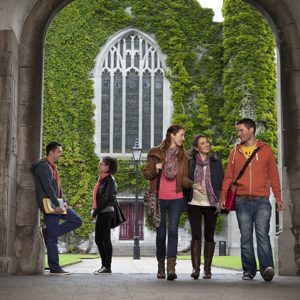
Choosing a course is one of the most important decisions you'll ever make! View our courses and see what our students and lecturers have to say about the courses you are interested in at the links below.
-
University Life

University Life
Each year more than 4,000 choose University of Galway as their University of choice. Find out what life at University of Galway is all about here.
-
About University of Galway
About University of Galway
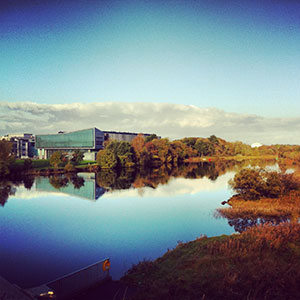
Since 1845, University of Galway has been sharing the highest quality teaching and research with Ireland and the world. Find out what makes our University so special – from our distinguished history to the latest news and campus developments.
-
Colleges & Schools
Colleges & Schools
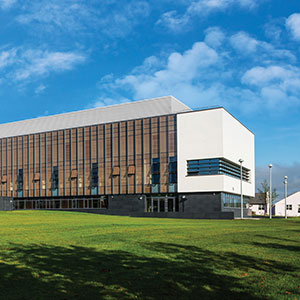
University of Galway has earned international recognition as a research-led university with a commitment to top quality teaching across a range of key areas of expertise.
-
Research & Innovation
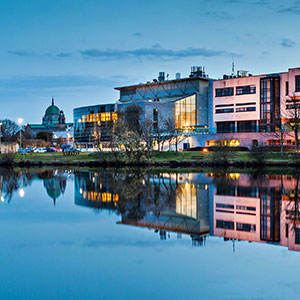
Research & Innovation
University of Galway’s vibrant research community take on some of the most pressing challenges of our times.
-
Business & Industry
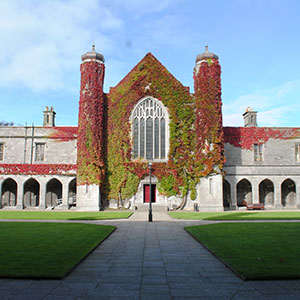
Guiding Breakthrough Research at University of Galway
We explore and facilitate commercial opportunities for the research community at University of Galway, as well as facilitating industry partnership.
-
Alumni & Friends

Alumni & Friends
There are 128,000 University of Galway alumni worldwide. Stay connected to your alumni community! Join our social networks and update your details online.
-
Community Engagement
Community Engagement
At University of Galway, we believe that the best learning takes place when you apply what you learn in a real world context. That's why many of our courses include work placements or community projects.
 Accessibility & Language
March New research shows smarter use of wood can help cool the planet
New research shows smarter use of wood can help cool the planet
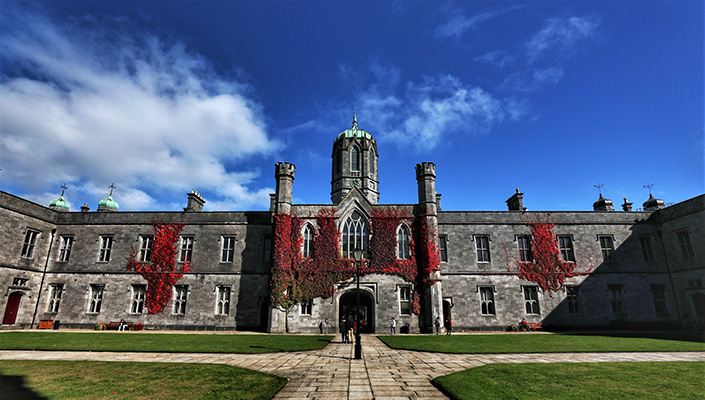
The Quadrangle, University of Galway
Mar
30
2026
Posted: 14:01 IST
International study shows combination of manufactured wood products and bioenergy with carbon capture can play a critical role in climate neutrality
A major new international research study has demonstrated an effective way to use wood to achieve long-term global cooling.
Led by researchers at the University of Galway, the study examined the combination of using low-value wood for manufacturing before it is converted into fuel for clean energy generation with carbon capture and storage once those products reach the end of their life.
The researchers revealed that this strategy of combining forestry with “cascading” use of wood products can play a critical role in achieving climate neutrality targets and provides more resilient and long-term climate benefits than either directly burning harvested wood for energy or leaving forests unharvested.
The research has been published here in Nature’s Communications Earth & Environment.
Dr George Bishop, lead scientist on the study, based at University of Galway, said: "National climate neutrality targets cannot be met without large-scale carbon dioxide removal. Bioenergy with Carbon Capture and Storage (BECCS) provides one of the few scalable ways to deliver permanent carbon removal while also producing renewable energy. Our research shows that cascading wood use into Bioenergy with Carbon Capture and Storage is a robust climate change mitigation option that consistently delivers long-term temperature reduction.”
The research is particularly significant for countries in the EU, including Ireland, which have legally-binding commitments to reach climate neutrality by 2050 – meaning that any greenhouse gases released must either be eliminated or balanced by an equal amount removed from the atmosphere.
One of the biggest challenges comes from sectors where deep emissions cuts are technically difficult and costly, such as agriculture - Ireland’s largest source of emissions - as well as aviation and heavy industry.
Bioenergy with Carbon Capture and Storage (BECCS) has been identified as a potential solution to this challenge. As trees grow, they absorb carbon dioxide from the atmosphere and store it in their biomass. When forests are harvested, some wood becomes low-value leftovers that are often burned for bioenergy, releasing the carbon back into the air. With BECCS, this CO₂ can be captured and permanently stored deep underground – effectively removing the greenhouse gas from the atmosphere forever.
However, large-scale deployment of BECCS infrastructure is expected to take decades.
The research team outline an opportunity: rather than burning low-value wood immediately, these materials can first be used to manufacture products such as particleboard.
This offers dual wins: it generates immediate climate benefits by replacing carbon-intensive materials like plastics, and “buys time” for BECCS deployment.
At the end of their service life, these wood products can still be used for bioenergy – but this time in a BECCS facility which has had time to be deployed. At the same time, sustainably managed forests regrow to replace harvested trees, continuing to draw carbon dioxide from the air, acting as a carbon vacuum.
The study demonstrates that this combined cycle creates a durable carbon removal pathway with a significant long-term cooling effect, supporting climate-neutrality goals in Ireland and globally.
Professor David Styles, co-author and Professor in Agri-sustainability, University of Galway, said: "The implication for policy is clear: to meet ambitious climate targets, governments must prioritise the development of permanent carbon dioxide capture and storage technologies and incentivise circular use of wood to prolong its lifespan as a carbon store. By integrating sustainable forest management with circular and cascading wood strategies and BECCS, the global community can ensure a more durable and resilient path towards climate stabilisation.”
Dr James Gaffey, co-author and Project Lead at Munster Technological University, said: "The results of this study highlight the need for greater investment in carbon capture and storage infrastructure in parallel with cascading circular bioeconomy and renewable energy developments. The results are relevant for Ireland and for other EU member states and the approach will help them to meet their climate obligations and avoid future risks of penalties.”
The research also highlighted an interesting analysis of the comparison between active forest management and leaving forests unharvested. While unharvested forests provide strong near-term cooling, their carbon sink strength diminishes as trees mature, and carbon stored in living forests is increasingly vulnerable to climate-driven disturbances such as wildfires, pests, and disease.
Dr Bishop added: “If we transfer carbon from forests to geological stores via a cascade of multiple wood uses we enhance the longevity and resilience of carbon dioxide removal from the atmosphere. Our sophisticated modelling shows that cascading wood use into Bioenergy with Carbon Capture and Storage eventually surpasses the climate benefits of unharvested forests.”
The research was supported by Ireland’s Department of Agriculture, Food and the Marine through the INFORMBIO project, and was a collaborative study involving experts from the University of Galway, MTU, and IEA Bioenergy BECCUS Inter-task members from Chalmers University of Technology, Sweden; KTH Royal Institute of Technology, Sweden; University of New England, Australia; Bangor University, Wales; DBFZ, Germany; VTT Technical Research Centre of Finland; and other leading institutions.
Ends
Related News
4 August 2026
Researchers design implant that fights ovarian cancer from the inside
29 July 2026
People of all ages invited to explore mathematical ideas through art
28 July 2026
University of Galway calls for public involvement in developing high blood pressure pathway
27 July 2026
Archaeologists uncover rare Neolithic tombs in Galway
20 July 2026
World premiere of Irish National Opera’s Testament to open at University of Galway