-
Courses
Courses
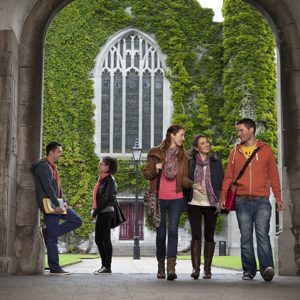
Choosing a course is one of the most important decisions you'll ever make! View our courses and see what our students and lecturers have to say about the courses you are interested in at the links below.
-
University Life
University Life
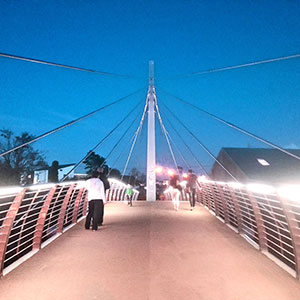
Each year more than 4,000 choose University of Galway as their University of choice. Find out what life at University of Galway is all about here.
-
About University of Galway
About University of Galway
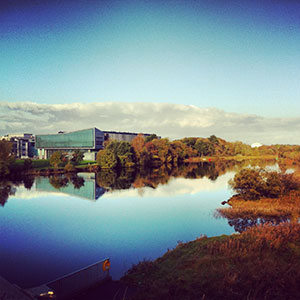
Since 1845, University of Galway has been sharing the highest quality teaching and research with Ireland and the world. Find out what makes our University so special – from our distinguished history to the latest news and campus developments.
-
Colleges & Schools
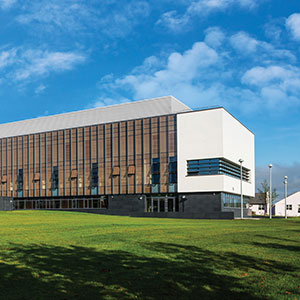
Colleges & Schools
University of Galway has earned international recognition as a research-led university with a commitment to top quality teaching across a range of key areas of expertise.
-
Research & Innovation
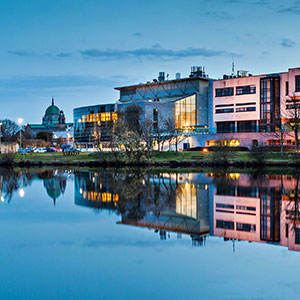
Research & Innovation
University of Galway’s vibrant research community take on some of the most pressing challenges of our times.
-
Business & Industry
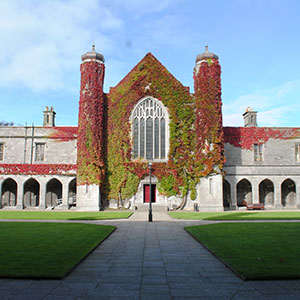
Guiding Breakthrough Research at University of Galway
We explore and facilitate commercial opportunities for the research community at University of Galway, as well as facilitating industry partnership.
-
Alumni & Friends
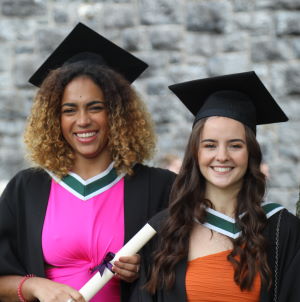
Alumni & Friends
There are 128,000 University of Galway alumni worldwide. Stay connected to your alumni community! Join our social networks and update your details online.
-
Community Engagement
Community Engagement
At University of Galway, we believe that the best learning takes place when you apply what you learn in a real world context. That's why many of our courses include work placements or community projects.
 Accessibility & Language
February Minister Calleary launches digital edition of first Irish-language newspaper An Gaodhal
Minister Calleary launches digital edition of first Irish-language newspaper An Gaodhal
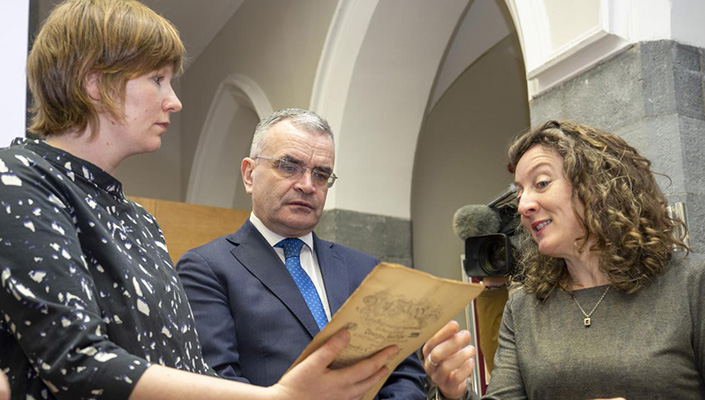
Catriona Cannon, Head of Heritage Collections and Digitisation at University of Galway Library, Minister for Rural and Community Development and the Gaeltacht Dara Calleary T.D., and Dr Deirdre Ní Chonghaile, Research Fellow at University of Galway. Credit – Andrew Downes, Xposure
Feb
06
2026
Posted: 14:09 GMT
Minister for Rural and Community Development and the Gaeltacht Dara Calleary T.D. has launched a digital edition of An Gaodhal, the world’s first newspaper dedicated to the Irish language community.
The project at University of Galway was borne out of an international partnership with New York University shedding new light on the global history of the Irish.
An Gaodhal was a bilingual newspaper, published monthly in Brooklyn, New York, at the end of the 19th century, between 1881 and 1898, and is considered a seminal influence on the Irish-language movement and media.
The founder, editor and publisher of An Gaodhal was Michael J. Logan, from Milltown, Co Galway. He died in 1899.
Minister Calleary T.D., said: “I am delighted to launch this project celebrating the newspaper An Gaodhal and that my Department was able to fund a significant portion of the work. Thanks to the digitisation of this newspaper and the development of innovative OCR resources, this collection will be valuable to researchers and to the general public alike. It will enable everyone to engage with the work of Mícheál Ó Locháin and to enjoy it. Projects such as this ensure that the Irish language will have a strong presence in the digital age, which is a specific objective of the Government.”
Professor Tadhg Ó hIfearnáin, Established Professor of Modern Irish at University of Galway, said: “The story of An Gaodhal reminds us of the power and position of media in public life as well as the value of the Irish language among Irish people at home and abroad. We treasure the opportunity to build on the rich legacy of Michael J. Logan toward strengthening digital humanities research and toward ensuring the digital future of the Irish language.”
The only surviving, complete series of the newspaper is preserved as part of the Special Collections at the University of Galway Library, having been bound in New York and sent to the Professor Tomás O Máille at the University in 1924 by Rev. Daniel Murphy. It contains 147 issues running to 2290 pages.
The wealth of material in the newspaper, including articles, advertisements, lists of subscribers, folklore, poetry and song along with the diversity of dialects of Irish, inspired the project team to extract the text in order to make a digitally searchable edition. The project used AI machine learning technology known as optical character recognition.
The project was completed with the support of the Robert David Lion Gardiner Foundation, Irish Institute of New York, Glucksman Ireland House, New York University, University of Galway, the Department of Rural and Community Development and the Gaeltacht, and Foras na Gaeilge.
In the 1890s, an estimated 40% of the world’s Irish speakers were living overseas, with 400,000 Irish speakers in the US and 70,000 of them in New York.
Founder and editor of An Gaodhal, Michael J. Logan, is highly-regarded for his pioneering work. The long-running Irish-American newspaper, The Irish World named him “Father of the Irish Language Movement in America” and shortly before his death, he became the first secretary of the Gaelic League in the US.
Kathryn M. Curran, Executive Director of the Robert David Lion Gardiner Foundation, said: “These early newspapers are a historic resource for every aspect of a specific community's daily life. They offer insight into social, economic, political and cultural issues of note and concern. This project will bring a richer voice to that more detailed story."
Professor Nicholas Wolf of New York University described the methodology: “An Gaodhal was printed using Cló Gaelach – the Irish script derived from the manuscript tradition. When our project began, there were no publicly available models suitable for the team to use to create a searchable, digitised edition of the newspaper. In order to bring this pioneering publication to life in the 21st century, we trained an AI model in the Irish language and then used it to develop a bilingual model. Making An Gaodhal digitally searchable has shown how technology can help deliver parity of esteem for different language communities and their shared historical sources, including those that are under-resourced or considered minority languages.”
Dr Deirdre Ní Chonghaile, Research Fellow on the project, said: “Michael Logan and his international network of supporters and subscribers hoped for a world where Irish would thrive and, through our project, their vision can now inspire a new generation of Irish speakers to continue that legacy of dreaming big.”
The project was completed with the support of University of Galway Library and the Data Science Institute.
The AI machine learning technology used – Optical Character Recognition (OCR) – is available worldwide for many languages, including Irish. The project’s bilingual model is the first of its kind to combine multilingual and multiscript functionality and is free for other researchers to use.
All digitised issues of An Gaodhal are available through the University of Galway Digital Repository at https://digital.library.universityofgalway.ie/p/ms/categories/an-gaodhal.
Ends
Related News
4 August 2026
Researchers design implant that fights ovarian cancer from the inside
29 July 2026
People of all ages invited to explore mathematical ideas through art
28 July 2026
University of Galway calls for public involvement in developing high blood pressure pathway
27 July 2026
Archaeologists uncover rare Neolithic tombs in Galway
20 July 2026
World premiere of Irish National Opera’s Testament to open at University of Galway