-
Courses
Courses
Choosing a course is one of the most important decisions you'll ever make! View our courses and see what our students and lecturers have to say about the courses you are interested in at the links below.
-
University Life

University Life
Each year more than 4,000 choose University of Galway as their University of choice. Find out what life at University of Galway is all about here.
-
About University of Galway
About University of Galway
Since 1845, University of Galway has been sharing the highest quality teaching and research with Ireland and the world. Find out what makes our University so special – from our distinguished history to the latest news and campus developments.
-
Colleges & Schools
Colleges & Schools
University of Galway has earned international recognition as a research-led university with a commitment to top quality teaching across a range of key areas of expertise.
-
Research & Innovation
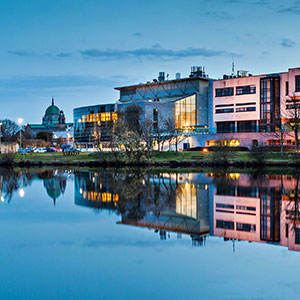
Research & Innovation
University of Galway’s vibrant research community take on some of the most pressing challenges of our times.
-
Business & Industry
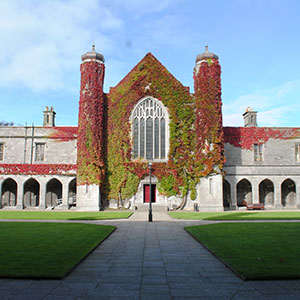
Guiding Breakthrough Research at University of Galway
We explore and facilitate commercial opportunities for the research community at University of Galway, as well as facilitating industry partnership.
-
Alumni & Friends

Alumni & Friends
There are 128,000 University of Galway alumni worldwide. Stay connected to your alumni community! Join our social networks and update your details online.
-
Community Engagement
Community Engagement
At University of Galway, we believe that the best learning takes place when you apply what you learn in a real world context. That's why many of our courses include work placements or community projects.
 Accessibility & Language
April Research shows evidence of potential therapeutic strategy for Alzheimer’s disease
Research shows evidence of potential therapeutic strategy for Alzheimer’s disease
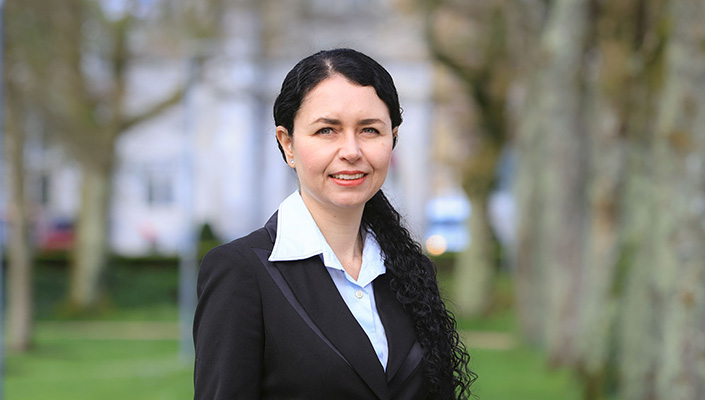
Professor Andrea Kwakowsky, Associate Professor of Pharmacology, School of Medicine, University of Galway. Photo: Martina Regan
Apr
21
2026
Posted: 09:59 IST
Researchers have found evidence that a therapeutic strategy which makes the brain work more efficiently to learn and recall memories may in fact help to target compromised brain activity in Alzheimer’s disease.
The study led by University of Galway focused on nerve cells which routinely limit or restrict activity and messages being sent by the brain, rather than the more conventional approach of therapy for nerve cells which stimulate activity.
Alzheimer’s disease is a chronic progressive neurodegenerative disorder with clinical symptoms including diminished memory and cognitive function. It is the most prevalent cause of dementia, accounting for 60-80% of dementia cases. Alzheimer’s disease and other dementias are among the top 10 causes of death globally.
The study was published in the journal Neuropharmacology and be read here.
Professor Andrea Kwakowsky, Associate Professor of Pharmacology and lead researcher at the School of Medicine, University of Galway, said: “Given the ever-increasing burden of Alzheimer’s disease, the urgent need for the identification of novel targets for the development of disease-modifying therapy is clear.”
The research team noted how the accumulation of Amyloid beta - protein fragment aggregates known as plaque – are a primary hallmark and suspected cause of Alzheimer’s disease. The Amyloid beta disrupts normal brain signalling and causes burn out and ultimately the death of nerve cells as it leads to the firing or over-activation of the nerve cells in the brain.
This symptom of the disease is then compounded by activity in the inhibitory nerve cells, which routinely limit or restrict activity and messages, as they overcompensate for the stimulatory impact in the brain that the disease is having.
The scientists highlighted that symptomatic relief from Alzheimer’s provided by these therapies which target the stimulatory nerve cells is only marginal, and the progression or underlying causes of the disease are not addressed.
Professor Andrea Kwakowsky said: “Our research is looking at the possibility of a therapy which helps to restore a balance in the brain after nerve cells have reacted to Alzheimer’s.
“We know, for sure, that the amino acid, GABA, is involved in many important physiological functions of the brain, including being the primary inhibiting factor for nerve cells. However, in Alzheimer’s disease, this control that it helps to exert in the brain is compromised, contributing to cognitive decline and memory impairment.
“Science and medicine has shown that an increase in extracellular GABA can be triggered by the protein Amyloid beta, leading to over-activation of a specific population of GABA receptors in Alzheimer’s disease.
“Our research is significant in that it demonstrates that if we block this GABA receptor activity in nerve cells we can reverse Alzheimer-like effects caused by Amyloid beta and improve cognitive performance.”
The research was funded by the University of Galway Hardiman Research Scholarship, Alzheimer’s New Zealand, Freemasons New Zealand, Alzheimer’s New Zealand Charitable Trust, Aotearoa Foundation, Brain Research New Zealand, Health Research Council of New Zealand, Centre for Brain Research, the University of Auckland and the University of Otago.
The team’s research is expanding on a hypothesis that has emerged in recent years, which shifts the focus of therapeutic treatment to the inhibitory side of signalling imbalance in nerve cells, suggesting that targeting the brain’s vulnerability to overstimulation-induced damage can ultimately reduce the impact and death of nerve cells.
Ends
Related News
4 August 2026
Researchers design implant that fights ovarian cancer from the inside
29 July 2026
People of all ages invited to explore mathematical ideas through art
28 July 2026
University of Galway calls for public involvement in developing high blood pressure pathway
27 July 2026
Archaeologists uncover rare Neolithic tombs in Galway
20 July 2026
World premiere of Irish National Opera’s Testament to open at University of Galway