-
Courses
Courses
Choosing a course is one of the most important decisions you'll ever make! View our courses and see what our students and lecturers have to say about the courses you are interested in at the links below.
-
University Life
University Life
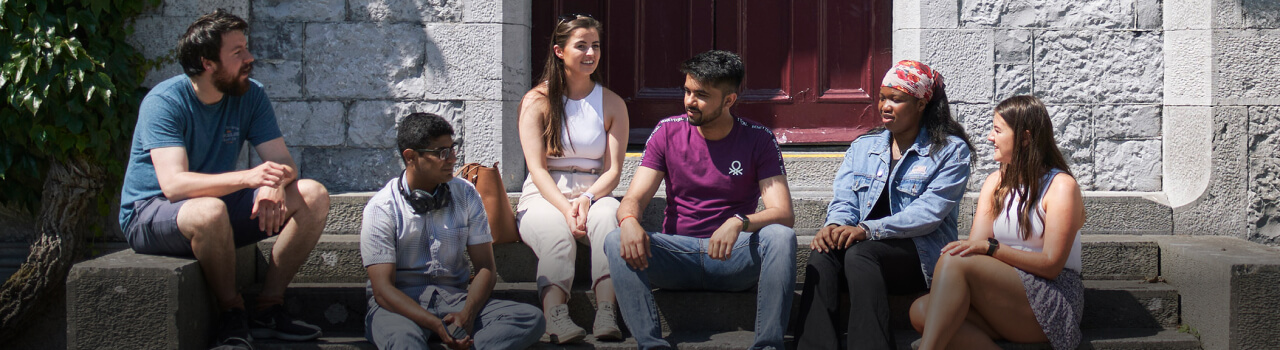
Each year more than 4,000 choose University of Galway as their University of choice. Find out what life at University of Galway is all about here.
-
About University of Galway
Since 1845, University of Galway has been sharing the highest quality teaching and research with Ireland and the world. Find out what makes our University so special – from our distinguished history to the latest news and campus developments.
-
Colleges & Schools
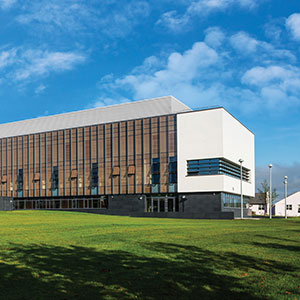
Colleges & Schools
University of Galway has earned international recognition as a research-led university with a commitment to top quality teaching across a range of key areas of expertise.
-
Research & Innovation
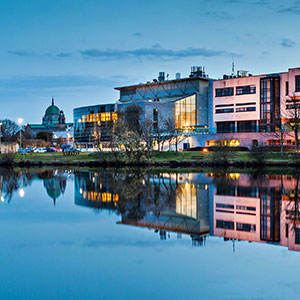
University of Galway’s vibrant research community take on some of the most pressing challenges of our times.
-
Business & Industry
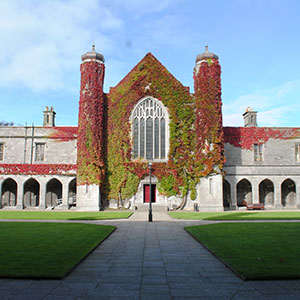
Guiding Breakthrough Research at University of Galway
We explore and facilitate commercial opportunities for the research community at University of Galway, as well as facilitating industry partnership.
-
Alumni & Friends
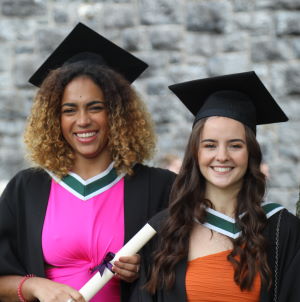
Alumni & Friends
There are 128,000 University of Galway alumni worldwide. Stay connected to your alumni community! Join our social networks and update your details online.
-
Community Engagement
At University of Galway, we believe that the best learning takes place when you apply what you learn in a real world context. That's why many of our courses include work placements or community projects.

Art and Ecology (MA, MFA, PGDip)
MA, MFA, PGDip (Art and Ecology)
College of Arts, Social Sciences & Celtic Studies, Burren College of Art (BCA)- Title of Award
- Master of Fine Arts
- Delivery
- On Campus
- NFQ
- Level 8
- Award Type
- Major
- Duration
- MFA 2 years (4 semesters) Full Time/ MA 1 year (3 semesters) Full Time
- ECTS Weighting
- 120 / 90
Why Choose This Course?
Course Information
Who is this course for?
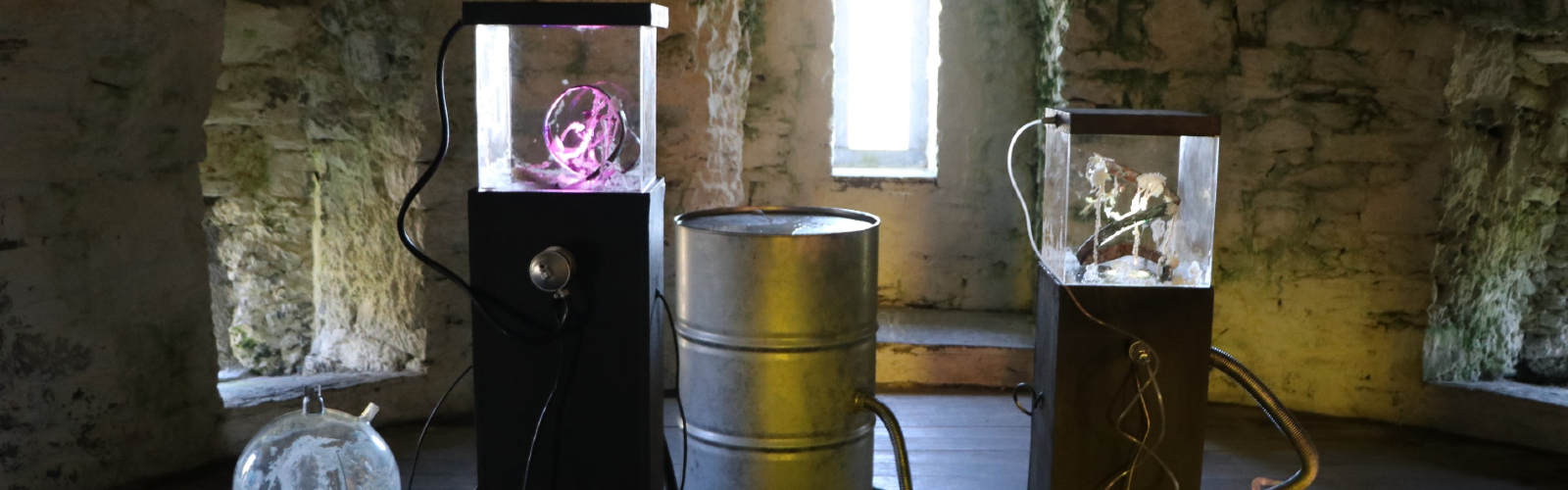
The MFA (2 years, 4 semesters) provides an immersive education in the development of professional practice as an artist. As an MFA graduate you will produce a final exhibition, the quality of which will show that you have gained the knowledge and skills necessary to survive and thrive as a practicing artist. You will also develop your capabilities for critical enquiry in the field of Art & Ecology through a written dissertation, demonstrating your ability to evaluate your work through an informed grasp of the social, cultural and theoretical concerns shaping discourse on contemporary research and practice in the field.
The MA (1 year, 3 semesters) provides a masters-level education in art appropriate to a diverse range of applications. As an MA graduate you will produce a final exhibition, the quality of which will demonstrate that you have acquired a masters-level in artistic practice. Whereas the MFA requires the completion of a written thesis, in the MA you will also complete modules in critical enquiry, in order to develop your ability to evaluate your work through an informed grasp of the social, cultural and theoretical concerns, and will be required to create an Artist Statement in conjunction with your final exhibition.
What will I study?
Studio Research provides for the development of artistic practice alongside students in the MFA / MA in Studio Art. These modules provide for studio and field-based investigation, experimentation and reflection leading to the production of a body of work engaging ecology, earth systems and environmental change. Theory and Art & Ecology engages with historical and contemporary discourse informing arts practice, ecological thinking, activism and the changing global climate.
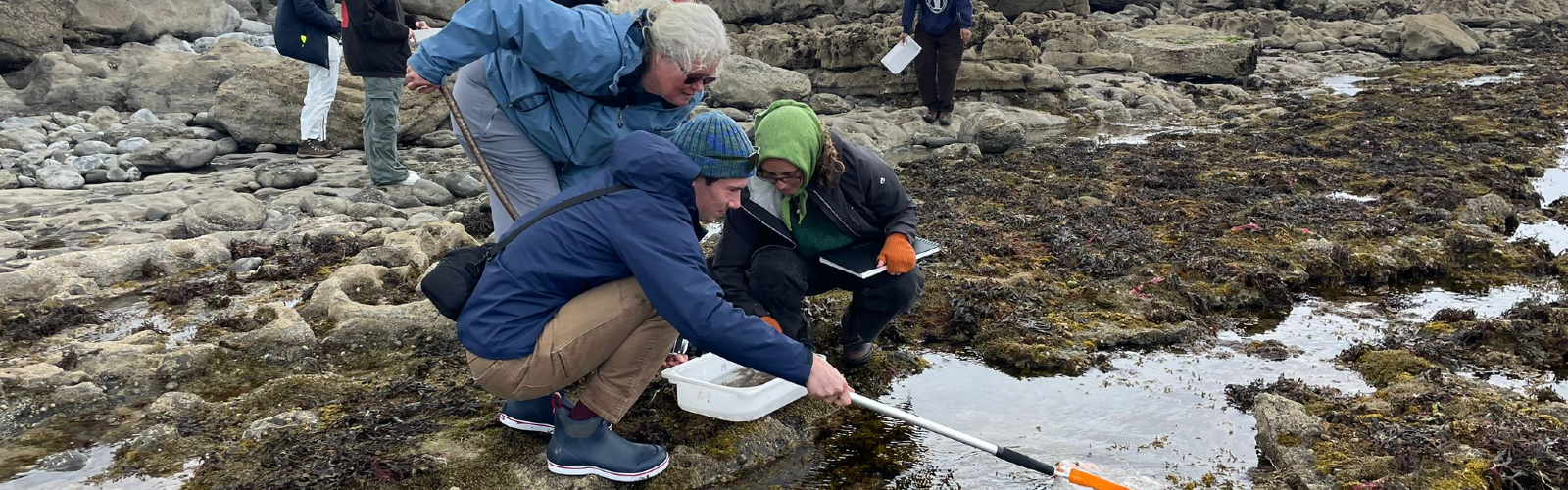
In the first year an Introduction to Ecosystem Science provides an engagement with ecosystems through lectures and first-hand experience of the Burren. In Ecology and Sustainability in the Burren, the stewardship of the Burren is explored as a microcosm of global ecological and environmental concerns. In this module students work with local conservationists, geologists and archaeologists, though BCA’s partnerships with Burren Beo, The Burren and Cliffs of Moher UNESCO Global Geopark, and University of Galway. Additionally, Professional Studies modules, taken alongside the MFA/MA Studio Art students, focus on the development of the professional skills necessary to survive and thrive as a practicing artist.
The MFA in Art & Ecology is a two year programme comprising of 120 ECTS. The MA in Art & Ecology is a one year programme (Sept-August) comprising of 90 ECTS. Please see the Course Structure opposite for an outline of the modules specific to each programme.
Course Structure
MFA / MA Art & Ecology
Year 1, Semester 1
Studio Research 1 : Research Methods, Materiality and the Land, 15 ECTS
Theory and Art & Ecology 1 : Land-based Art, 5 ECTS
Environmental Studies 1 : Introduction to Ecosystem Science, 5 ECTS
Professional Studies 1 : Introduction to Professionalism, 5ECTS
Year 1, Semester 2
Studio Research 2 : Refinement/Coherence of Enquiry & Practice,15 ECTS
Theory and Art & Ecology 2 : Visualising Research, 5 ECTS
Environmental Studies 2 : Ecology & Sustainability in the Burren, 5 ECTS
Professional Studies 2 : Student Selected Project, 5 ECTS
Year 1, Semester 3, Summer Term, For MA in Art & Ecology only
Studio Research Project : The MA Exhibition, 30 ECTS
A studio-based, independent studies module for students seeking to graduate with the award of MA in Art & Ecology. Students develop a body of work for exhibition supported by a written Artist’s Statement
TOTAL FOR MA IN ART & ECOLOGY : 90 ECTS
Year 2, Semester 3
Studio Research 3 : Engaging Place, 20 ECTS
Theory and Art & Ecology 3 : The Dissertation 5 ECTS
Professional Studies 3 : Organising and Publicising an Exhibition, 5 ECTS
Year 2, Semester 4
Studio Research 4 : The MFA Exhibition, 20 ECTS
Theory and Art & Ecology 4 : The Position Statement 5 ECTS
Professional Studies 4 : Exhibition Installation, 5 ECTS
TOTAL FOR MFA IN ART & ECOLOGY : 120
Curriculum Information
Curriculum information relates to the current academic year (in most cases).Course and module offerings and details may be subject to change.
Glossary of Terms
- Credits
- You must earn a defined number of credits (aka ECTS) to complete each year of your course. You do this by taking all of its required modules as well as the correct number of optional modules to obtain that year's total number of credits.
- Module
- An examinable portion of a subject or course, for which you attend lectures and/or tutorials and carry out assignments. E.g. Algebra and Calculus could be modules within the subject Mathematics. Each module has a unique module code eg. MA140.
- Optional
- A module you may choose to study.
- Required
- A module that you must study if you choose this course (or subject).
- Semester
- Most courses have 2 semesters (aka terms) per year.
Year 1 (90 Credits)
RequiredEN529: Dissertation
EN529: Dissertation
15 months long | Credits: 30
Learning Outcomes
- To be confirmed
Assessments
- Research (100%)
Teachers & Administrators
Click a name to search for their researcher profile. Note: Only teachers publish research profiles.
The above information outlines module EN529: "Dissertation" and is valid from 2018 onwards.Note: Module offerings and details may be subject to change.
RequiredEN6116: Writing and Research
EN6116: Writing and Research
Semester 1 and Semester 2 | Credits: 10
This module will run over the academic year (in both semesters) and will enable students on the MA in English to make the transition from undergraduate-level scholarship to a postgraduate expertise in research and writing.
(Language of instruction: English)
Learning Outcomes
- Make efficient use of libraries, electronic resources, special collections and archives to find, evaluate, and classify sources for the purposes of their research project.
- Be capable users of an efficient note-taking system.
- Write bibliographies and use a reference system in their writing successfully and with ease.
- Produce a feasible research proposal and plan a substantial research project.
Assessments
- Continuous Assessment (100%)
Teachers & Administrators
Click a name to search for their researcher profile. Note: Only teachers publish research profiles.
The above information outlines module EN6116: "Writing and Research " and is valid from 2020 onwards.Note: Module offerings and details may be subject to change.
OptionalEN601: Writing Workshop: Poetry
EN601: Writing Workshop: Poetry
Semester 1 | Credits: 10
The primary aim of this workshop is the generation of new work in poetry by students. This will be the result of readings in poetry in a wide variety of forms from various traditions, weekly exercises and projects.
(Language of instruction: English)
Learning Outcomes
- To be confirmed
Assessments
- Continuous Assessment (100%)
Teachers & Administrators
Click a name to search for their researcher profile. Note: Only teachers publish research profiles.
The above information outlines module EN601: "Writing Workshop: Poetry" and is valid from 2015 onwards.Note: Module offerings and details may be subject to change.
OptionalFR6101: Language, Gender and Power
FR6101: Language, Gender and Power
Semester 1 | Credits: 10
Over the last number of decades, there has been a strong interest in the relationship between language, gender and power both as an academic and a popular topic. This module provides students firstly with an understanding of how language as a social entity intersects with gender and sexuality, and subsequently how power can be disseminated through language. It addresses the use of language to categorise the gender/ sexuality world and to create and display gender/sexual identities. It includes discussions on the constructions and representations of femininity/masculinity, non-binary gender identities, sexual violence, sexual harassment and motherhood/ fatherhood in a range of discourse types. Students explore a selection of texts and examples from a variety of sources including print media, advertising, health promotion and internet media and are introduced to key theoretical frameworks for the analysis of language, gender and power including traditional sociolinguistic approaches, discourse analysis, critical discourse analysis and corpus linguistics.
(Language of instruction: English)
Learning Outcomes
- Think critically about the relationship between language, gender and sexuality
- Reflect on how power relations can be disseminated through language
- Apply the different theoretical and methodological frameworks used for the analysis of language, gender and power in a range of different contexts
- Engage in the process of investigation of language, gender and power related issues through their own selection and analysis of texts
Assessments
- Department-based Assessment (100%)
Teachers & Administrators
Click a name to search for their researcher profile. Note: Only teachers publish research profiles.
Reading List
- "Language and Gender" by Penelope Eckert,Sally McConnell-Ginet
ISBN: 9781107029057.
Publisher: Cambridge University Press - "Language, Society and Power" by Annabelle Mooney,Betsy Evans
ISBN: 9780415786249.
Publisher: Routledge - "Language and Gender" by Mary Talbot
ISBN: 9781509530090.
Publisher: Polity - "Researching Language, Gender and Sexuality" by Helen Sauntson
ISBN: 9781138637368.
Publisher: Routledge
Note: Module offerings and details may be subject to change.
OptionalEN527: Literature Of North America
EN527: Literature Of North America
Semester 1 | Credits: 10
This course examines current trends in contemporary North American writing of the past ten years within a cultural and theoretical context .
(Language of instruction: English)
Learning Outcomes
- identify the themes and concerns in contemporary North American literature
- discuss how North American novelists engage with historical events and their own lived experience to provide a critique of their society, with reference to issues such as gender, race, and class.
- relate these contemporary novels to the tradition of writing from which they came and consider them in the historical context of the American novel.
- present close readings of the novels and describe them in terms of writing style, narrative voice, genre, use of language, and intertextuality.
Assessments
- Continuous Assessment (100%)
Teachers & Administrators
Click a name to search for their researcher profile. Note: Only teachers publish research profiles.
Reading List
- "The Sellout" by Paul Beatty
- "The Things they Carried" by Tim O'Brien
- "The Virgin Suicides" by Jeffrey Eugenides
- "The Ice Storm" by Rick Moody
- "The Submission" by Amy Waldman
- "My Year of Meats" by Ruth Ozeki
- "Station Eleven" by Emily St John Mandel
- "A Complicated Kindness" by Miriam Toews
- "Winter's Bone" by Daniel Woodrell
Note: Module offerings and details may be subject to change.
OptionalFM6101: Ireland on Screen
FM6101: Ireland on Screen
Semester 1 | Credits: 10
This module provides students with an overview of Irish cinema from the early twentieth century to the present. It includes an analysis of the major films produced and the discourses concerning cinema in Ireland over the past one hundred years. Among the questions the module examines are: what are the major traditions of representing Ireland in cinema? How have indigenous filmmakers responded to these representations? What are the distinctive characteristics of contemporary Irish film culture?
(Language of instruction: English)
Learning Outcomes
- Comprehend the major issues and debates surrounding ‘national cinema’.
- Recognise patterns in the representation of Ireland in international cinema.
- Recall the major developments in the history of cinema in Ireland and examine key texts.
- Analyse the major themes apparent in contemporary Irish cinema.
- Evaluate the challenges and advantages of film-making in Ireland today.
Assessments
- Department-based Assessment (100%)
Teachers & Administrators
Click a name to search for their researcher profile. Note: Only teachers publish research profiles.
Reading List
- "Irish national cinema" by Ruth Barton
Publisher: Routledge - "Contemporary Irish Film: New Perspectives on a National Cinema." by Werner Huber & Sean Crosson
Publisher: Braumüller
Note: Module offerings and details may be subject to change.
OptionalEN672: Environmental Literature: Nature and Narration
EN672: Environmental Literature: Nature and Narration
Semester 1 | Credits: 10
This module examines how literary texts, with their emphasis on storytelling, narrative, and style, help shape and communicate environmental awareness to global audiences. Drawing from the expanding field of ecocriticism, which has gained prominence in literary criticism since the early 1990s, the course will explore the historical significance of global ecological concerns and their influence on literature. It will focus on works that incorporate the natural environment as a fundamental element of textuality, while addressing emerging conceptual resources that offer new ways to re-think the field. The course adopts a key-word approach, examining concepts such as the Anthropocene and Technoscene, Petroculture and Energy Humanities, Blue Humanities and Hydrofiction, Waste/Trash Culture, Transcorporeality, Multinaturalism and indigenous ecologies, Extinction and Animalism, as well as activism and ecological hope. The module will explore how language and narrative style function in the literary representation of the ongoing planetary crisis.
(Language of instruction: English)
Learning Outcomes
- Demonstrate an understanding of how literary texts address global environmental issues.
- Engage with Environmental Humanities theories, such as the Anthropocene, Energy Humanities, and Indigenous Ecologies, to interpret a range of literary works.
- Show understanding of the ways in which literary language and style are adopted in addressing the current planetary crisis.
Assessments
- Continuous Assessment (100%)
Teachers & Administrators
Click a name to search for their researcher profile. Note: Only teachers publish research profiles.
Reading List
- "The Shock of the Anthropocene" by Christophe Bonneuil,Jean-Baptiste Fressoz
ISBN: 9781784785031.
Publisher: Verso Books - "The Companion Species Manifesto: Dogs, People, and Significant Otherness" by Donna J. Haraway
ISBN: 9780971757585.
Publisher: Prickly Paradigm Press - "Extraction Ecologies and the Literature of the Long Exhaustion" by Elizabeth Carolyn Miller
ISBN: 9780691205267.
Publisher: Princeton University Press - "Literature for a Changing Planet" by Martin Puchner
ISBN: 9780691213750.
Publisher: Princeton University Press - "Animal's People" by Indra Sinha
ISBN: 9780743259200.
Publisher: Simon & Schuster (UK) - "Why the moon travels" by Oein DeBhairduin
ISBN: 9781916493506.
Publisher: SKEIN PRESS - ""They Saw a Thylacine" in Endangered: Three Plays." by Sarah Hamilton and Justine Campbell
ISBN: 978192500587.
Publisher: Currency House Inc - "Three Short Plays" by Wole Soyinka
ISBN: 9780199110865.
Publisher: Oxford University Press, USA - "Origins of the Syma Species" by Tares Oburumu
ISBN: 9781496237026.
Publisher: U of Nebraska Press - "Hum" by Jamaal May
ISBN: 9781938584022.
Publisher: Alice James Books
Note: Module offerings and details may be subject to change.
OptionalEN6125: WB Yeats and the Cultural Revolution
EN6125: WB Yeats and the Cultural Revolution
Semester 1 | Credits: 10
As the commemorations for Yeats2015 proved, the 1923 Nobel Prize winner for Literature, W.B.Yeats, is known and still read worldwide as a poet. His ability to write ‘like God’, to quote the critic John Carey, is nowhere better exemplified than in the books of poetry through which he built his reputation. A close-reading reconsideration of these monuments are at the heart of this class, and structure the way in which his work is considered. But as central part of Ireland’s most important artistic family, he was also a politician, journalist, editor, printer, a dramatist and director who accepted the Nobel Prize on behalf of a theatre, and an incessant collaborator whose work with musicians, ballet dancers, artists, stage-designers, folklorists, broadcasters (including with prenaturarally talented lovers, family, and friends) proved extraordinarily protean and productive. If even now he remains (especially in Ireland) a divisive figure, it was here he helped created a cultural revolution with worldwide and contempory ramifications. This class encourages students to engage anew with Yeats’s written work and cultural impact, and forge projects of research, drawing on class readings, and NUI Galway’s James Hardiman Library for books and letters, for little magazines and Cuala Press holdings in Special Collections, for Abbey, Gate, and Lyric Theatre archives, and Galway County’s wider cultural resources Thoor Ballylee and Coole Park.
(Language of instruction: English)
Learning Outcomes
- Practice close readings of selected poetry, plays, essays and criticism.
- Evaluate the context and production of the arts in modern Ireland.
- Pursue independent research in library resources and archives.
- Discuss and respond to the analysis of literary texts and cultural criticism.
- Plan and compose extensive academic written appraisals synthesizing arguments and producing new ideas.
Assessments
- Research (100%)
Teachers & Administrators
Click a name to search for their researcher profile. Note: Only teachers publish research profiles.
Reading List
- "The Major Works" by W.B.Yeats
ISBN: 9780199537495.
Publisher: Oxford - "Yeats's Poems" by W.B.Yeats
ISBN: 0333675185.
Publisher: Palgrave Macmillan - "Selected Plays" by W.B.Yeats
ISBN: 978014018374.
Publisher: Penguin - "Literature, Modernism and Dance" by Susan Jones
ISBN: 9780199565320.
Publisher: Oxford University Press - "Yeats and the Visual Arts" by Elizabeth Bergman Loiseaux
ISBN: 0815629958.
Publisher: Syracuse University Press - "Ireland: A Social and Cultural History 1922-2002" by Terence Brown
ISBN: 0007125761.
Publisher: Harper - "Untwisting the Serpent: Modernism in Music, Literature and the Other Arts" by Daniel Albright
ISBN: 0226012549.
Publisher: University of Chicago - "Black Riders: The Visible Language of Modernism" by Jerome McGann
ISBN: 0691015449.
Publisher: Princeton University Press
Note: Module offerings and details may be subject to change.
OptionalEN6143: Media for Social Change
EN6143: Media for Social Change
Semester 2 | Credits: 10
Through this module students will gain an understanding of the history, ethos, and operation of media for social change. Students will explore a range of forms, from social movement activism, to community media, to innovative online activity.
(Language of instruction: English)
Learning Outcomes
- Evaluate and critically discuss significant concepts and scholarly work related to media for social change.
- Apply scholarly work to practical case studies, both from the literature and personal research.
- Conduct original research, and prepare a scholarly paper based on that research.
- Reflect critically on the impact of pedagogy on the learning process.
- Work collaboratively with a team, using both in-person and remote/virtual modalities.
Assessments
- Continuous Assessment (75%)
- Oral, Audio Visual or Practical Assessment (25%)
Teachers & Administrators
Click a name to search for their researcher profile. Note: Only teachers publish research profiles.
Reading List
- "Fissures in the Mediascape" by Clemencia Rodríguez
ISBN: 1572733691.
Publisher: Hampton Press - "Radical Media" by John D. H. Downing
ISBN: 1452238243.
Publisher: SAGE - "Alternative Media" by Chris Atton
ISBN: 1849202907.
Publisher: SAGE
Note: Module offerings and details may be subject to change.
OptionalFM6119: Film, Politics, and Colonialism
FM6119: Film, Politics, and Colonialism
Semester 2 | Credits: 10
This module considers the significance of film as a mode of cultural production, the politics of representation, and the role of ‘national’ cinema. The films viewed and analysed address subjects including colonial history, marginal groups, conflict, resistance, gender, and postcolonial realities. Students will consider aspects of those films including genre, theme, and narrative structure. The political and historical circumstances of their production will also be discussed and analyzed.
(Language of instruction: English)
Learning Outcomes
- Understand the language of film and be able to deconstruct and read a film critically.
- Analyse the politics of representation, with reference to the historical and social context of films under discussion, including the effects of colonialism and postcolonialism.
- Explore ideas about film and politics which provide theoretical and analytical tools that can be deployed in the specific media practices involved in advocacy, for example the application of postcolonial theory to film texts.
- Demonstrate understanding of the relationship between film and politics, and the difference between propaganda and entertainment.
Assessments
- Department-based Assessment (100%)
Teachers & Administrators
Click a name to search for their researcher profile. Note: Only teachers publish research profiles.
Reading List
- "Questions of Third Cinema" by Jim Pines
- "Inventing Vietnam: The War in Film and Television" by Michael Anderegg
Publisher: Temple UP - "Irish Film: The Emergence of a Contemporary Cinema" by Martin McLoone
Publisher: BFI
Note: Module offerings and details may be subject to change.
OptionalEN547: Literature And Colonialism
EN547: Literature And Colonialism
Semester 2 | Credits: 10
The course analyses literature in relation to colonial power structures and considers the relationship between political power and literary representation. Students will read a wide range of literary texts as well as postcolonial criticism. By the end of the course, students will be encouraged to consider how ideas concerning literary representation relate to present-day debates about representation and power in a modern globalised world.
(Language of instruction: English)
Learning Outcomes
- By the end of the module, students will be able to demonstrate an in-depth knowledge of a wide geographical range of literature relating to the British Empire and its former colonies.
- By the end of the module, students will be able to identify characteristics of key literary genres and to place those characteristics in relation to the workings of colonial and postcolonial discourse.
- By the end of the module, students will be able to make connections between older modes of colonial discourse and more modern debates regarding cultural discourses of race, power and knowledge through close analysis of relevant literature.
Assessments
- Continuous Assessment (100%)
Teachers & Administrators
Click a name to search for their researcher profile. Note: Only teachers publish research profiles.
Reading List
- "Empire Writing" by Elleke Boehmer
ISBN: 9780199555598.
Publisher: OUP Oxford - "Colonial Discourse and Post-Colonial Theory" by Laura Chrisman,Patrick Williams
ISBN: 9781315656496.
Note: Module offerings and details may be subject to change.
OptionalEN6141: SERVICE LEARNING: LITERARY STUDIES IN THE COMMUNITY
EN6141: SERVICE LEARNING: LITERARY STUDIES IN THE COMMUNITY
Semester 2 | Credits: 10
Service-learning experiences are about shaping, reshaping, and challenging narratives, whether it is recognizing and challenging our own subjective narratives, or learning about new narratives and synthesizing our own stories as they intersect with others in the community. As such, the pedagogies of service-learning and literary studies overlap in many ways. Reading, writing, and community-engaged practices are profoundly context-dependent activities: As a pedagogy, service learning is education that is grounded in experience as a foundation for learning and on the significance of critical reflection intentionally designed to enable learning to transpire. Moreover, literary studies and writing embrace many transferable skills that are compatible with practices of context-based engagement. In this module, we will explore service-learning from core foundational principles and definitions to specific English Studies approaches.
This service learning module offers students the opportunity to develop responsible citizenship skills by addressing issues beyond the classroom and in the local community. Students work within the local community through a one-hour per week, semester-long placement in a local primary school in order to develop practical skills and experience in the field of literary studies and creative writing, during which they learn to apply theoretical information to real life issues. In addition to attending a two-hour reflective seminar per week, students will spend one hour supporting children with their reading and writing in a teacher-supervised classroom at a local primary school.
Garda Clearance requirement
It is a requirement of this course that all students taking it comply fully with the university's Garda vetting procedures regarding working with children. Full
details on how to obtain this clearance will be provided before the seminar begins.
(Language of instruction: English)
Learning Outcomes
- Explain the significance of service learning scholarship, including the importance of public engagement, citizenship, and social justice
- Integrate the literary and theoretical content of the module with their experiences/activities on service learning placement though reflection in class and individual study time.
- ‘Read’ both literary and life experiences as part of their textual study and course work, analysing the ways in which literature does and does not reflect their actual experiences, including the ability of literature to imagine possibilities for enriching human lives.
- Produce reflective, critical, and creative writing and oral discussion that articulates connections and dissonances between the reading of literature and theoretical texts, and service learning experiences.
- Produce course projects or papers that benefit community partners, for example public writing and research, oral presentations, performances, fundraising letters/videos/social media productions, blogs, websites, etc.
Assessments
- Continuous Assessment (100%)
Teachers & Administrators
Click a name to search for their researcher profile. Note: Only teachers publish research profiles.
Reading List
- "Teaching English Creative" by Cremin
Publisher: Routledge - "Democracy and Education" by John Dewey
Publisher: New York, The Free Press - "Service-Learning and Literary Studies in English" by Grobman, L
Publisher: New York: Modern Language Assoc. of America - "A Kestrel for a Knave" by Barry Hines
ISBN: 9780141184982.
Publisher: ePenguin - "Service-Learning Essentials" by Jacoby, B., & Howard,
Publisher: San Francisco, CA: John Wiley & Sons,
Note: Module offerings and details may be subject to change.
OptionalEN671: Literature for Children and Young Adults in the 21st Century
EN671: Literature for Children and Young Adults in the 21st Century
Semester 2 | Credits: 10
The focus of this course is an in-depth analysis of selected children’s fiction and YA novels written in the 21st century.
In this course, the students will appraise each text individually and comparatively.
The main issues under scrutiny will include but are not limited to:
- The evolution of the literary genres of children’s fiction and YA fiction
- Gender politics
- Power abuse
- Injustice
- The representation of oppression
(Language of instruction: English)
Learning Outcomes
- Demonstrate an understanding of the paradigms of the genre of children’s fiction and YA fiction
- Engage with the theories related to children’s fiction and YA fiction with a range of selected primary texts.
- Construct a coherent and well-informed textual analysis of the primary texts.
- Interpret and exploit secondary sources.
Assessments
- Continuous Assessment (100%)
Teachers & Administrators
Click a name to search for their researcher profile. Note: Only teachers publish research profiles.
Reading List
- "The Hunger Games" by Suzanne COLLINS
ISBN: 978140713208.
Publisher: Scholastic - "A Very Large Expanse of Sea" by Tahereh MAFI
ISBN: 9781405292603.
Publisher: Electric Monkey - "The Miseducation of Cameron Post" by Emily DANFORTH
ISBN: 978014138916.
Publisher: Penguin - "A Land of Permanent Goodbyes" by Atia ABAWI
ISBN: 978039954683.
Publisher: Philomel Books - "The Girl of Ink & Stars" by Kiran Millwood Hargrave
ISBN: 9781910002742.
Publisher: Scholastic Limited - "Politics and ideology in children's literature" by Aine McGillicuddy
ISBN: 978184682526.
Publisher: Four Courts Press - "The Gothic in Children's Literature: Haunting the Borders" by Anna JACKSON
ISBN: 978041596036.
Publisher: Routledge - "Female Rebellion in Young Adult Dystopian Fiction (Studies in Childhood, 1700 to the Present)" by Sara K. DAY
ISBN: 978147243149.
Publisher: Routledge
Note: Module offerings and details may be subject to change.
OptionalEN573: Travel Literature
EN573: Travel Literature
Semester 2 | Credits: 10
Narratives of travel constituted one of the most popular publishing genres of the sixteenth and seventeenth centuries. This course examines the literary conventions, genres, and modes of representing otherness that characterised this disparate body of texts. We will make particular used of Early English Books Online which makes available virtually everything printed from 1475-1700.
Learning Outcomes
- To be confirmed
Assessments
- Continuous Assessment (100%)
Teachers & Administrators
Click a name to search for their researcher profile. Note: Only teachers publish research profiles.
The above information outlines module EN573: "Travel Literature" and is valid from 2015 onwards.Note: Module offerings and details may be subject to change.
- MPhil/PhD pathway: For students interested in pursuing a practice-based research degree, it is possible to transfer to the MPhil or PhD degree after the first year of the MFA (with faculty approval and a strong research proposal).
- Emphasis on developing artistic voice: Our modules give students the critical and historical information to inform their own concepts and ideas in their work within an ecological theme.
- Industry connections: Provides opportunities for students to visit major Irish exhibitions in Dublin, Galway and Limerick, and partnering organizations within the field of ecology.
- Collaborative Community: In addition to working with our faculty, students have the opportunity to meet with visiting artists and cultural professionals through a series of artist talks and one-to-one tutorials.
Selling points that set it apart from other courses.
- Unique placed-based learning in the environment of the Burren.
- Low student to teacher ratio of 4-1.
- Emphasis on the development of concepts and ideas to develop your independent voice as an artist.
- Partnerships with Irish environmental organizations including BurrenBeo and BurrenGeoPark, as well as School of the Art Institute of Chicago (US) and Royal College of Art (London) which include student exchange and visiting mentor.s
- Large studio spaces which students have 24/7 access to.
- Training in professional studies and exhibition development.
While the emphasis in our teaching methods is not industry-focused, students are given the skills to prepare their portfolios and profiles to exhibit as professional artists.
Our Professional Practices modules also prepare students for curating and installing exhibitions, either collaboratively or as solo artists. Students also learn promotional and marketing tools, as well as how to create a budget for exhibiting their work.
Graduates have gone on to further research at PhD level and have acquired positions as lecturers and researchers in third level institutions. Graduates have also founded their own arts organizations and DIY gallery exhibitions. Many are working as professional artists who regularly exhibit their work internationally.
European Field Trip
As part of the MFA/MA in Art & Ecology, students have the option to take part in a faculty-led field trip to London in the Autumn semester and Barcelona in the Spring. This experience gives students the opportunity to visit major European art hubs to learn about contemporary and historical works, with faculty guidance.
Over the course of the trip, students will visit galleries and museums during the day and can then explore the culture of the city independently in the evening.
The trip typically lasts four days and includes an additional cost to cover flights and accommodation, which is kept as affordable as possible.
Accrediting Body
The course meets international standards with regard to coursework requirements, content hours, and faculty standards necessary to achieve the MFA/MA in Art & Ecology. The MFA/MA is accredited by University of Galway and is recognized as a Level 9 degree by the Irish Register of Qualifications (QQI) HERE.
How will I learn?
The MFA aims to provide students with a professional education so they may effectively operate as artists.
Successful MFA graduates will:
- Produce a final exhibition of both personal and collaborative work, the quality of which will demonstrate that they have acquired the confidence, skills and maturity necessary to function as successful artists.
- Be able to critically evaluate their own work and that of their peers, informed by contemporary fine art practice and principles.
- Demonstrate strong expressive and communicative abilities in visual, material, performative and verbal modes.
- Display high level intellectual capabilities and more advanced understanding of the philosophical and cultural concerns of artistic production relevant to contemporary art.
The MA aims to provide students with a postgraduate education in the subject with a view to a diverse range of applications.
Successful MA graduates will:
- Produce a final exhibition of both personal, the quality of which will demonstrate that they have acquired a masters level of art practice.
- Be able to critically evaluate their own work and that of their peers, informed by contemporary fine art practice and ecological principles.
- Demonstrate strong expressive and communicative abilities in visual, material, performative and verbal modes.
- Display high level intellectual capabilities and more advanced understanding of the philosophical and cultural concerns of artistic production relevant to Art & Ecology.
Examination results are either Pass or Fail, without grades being formally awarded. However, the feedback forms provide information about progress in the fulfillment of stated criteria in the following categories: Excellent; Very Good; Good; Satisfactory; and Unsatisfactory. The forms also provide comments and advice.
The results: Excellent; Very Good; and Good signify a Pass. The result Satisfactory is the borderline between Pass and Fail and signifies a risk of failure. Unsatisfactory signifies failure.
A student who fails a module will have an opportunity to retrieve that failure in the following semester. A student who fails a module in the fourth semester will have an opportunity to retrieve that failure at a later date that will be specified, but not in time to receive the award of MFA at the Degree Conferring ceremony.
It is necessary to pass all modules in the first year in order either to progress into the second year or to receive the award of Postgraduate Diploma in Fine Art, which is available as an intermediary award. It is necessary to pass all modules in the first and second years in order to receive the award of MFA.
Assessment is conducted by an Internal Examination Board who are the Dean and faculty teaching on the programme. In the final examination they are joined by an External Examiner, an independent academic appointed by the university to assure critical distance and objectivity in the examination process. Upon completion of the external examination process an Examination Board meeting is convened, comprising of the Dean, External Examiner and a representative from the College of Arts, Social Sciences and Celtic Studies, who formally approve final marks.
The role of the External Examiner is to assure critical distance in examinations so that results are comparable with similar programmes in other institutions.
They have a duty to be impartial and, therefore, students should not confuse the External Examiner with the visiting artists. They will not normally provide feedback on a student’s work nor offer advice about it.
Course queries:
contact@burrencollege.ie
Director of Admissions:
Dr Lisa Newman
E: lisa@burrencollege.ie
T: 065 7077200
Burren College of Art recognises that knowledge and skills can be acquired from a range of learning experiences. This is in line with the National Framework of Qualifications (NFQ) goals which aim to recognise all learning achievements by supporting the development of alternative pathways to qualifications (or awards) and by facilitating the recognition of prior learning (RPL).
Prior experiences can be included in the initial application to the MFA/MA programme and will be considered by the faculty review committee. To discuss these in advance of application submission, please contact the Admissions office at contact@burrencollege.ie
Accreditations & Awards
Meet our Employers
Entry Requirements and Fees
- Applicants should have a Bachelors Degree with first or upper second class honours in Fine Art; or a Bachelors Degree with a major in Fine Art with a GPA or 3.50 or above; or evidence of equivalent achievement. In the case of an outstanding portfolio, a Bachelors Degree with a lower second class/2.2 honours/GPA of 3.0 may be accepted.
- Overseas applicants from outside the EU must comply with Irish immigration rules regarding passport, visa, financial viability and evident of student status (e.g. letter of acceptance from the College).
- English Language Requirements for non-native speakers of English: Applicants in this category should have competence in English, which is the language of tuition. They will be required to supply an IELTS with an overall score of 6.5 or more, unless their primary degree has been taken through English, certification of which must be supplied.
Please visit the Burren College of Art website to submit your application:
https://www.burrencollege.ie/programmes/mfa-ma-in-studio-art/admissions/
Applicants should submit the following materials:
The application deadline for the 2026/2027 entry year is February 1, 2026. Any enquiries may be directed to Lisa Newman, Director of Admissions, at lisa@burrencollege.ie
- A completed application form (on website)
- A copy of a recent essay on art or a critical review of an exhibition you have recently visited (approx. 1000 words)
- A portfolio comprised of 10-15 works, which may be represented digitally as jpeg or links (video) and sent through GoogleDocs or www.wetransfer.com
- A written statement of approx. 500 words that clearly states what you seek to attain through study on this programme
- A résumé providing details of education, employment history, exhibitions and publications
- Official certificate or transcript for all degree awards received
- Two letters of recommendation (May be emailed directly to lisa@burrencollege.ie and must be sent by your referees)
- A copy of your Passport
- Non-refundable application fee of €50 payable online here.
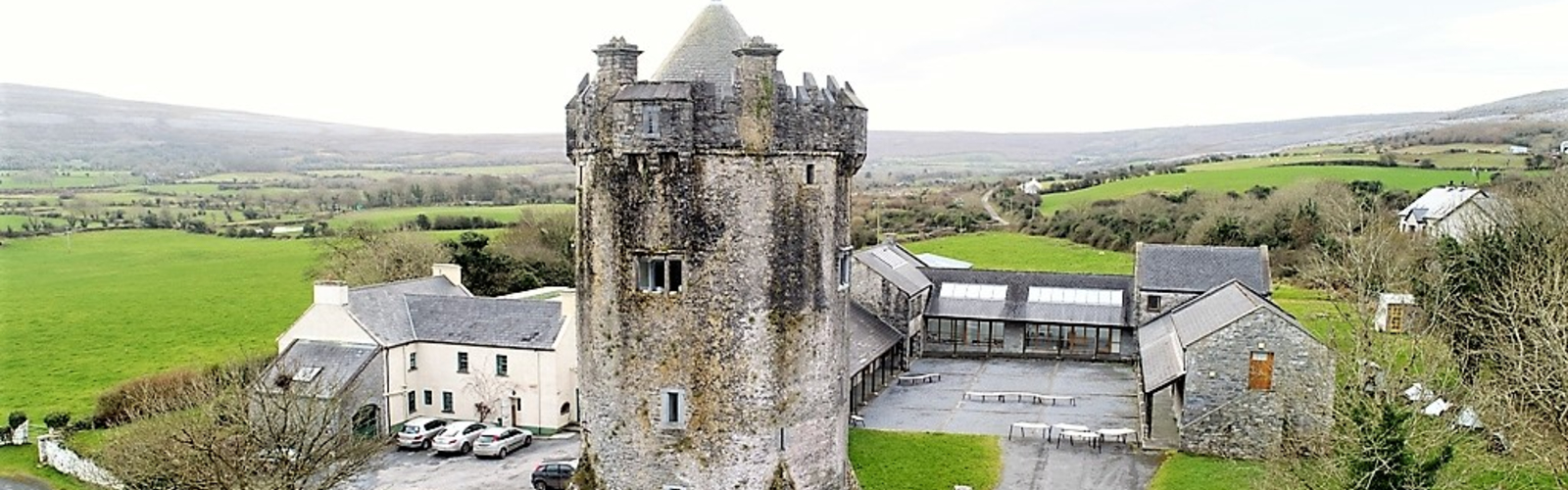
Note: We request official copies of transcripts to be either sent by password-protected email by your college or university, or sent as a hard copy to Admissions, Burren College of Art, Newtown Castle, Ballyvaughan, Co. Clare, Ireland. Portfolio images can be submitted electronically via GoogleDocs or www.wetransfer.com. All other application materials can be emailed to the Director of Admissions, Lisa Newman, at lisa@burrencollege.ie
| Course Type | Year | EU Tuition | Student Contribution | Non-EU Tuition | Levy | Total Fee | Total EU Fee | Total Non-EU Fee |
|---|
This is a compulsory section in the course page template.
MFA in Art & Ecology
(2 Semesters per yr.) EU Fee €9,500 per yr / International Fee €18,990 per Yr.
MA in Art & Ecology
(3 Semesters) EU Fee €11,955 / International Fee €23,460
Other Fees
- Programme Fee €550 per year
- Activity Fee €450 per year
- Optional Faculty-led trip to London €720*
- Optional Faculty-led trip to Berlin €720*
- Graduation Fee €100 final year
*Indicative only, subject to change.
Burren College of Art is an independent, not-for-profit institution which does not receive any State or government funding in the form of grants or support for Irish or EU students. In recognition of this, we assist Irish and EU students by providing a 50% reduction in tuition fees, reserving additional most internal scholarship funds for our international (non-EU students).
Michael Greene Merit Scholarship
The Michael Greene Merit Scholarship is awarded to postgraduate applicants who demonstrate exceptional merit, commitment and financial need. The Scholarship awards bursaries ranging from 10-20% of Full Time tuition remission for all postgraduate programs (NOTE: Scholarships are only available for international, non-EU students accepted to full-time enrolment in the PhD, MFA/MA and Post-Baccalaureate programmes). Part Time or Hybrid PhD degree programs are not eligible for scholarship funding. To be considered for the Michael Greene Merit Scholarship, you must have submitted your completed application to the College by February 1 for entry in the forthcoming Fall semester and be prepared to provide documentation of financial need (i.e. tax returns). The scholarship is not automatically renewable, and successful PhD/MFA awardees will need to re-apply for the scholarship annually.
The Sean Scully Scholarship
Renowned international artist, Sean Scully, has generously donated $10,000 USD towards tuition for an incoming student on an annual basis. This award is available for MFA or MA students enrolling in either Studio Art or Art & Ecology and is based on a combination of demonstrated exceptional talent and financial need. This award is for one year only.
The Bernice P. Shaughnessy and Janet M. Shaughnessy Scholarship
This award was established in 2017 by alumnus Janet Shaughnessy (1952-2018) in loving memory of her mother, Bernice P. Shaughnessy (1921-2016). Janet wished to pay tribute to the Burren, and the meaningful experience she had while living and working there as a member of the first Burren College of Art MFA class, graduating in 2005. The Burren landscape, colors, sky, weather and seasons had a profound influence on her drawings. The quiet, the sea, and the space to explore her interior and exterior worlds continued to influence every part of her life. As executor of the fund, Janet’s husband, Hal Weaver, would enjoy informal communication with the scholarship recipient to discuss their ongoing progress.
The €5000 scholarship, renewable for two years, will be awarded to an incoming international (non-EU) MFA student, whose application will show compelling ability and clarity of intention in choosing the Burren as an influential location for their work, as well as demonstrated financial need. Recipients must be enrolled full time and in good academic standing. This scholarship is available to all international Masters of Fine Art students in Studio Art or Art & Ecology.
BCA Housing Scholarship
This Trust provides means-based scholarships to facilitate participation by the most talented EU and Non-EU artists on our Graduate Programmes. These awards fall into various categories: Full housing scholarship, partial housing scholarship and housing scholarships which include allocated duties. The award is for the academic year (Fall and Spring semesters, not including Christmas break). Selection is based on portfolio assessment and financial need.
Why University of Galway?
World renowned research led university nestled in the vibrant heart of Galway city on Ireland's scenic West Coast.
Downloads
Meet Our Alumni
Course Introduction
Graduate students develop key skills in producing work in studio and field-based contexts, investigate how social and earth ecologies coexist within the unique context of the Burren, and have the opportunity to participate in collaborative or community based initiatives. Students work with BCA’s core faculty team alongside environmental scientists and local community based organisations to develop critical enquiry through arts practice. Graduates produce a final exhibition of work engaging the dynamic between ecology and arts practice and demonstrating an embodiment of the social, cultural and theoretical concerns shaping the relationship between contemporary art and ecological thinking.